 Civilnet
By Hayk Ghazaryan
More than two years after the mass displacement of Armenians from Nagorno-Karabakh, many of those forced to flee say they remain without recognized political representation in Armenia, as official ties between Yerevan and the defunct Karabakh institutions have broken down.
On social media and in public discussions, displaced Karabakh Armenians often describe their situation as one of being “ownerless,” saying they lack a clear voice while still facing unresolved housing, employment, and social problems.
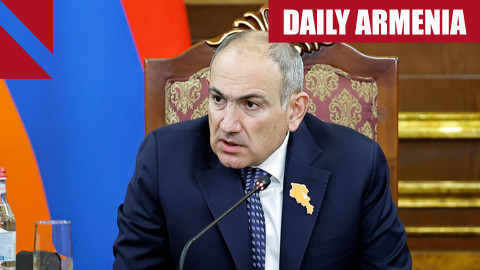
Armenia’s Prime Minister Nikol Pashinyan has repeatedly stated that no government other than Armenia’s can exist on Armenian territory, a position that effectively excludes exiled Karabakh state bodies from official recognition. As a result, relations between Armenia’s authorities and Karabakh’s leadership have deteriorated sharply.
Between political rejection and everyday needs
Ashot Danielyan, the speaker of the exiled Karabakh parliament and acting president after the displacement, said executive-level contacts between Yerevan and Stepanakert continued for about six to seven months after the exodus but later ceased.
“We raised objective issues that needed to be addressed,” Danielyan said. “But the response we received was that the entire social package falls under Armenia’s authority, and decisions would be made as they saw fit.”
Members of Armenia’s ruling Civil Contract party reject the notion that any single figure or institution represents all displaced Karabakh Armenians. Civil Contract lawmaker Zaruhi Batoyan said representation must come from the displaced community itself.
“First, Karabakh Armenians must decide who represents them. I am not aware of anyone being formally authorized to speak on their behalf,” she said, adding that the government does not restrict individuals or groups who claim to represent displaced people if they have been mandated to do so.
Former Karabakh Minister of Territorial Administration and Infrastructure Hayk Khanumyan said political disagreements should not prevent dialogue with a displaced population of roughly 150,000 people.
“You don’t have to agree on politics,” he said. “But to stop communicating with these people or treat them as outsiders is unacceptable.”
Khanumyan said that if Armenia’s authorities do not wish to engage with the exiled Karabakh state institutions, they could instead work with the community and village heads, who maintain direct contact with displaced residents and know their professional backgrounds, allowing for more targeted assistance programs.
Some interaction does continue through informal channels. Karabakh’s human rights defender, Gegam Stepanyan, said Armenian state bodies meet with him not in his official capacity but as someone familiar with the displaced community’s problems.
“The problem isn’t that issues aren’t voiced,” Stepanyan said. “It’s that there is little willingness to move away from a fixed agenda and respond empathetically.”
Batoyan said not all proposals are accepted, but argued that revisions to assistance programs show the government does listen.
Housing remains the most acute problem. Of roughly 25,000 displaced families, 4,066 have received housing purchase certificates, but only 1,768 have been able to use them, demonstrating the difficulty of purchasing property with state-issued vouchers.
Another unresolved issue concerns the victims of the September 25, 2023, fuel depot explosion in Karabakh, which killed up to 200 people and injured around 300 others. Families of those killed have not been granted official status, meaning they do not qualify for state assistance programs that in Armenia are typically provided to war victims and the families of those killed in action. Danielyan said the victims should be recognized as casualties of war and blockade, noting that many were servicemen who had gone to collect fuel.
Employment and other issues
Employment is also a sensitive issue, particularly for former Karabakh officers. Danielyan said many have been offered positions far below their previous ranks. “We have lieutenant colonels driving taxis,” he said.
With no formal representative body, civil initiatives have stepped in. Activist Lianna Petrosyan runs a legal advisory center for displaced Karabakh Armenians, handling thousands of calls and messages each month.
“If we wait for somebody or a council to be created, we lose time,” Petrosyan said. “The displaced person’s problem cannot wait.”
She said no single individual can fully represent all Karabakh Armenians and urged those trying to act as intermediaries not to be discouraged. “People need to set disagreements aside and work in the interests of the displaced,” she said.
Pashinyan has said the return of refugees to Karabakh is unrealistic and that they should integrate into Armenia. Since the displacement, more than 15,000 Karabakh Armenians have left Armenia. At the same time, around 26,000 have applied for Armenian passports, and more than 19,000 have obtained new documents issued without the former “070” code, which had previously identified Armenian passports held by Karabakh residents.
Critics say the shift blurs the distinction between refugee status, which provides certain international protections, and Armenian citizenship, which the government has promoted as the primary path to integration and access to state support.
With former institutions sidelined and no new mandate emerging, displaced Karabakh Armenians remain caught in a political vacuum, relying on ad hoc dialogue and civil society efforts to make their voices heard.
Armenian officials say the approach reflects a deliberate integration policy rather than an attempt to ‘ghettoize’ the displaced population. Government representatives argue that extending Armenian citizenship, channeling assistance through state-wide social programs and avoiding recognition of parallel political structures are intended to prevent long-term segregation and ensure equal access to services.
In this view, recognizing former Karabakh institutions or informal leaders could entrench parallel governance rather than help displaced residents integrate into Armenia’s political, legal and economic systems.
Watch the video in Armenian:

 Stories