 Civilnet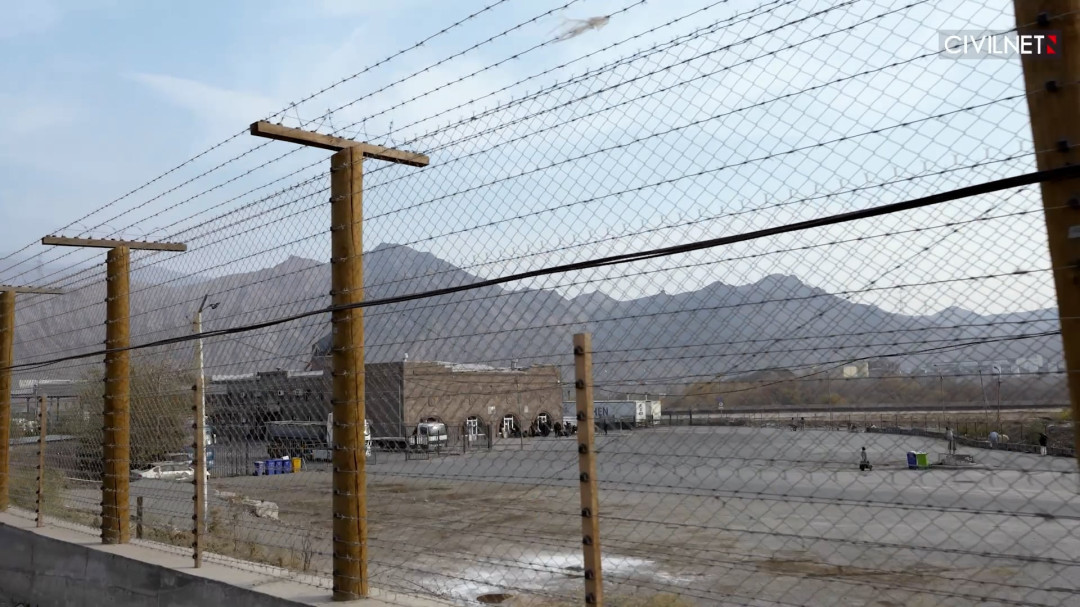
By Arshaluys Mgdesyan
Armenia’s participation in the Trump Route for International Peace and Prosperity (TRIPP) could attract infrastructure investment while offering limited revenue prospects for the country’s railway system, logistics expert Gagik Aghajanyan said in an interview with CivilNet.
Aghajanyan, chief executive of logistics firm Apaven, said the economic impact of the project for Armenia depends less on the scale of construction and more on how freight flows are organized within the country.
TRIPP is a U.S.-backed regional transport initiative aimed at reopening rail and road links between Armenia, Azerbaijan and neighboring states as part of broader efforts to unblock regional communications.
“TRIPP may bring investment, but investment does not automatically mean income,” Aghajanyan said. “If freight enters Armenia and distribution happens close to the border, the rest of the railway system simply remains unused.”
He said Armenia’s railways were already operating under pressure after freight volumes fell sharply following the 2020 Karabakh war. Before the conflict, the network transported about 3.5 million tonnes of cargo annually. After ore shipments from the Sotk mine were halted, volumes declined by roughly 1.76 million tonnes, he said.
According to Aghajanyan, TRIPP-linked reopening of routes with Azerbaijan could further reduce traffic on Armenia’s internal rail network if fuel and grain imports are redirected through shorter corridors without restoring the Ijevan–Hrazdan railway connection.
Armenia has recently received several shipments of fuel and grain transported via the Azerbaijani railway network through Georgia from Russia and Kazakhstan, marking the first such deliveries since independence. The shipments followed the initialing of a U.S.-backed peace treaty between Armenia and Azerbaijan in August 2025, which enabled limited transport cooperation.
“If trains reach Ijevan and unloading takes place there, because there is no link to the central network, more than 700 kilometers of Armenia’s railway is effectively sidelined,” Aghajanyan said. “You cannot maintain stations, staff and infrastructure under those conditions.”
Armenia’s railway system has been operated since 2008 by South Caucasus Railway, a subsidiary of Russian Railways, under a 30-year concession that obliges the operator to invest in modernization while ownership of the assets remains with the Armenian state.
Prime Minister Nikol Pashinyan said last week that Armenia has formally asked Russia in writing to restore several rail segments tied to regional unblocking efforts, including lines toward Azerbaijan, Nakhichevan and Turkey. He has said Yerevan could reclaim parts of the network from the concession if the work is not carried out within a reasonable timeframe.
Finance Minister Vahe Hovhannisyan said earlier this year that Armenia’s broader “Crossroads of Peace” transport initiative could cost between $400 million and $500 million, estimating the restoration of the Hrazdan–Ijevan–Kazakh–Aghstafa railway at about $320 million.
Aghajanyan questioned whether restoring only short cross-border segments under TRIPP would make Armenia’s railway financially viable, arguing that long-term sustainability depends on steady freight circulation across the domestic network rather than transit alone.
“Shorter routes are cheaper and attractive from a transit point of view,” he said, “but without a freight model that works for Armenia’s internal railway, the system’s economics remain uncertain.”


 Stories