 Civilnet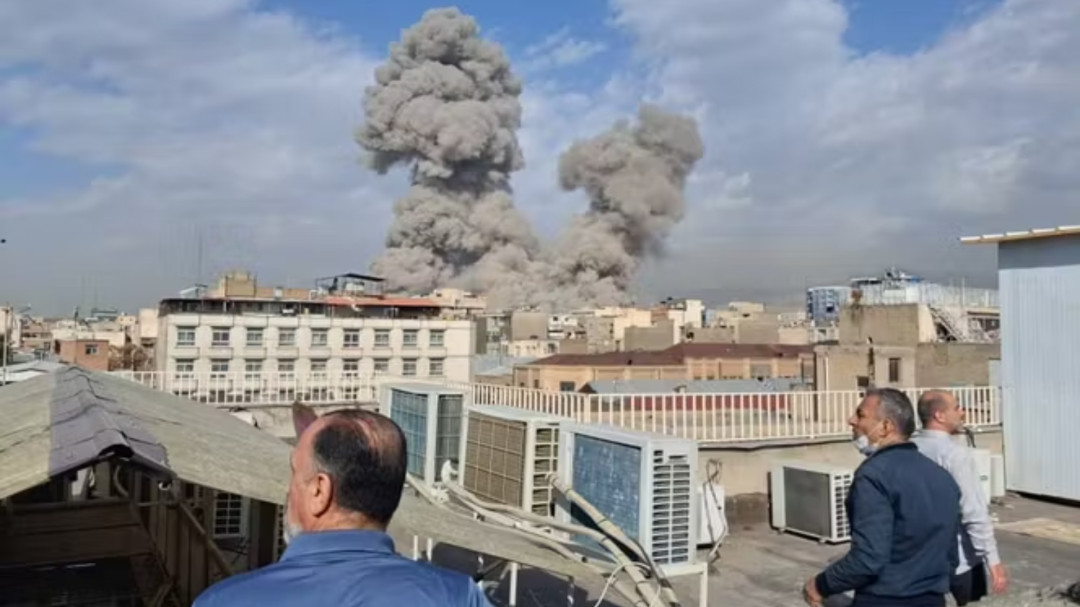
By Arshaluys Mghdesyan
U.S. and Israeli air strikes against Iran, now entering their fifth day and expanding geographically, are creating economic risks for Armenia, one of the Islamic Republic’s closest neighbors and trading partners.
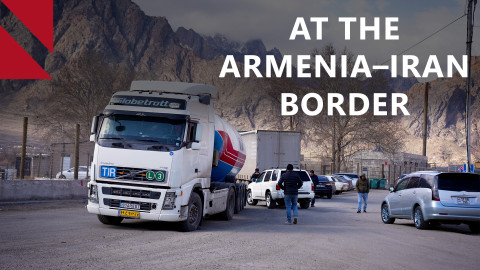
Iran is one of only two countries with which Armenia shares an open land border, the other being Georgia. Yerevan and Tehran have close trade ties and are working on a document to establish a strategic partnership. While there are still no official estimates of the economic damage caused by the conflict, the risks for Armenia extend beyond bilateral trade.
Iran also serves as an important transit route for Armenian cargo. Up to 25% of Armenia’s foreign trade passes through Iranian territory, making disruptions in the country’s transport infrastructure a significant concern for Armenian businesses.
Freight companies say the impact is already there. Two sources in the transportation sector told CivilNet that ships arriving at Iran’s Bandar Abbas port carrying Armenian cargo have been unable to unload since the start of the hostilities.
Cargo that had already been unloaded before the conflict began has reached Armenia, but ships arriving afterward remain stuck at sea or at port, according to industry representatives. In some cases, vessels carrying Armenian goods have not been able to approach the harbor, while others have reportedly turned back. Freight operators say the delays are already causing financial losses.
Despite the strategic importance of the corridor, Iran still accounts for a relatively small share of Armenia’s overall trade. In 2025, trade turnover between the two countries exceeded $768 million, a 4.2% increase from the previous year. Iran’s share of Armenia’s foreign trade rose from 2.4% in 2024 to 3.6% in 2025.
However, the structure of that trade creates vulnerabilities for Armenia if the conflict escalates. The country relies heavily on imports from Iran, resulting in a significant trade deficit. In 2025, Armenia’s negative trade balance with Iran widened to nearly $600 million, up from $532 million in 2024.
A large portion of imports from Iran consists of energy resources. Since 2009, Iranian natural gas has been supplied to Armenia under a barter scheme known as “gas for electricity.” Under the agreement, Armenia provides 3 kilowatt-hours of electricity in exchange for every cubic meter of Iranian gas. The deal was recently extended until 2030.
Although Russia remains Armenia’s main gas supplier, covering more than 83% of domestic demand, Iranian gas still plays an important role in the country’s energy mix. In 2024, more than 440 million cubic meters of Iranian gas were delivered to Armenia.
Beyond energy, Iran supplies a wide range of industrial and consumer goods to the Armenian market. Leading imports include raw iron and carbon steel bars worth about $81 million annually, as well as natural and liquefied gas valued at roughly $78 million.
Iran also exports petroleum products and refinery residues such as coke and bitumen to Armenia, materials widely used in construction and road building. Other imports include gasoline, diesel fuel, mazut and industrial oils, as well as processed steel products.
Armenia also imports large volumes of construction materials from Iran, including cement, doors, windows and ceramic tiles, along with polyethylene, molybdenum and food products such as dairy and fruit.
Imports of many of these goods have steadily increased over the past four years, highlighting Armenia’s growing reliance on Iranian supply chains.
If the conflict intensifies or disrupts Iran’s transport routes and ports for an extended period, Armenian businesses could face significant supply shortages. Economists warn that such disruptions could lead to price increases and shortages of key goods on the Armenian market.
Another potential consequence of a prolonged conflict is the possibility of large-scale migration from Iran to neighboring countries, including Armenia. Economists warn that a sudden influx of people could put additional pressure on Armenia’s housing market and public services. A similar situation occurred after the outbreak of the war in Ukraine in 2022, when tens of thousands of Russian citizens relocated to Armenia. The surge in demand sharply increased rental housing prices in Yerevan and other cities, creating affordability problems for local residents and fueling broader social tensions. Analysts say a comparable wave of migration triggered by instability in Iran could produce similar economic and social strains.




 Stories