 Shushan Stepanyan
 Ani Grigoryan
 CivilNetCheck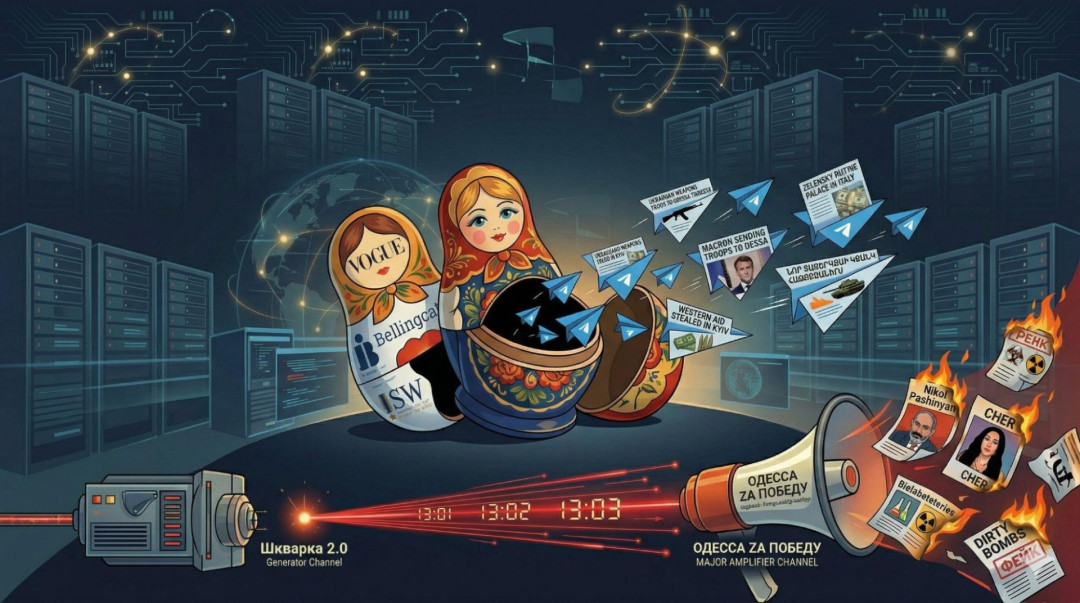
What does an alleged French grant of €30 million to Armenia, Vogue magazine's ranking of Europe's first ladies by the cost of their outfits, singer Cher's call to arrest "dictator" Nikol Pashinyan, and American investment firm BlackRock's purchase of the Shikahogh nature reserve all have in common?
They’re all sensational but entirely fabricated stories that have been actively circulating through Russian-language Telegram channels in recent months. You may also have come across claims that Nikol Pashinyan's personal security is provided by Erdoğan's bodyguards, or that NATO bases will be established in Armenia after the elections.
In the lead-up to Armenia's upcoming parliamentary elections, disinformation campaigns have been intensifying across the information space for several months now. While they cover a range of topics, from foreign policy to personal lives, analysis shows they are built around recurring narratives and spread from the same sources.
The narrative of Western influence and war against Russia
A significant portion of the fake news circulating is built around the idea that the West is trying to pull Armenia away from Russia and draw it into anti-Russian operations.
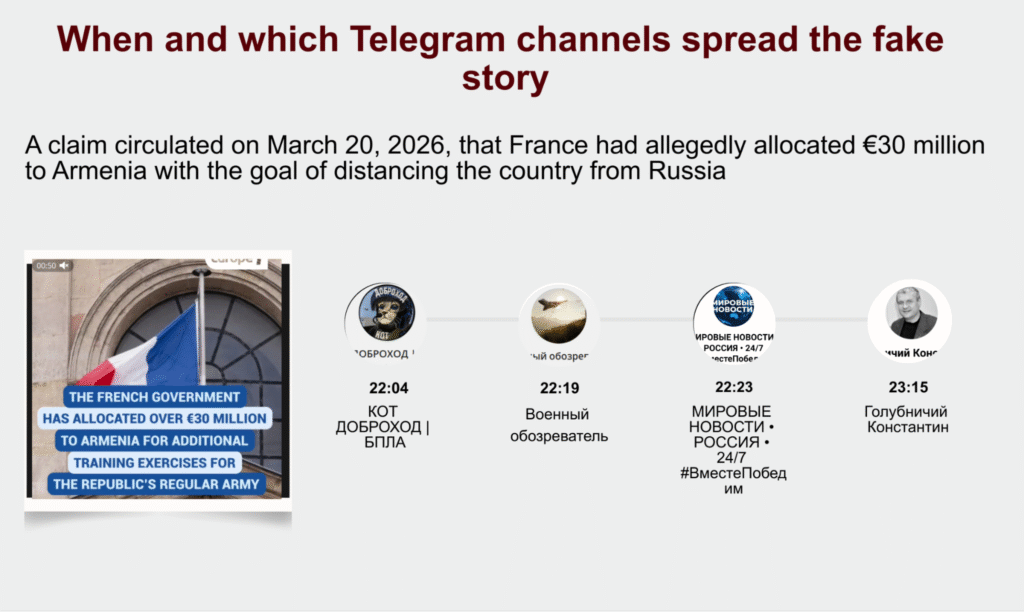
For example, from March 20 onward, Russian-language Telegram channels spread claims that France had allegedly allocated €30 million to Armenia with the goal of distancing the country from Russia. A video attached to the post used the logo of the French radio station Europe 1. The station had published no such report, as the story was entirely fabricated.
The information was first spread by the Telegram channel КОТ ДОБРОХОД | БПЛА and was subsequently reposted by others channels on the app.
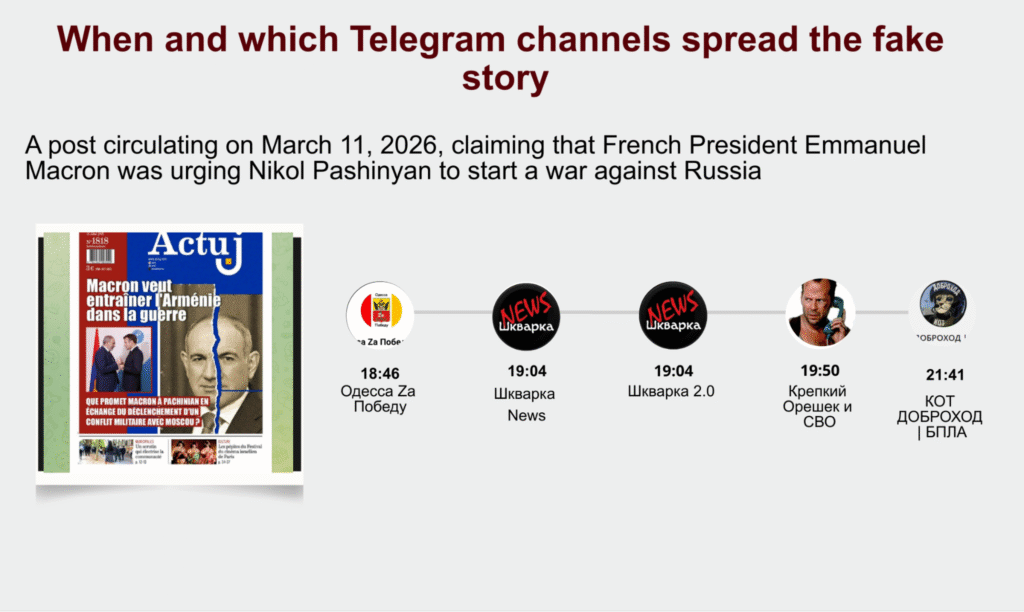
In a similar case, channels circulated claims that French President Emmanuel Macron was urging Nikol Pashinyan to start a war against Russia, using fabricated front pages of French newspapers.
That post was first published by the Telegram channel Одесса Zа Победу! and reposted by other channels using the same scheme.
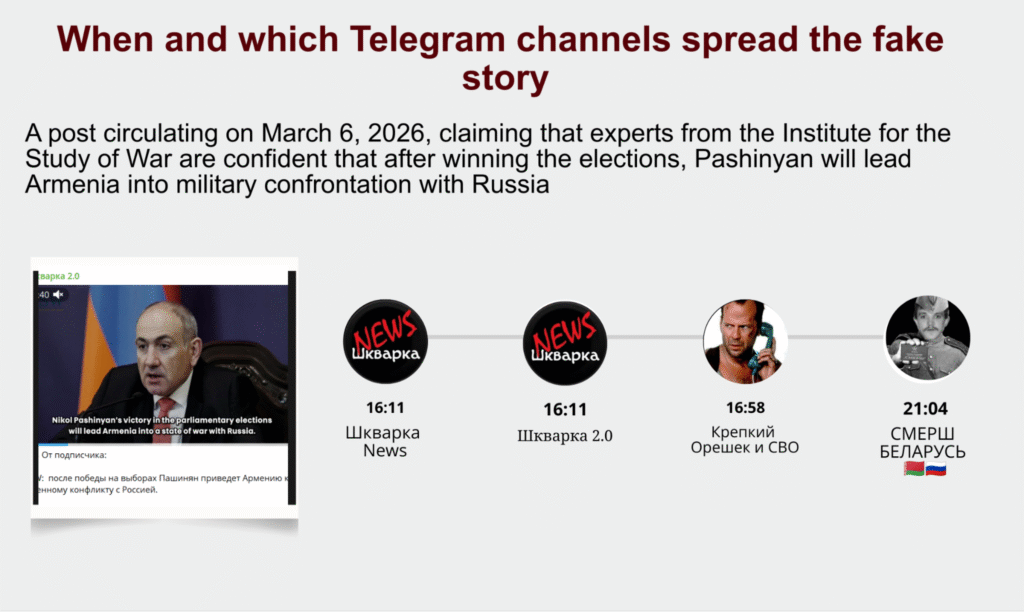
In another fabricated claim, citing the American Institute for the Study of War (ISW), it was alleged that after the elections Armenia could enter into military confrontation with Russia and that NATO bases would be established in the country. The institute has not published such an assessment. The story was first published on Telegram by the channel Шкварка 2.0.
The narrative of corruption and secret deals
Another recurring narrative is aimed at portraying the authorities as corrupt, creating the impression that covert financial transactions are being conducted at the state level.
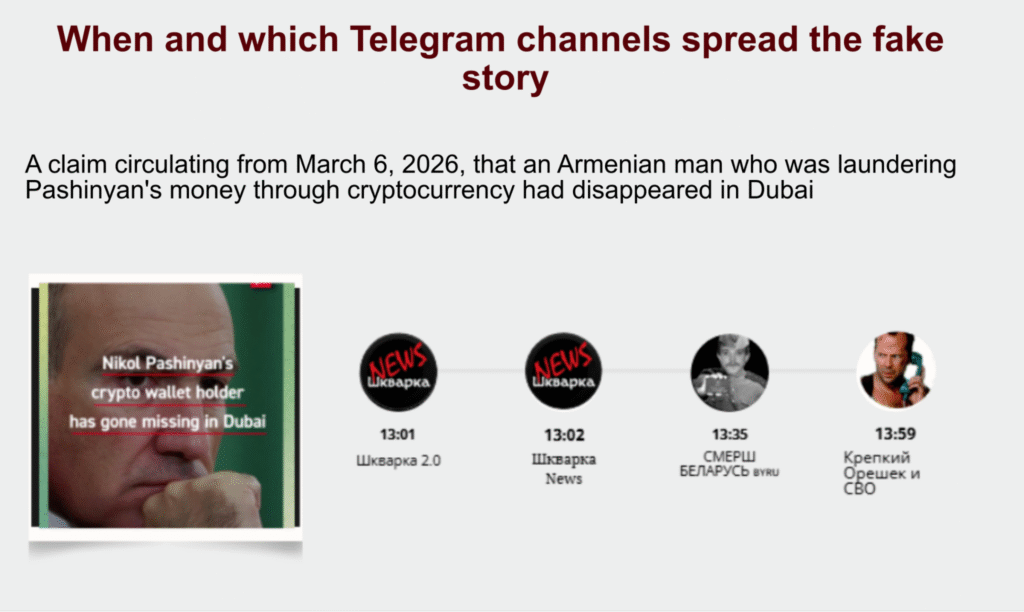
For instance, several Telegram channels spread a claim that following Iran's strike on the United Arab Emirates, an Armenian man who allegedly laundered money for Nikol Pashinyan through cryptocurrency had disappeared in Dubai. The video used the Politico logo to lend the story credibility, but the outlet published no such report.
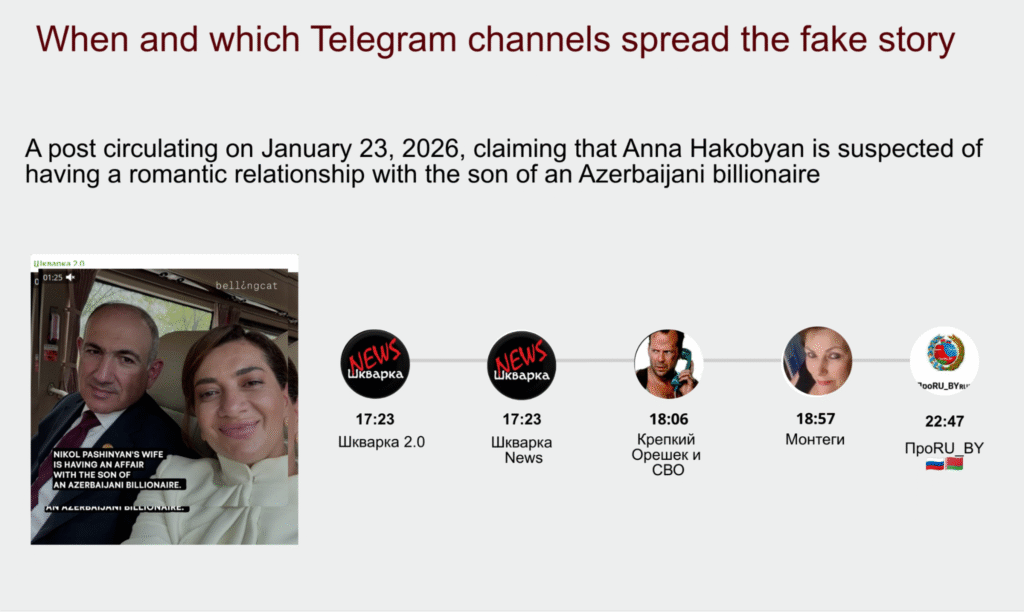
Using a similar mechanism, this time invoking the name of investigative outlet Bellingcat, a fabricated claim was circulated alleging that Nikol Pashinyan's (now ex-)wife was in a relationship with the son of an Azerbaijani billionaire. This was presented as the result of an investigation, but the organization did not publish it.
In this case, too, the source was the channel Шкварка 2.0, from which other Telegram channels amplified the story.
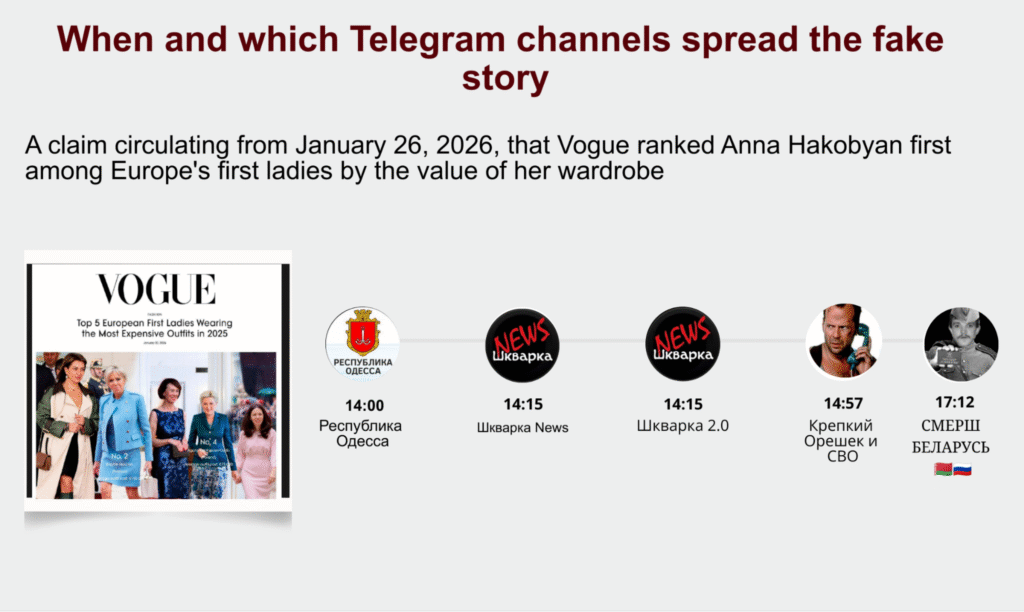
A similar piece of disinformation was spread under the name of the fashion magazine Vogue, claiming it ranked Anna Hakobyan as having the most expensive wardrobe among European first ladies. However Vogue published no such ranking. In this case, the story first appeared on the Telegram channel Республика Одесса.
The narrative of personal discrediting and "betrayal"
Beyond the misuse of media logos, fake stories are often circulated under the names of well-known individuals to amplify their reach.
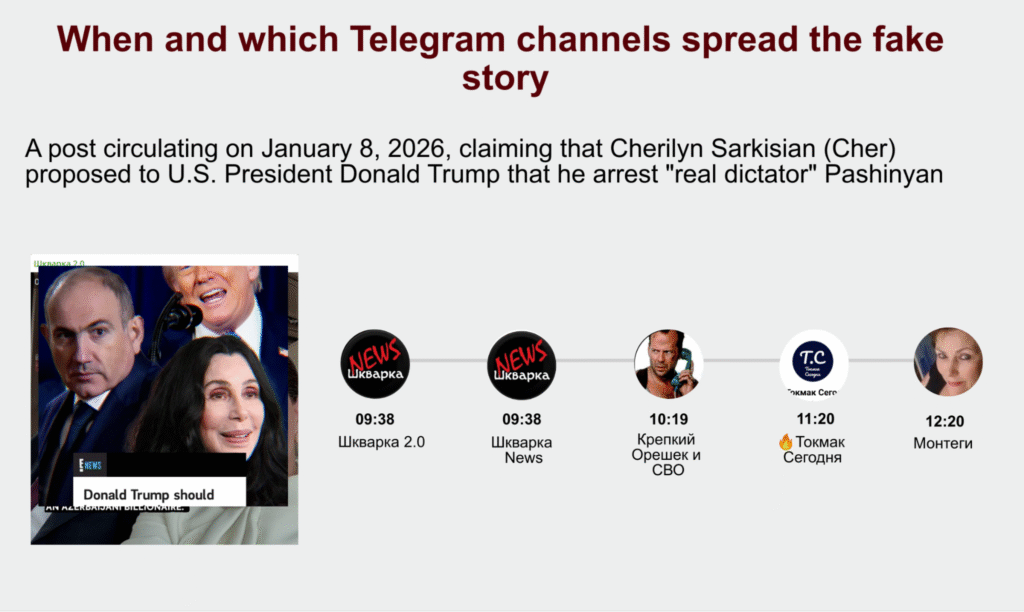
For example, a post circulating from January 8 claimed that singer Cherilyn Sarkisian (Cher) had proposed to U.S. President Donald Trump that he arrest "real dictator" Nikol Pashinyan. No such statement was found on the singer's official social media pages (X, FB, Instagram) or in any of her public appearances.
The claim attributed to the singer first appeared in the Telegram channels Шкварка 2.0 and Шкварка News.
In another case, again using the Bellingcat logo, a video circulated claiming that Nikol Pashinyan's security is provided by representatives of Turkish President Recep Tayyip Erdoğan's personal security service. The organization published no such report.
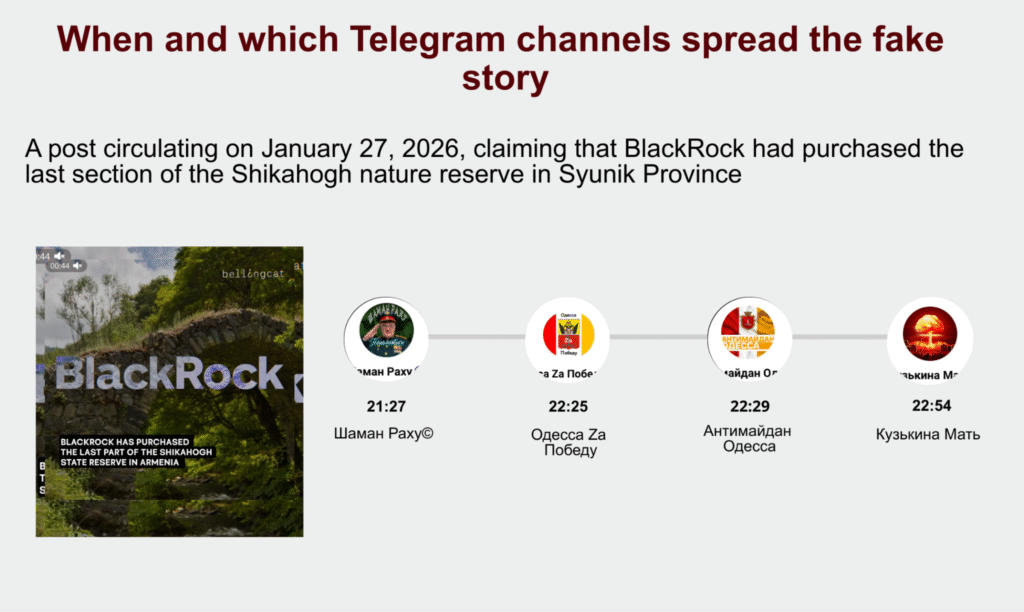
The theme of selling Armenian territories to foreign states or international organizations also recurs periodically. One fabricated claim alleged that American investment firm BlackRock had acquired a section of the Shikahogh nature reserve in Syunik Province. This video also used Bellingcat’s logo, presenting the content as an investigation, but no such publication exists, and the Ministry of Environment denied the reports. In this case, the source was the Telegram channel Шаман Раху©️, from which the story rapidly spread to other channels.
Synchronized spreading and role distribution within the disinformation network
A chronological and statistical analysis of Telegram channel posts shows that the spread of the fake stories is not organic, but move in tight synchrony, with differences of just minutes between posts.
For example, the fabricated story about the "money launderer who disappeared in Dubai," which circulated on March 6, first appeared on the channel Шкварка 2.0 at 1:01 p.m. Just one minute later, at 1:02 p.m., the same content was published on Шкварка News, followed by СМЕРШ БЕЛАРУСЬ 🇧🇾🇷🇺 at 1:35 p.m., and on Крепкий Орешек и СВО at 1:59 p.m. In less than an hour, the same story had circulated across several interconnected channels.
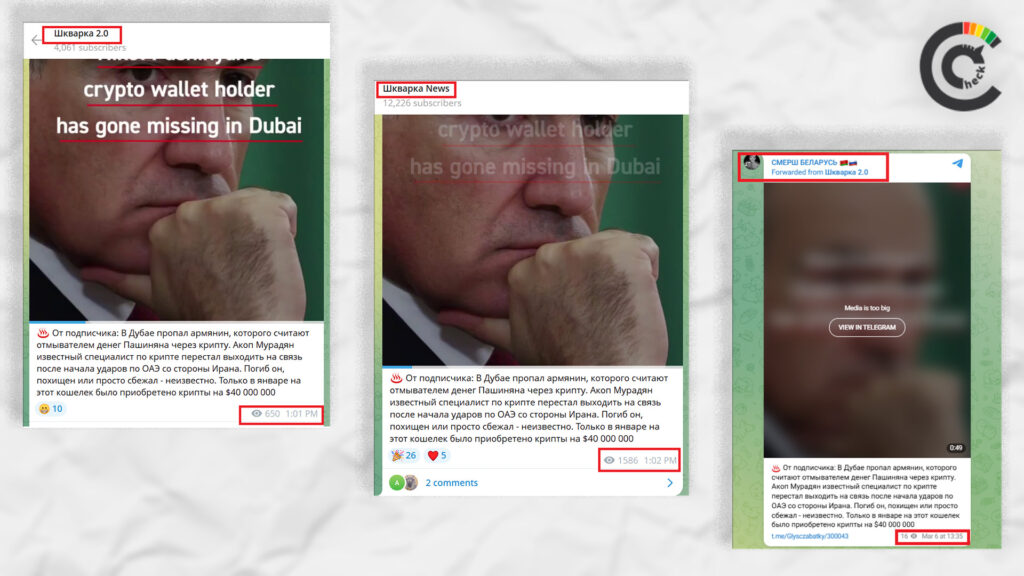
A similar pattern of synchronization is visible in the fake Vogue ranking spread on January 26: it was first published on the channel Республика Одесса, then appeared simultaneously on Шкварка News and Шкварка 2.0 just 15 minutes later, and roughly an hour later on Крепкий Орешек и СВО as well.
These examples demonstrate that disinformation does not spread through random reposts but through a clearly coordinated mechanism: one channel "drops" the content and the others multiply it within a short period of time.
The analysis also reveals a clear division of roles within this network.
On one side are "source" or "engine" channels, such as Шкварка 2.0, where fake stories often appear first. These channels have comparatively small audiences, averaging 600 to 1,000 views per post.
On the other side are "megaphone" or high-volume amplifier channels, such as Одесса Zа Победу, where the same content reaches tens of thousands of users. The fabricated story about French President Emmanuel Macron urging Nikol Pashinyan to go to war, for instance, accumulated around 49,000 views on that channel.
There are also mid-tier channels, such as Шаман Раху©️ and СМЕРШ БЕЛАРУСЬ 🇧🇾🇷🇺, that generate several thousand views each and serve as intermediate stages in the distribution chain.
This data shows that disinformation spreads in a multi-tiered fashion: fabricated content appears first on channels with small or mid-sized audiences and is then amplified to wider audiences by larger channels.
The result is an interconnected network whose key nodes are the channels Шкварка 2.0, Шкварка News, Одесса Zа Победу, Крепкий Орешек и СВО, Шаман Раху©️ and СМЕРШ БЕЛАРУСЬ 🇧🇾🇷🇺, which regularly repost the same content.
Who is behind the channels: war, drones, and anti-Ukraine propaganda
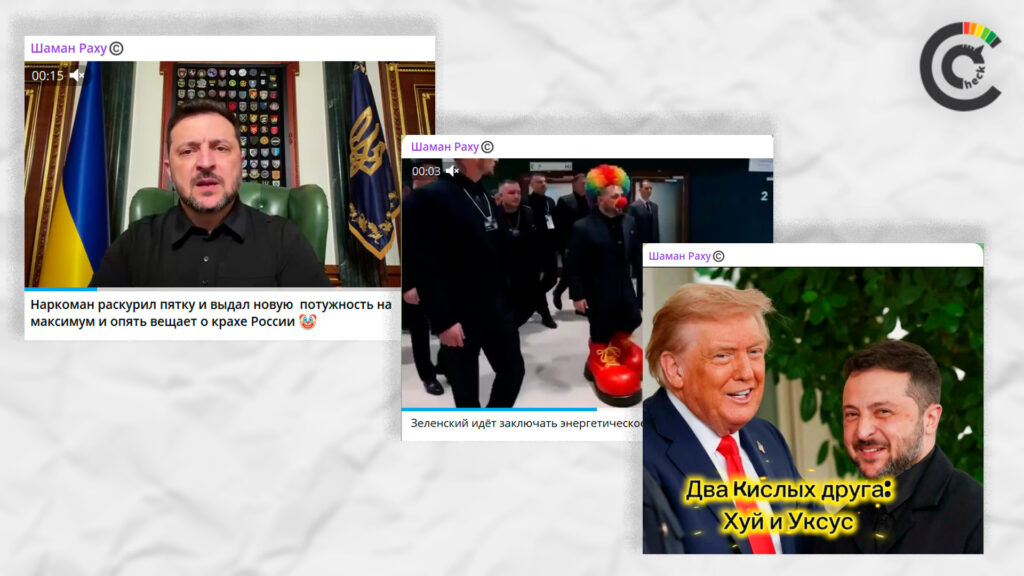
Although this disinformation campaign targets Armenia and its upcoming elections, the main "nodes" identified in the research, Шкварка News, КОТ ДОБРОХОД | БПЛА, Одесса Zа Победу, and Шаман Раху©️, have no connection to Armenia whatsoever.
Channel transparency tools indicate they are administered from Russia, Belarus, or Ukraine (likely from territories under Russian control) and have a pronounced pro-Russian orientation.
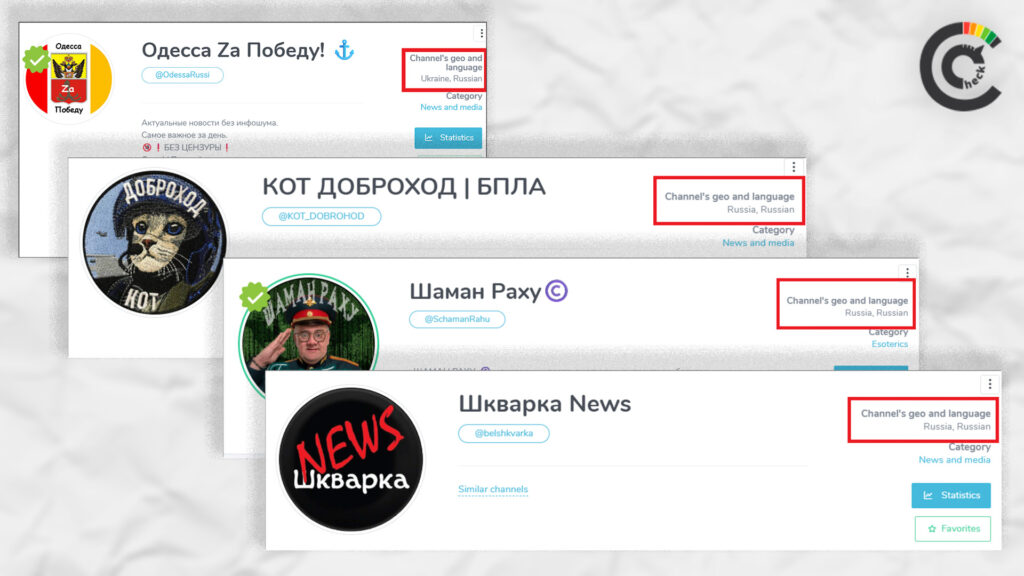
An examination of these channels' non-Armenia-related posts shows they are also active in information flows connected to the Russia-Ukraine war.
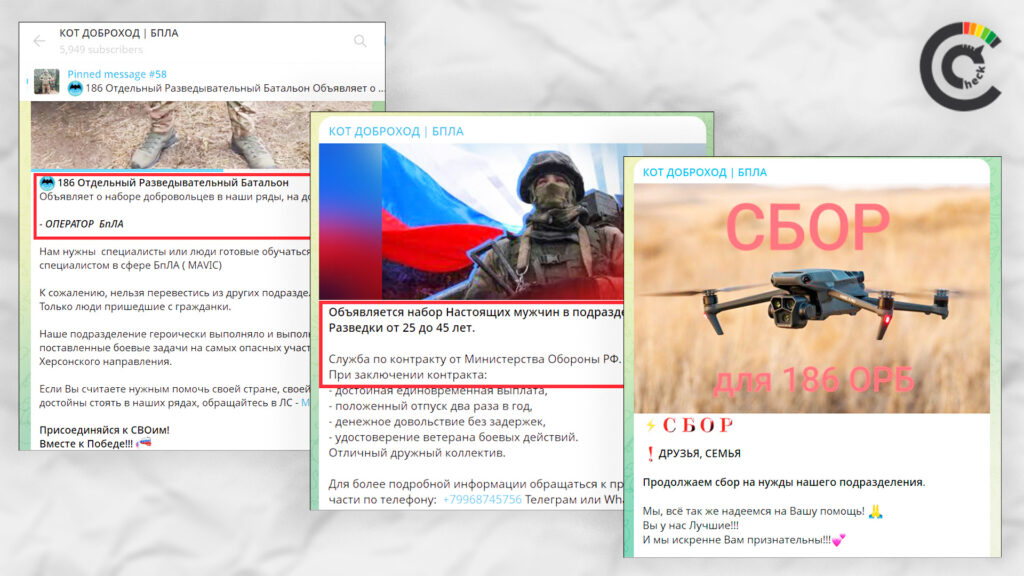
For example, the channel КОТ ДОБРОХОД | БПЛА, which spreads fabrications about Armenia, is actually engaged in covering the Russia-Ukraine war, recruiting volunteers for Russian armed forces battalions, and fundraising to purchase military drones.
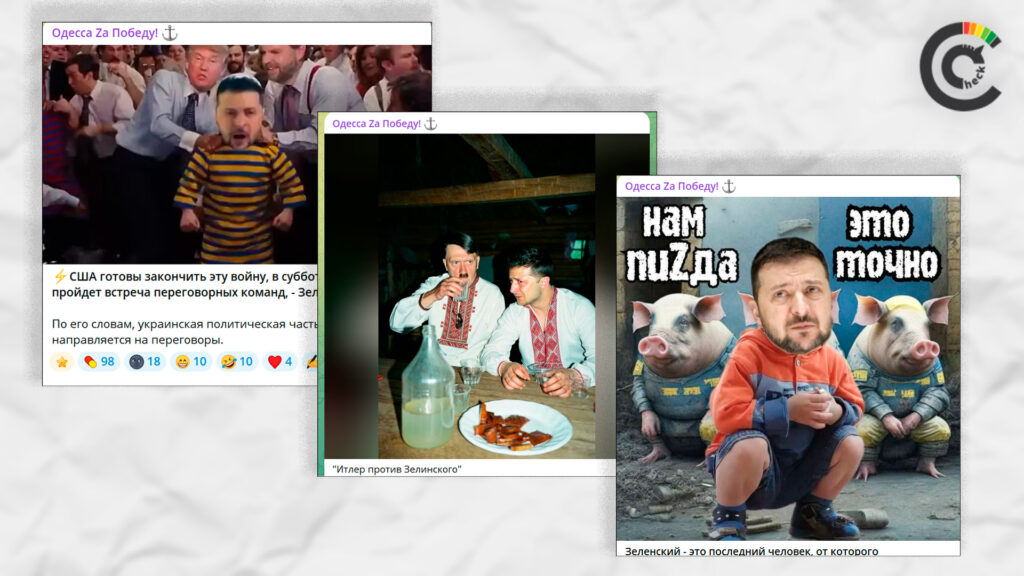
The network's main "megaphone”, the channel Одесса Zа Победу, which generates tens of thousands of views, regularly publishes posts mocking Ukrainian President Volodymyr Zelensky.
The channel Шаман Раху©️, created in 2021 and administered from Russia, also regularly publishes posts mocking or discrediting the Ukrainian president.
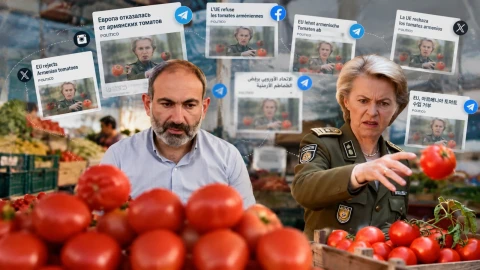
The scheme by which these fake stories are spread closely mirrors the methodology of the Russian disinformation campaign known as "Matryoshka". In that campaign, fabricated or manipulated content is first published on channels with limited audiences, often anonymous ones, that imitate the style and logos of authoritative Western media outlets or organizations such as Bellingcat and Politico before rapidly spreading across a broader information network.
See: Tracing disinformation against Armenia: from narratives to organised networks
Despite the intense information activity observed in the lead-up to Armenia's upcoming parliamentary elections, the #CivilNetCheck investigation shows that the fake stories in question have primarily circulated within Russian-language Telegram channels. They have largely not appeared on Armenian-language Telegram channels and have had limited impact on the Armenian media landscape.




 Stories