By Gevorg Tosunyan
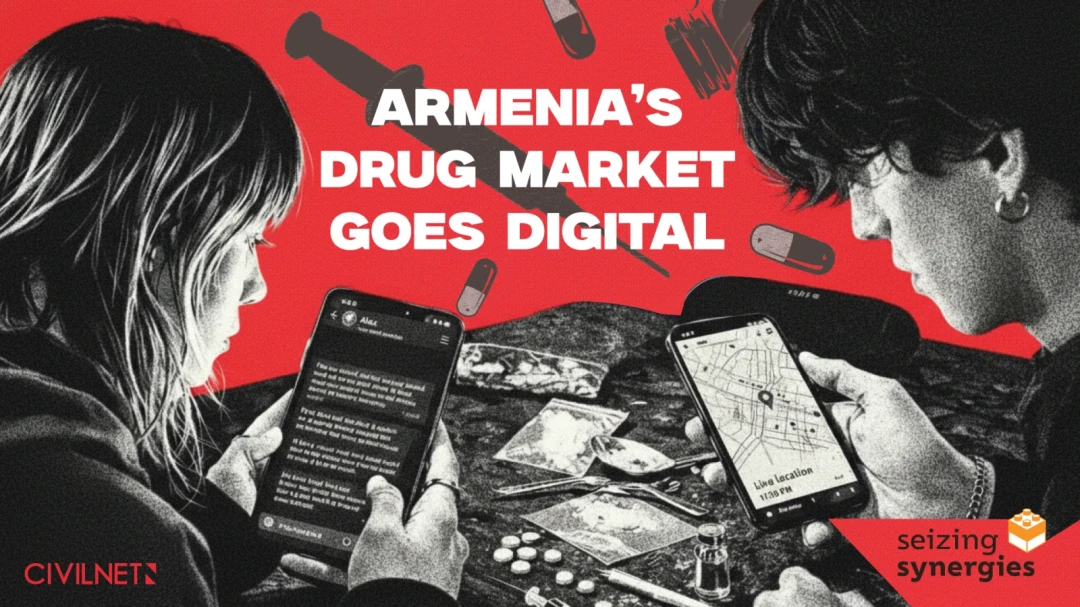
Buying illegal drugs in Armenia today can be as simple as ordering food online. Drug users are found to be younger and increasingly women, while digital platforms are transforming how substances are sold and consumed.
“If I could go back to being 23, I would tell myself to stop,” says Narine, 45, who is now undergoing methadone treatment as she tries to rebuild her life.
Her addiction began decades ago abroad, after she was offered synthetic drugs to ease pain from an injury. At first, the effects felt harmless, even euphoric.
“Everything seemed colorful,” she recalls. But that phase quickly gave way to physical and psychological suffering.
“When I stopped, the withdrawal was unbearable. It felt like my bones were breaking. I couldn’t breathe, I was freezing or burning,” she says.

Narine later returned to Armenia and stayed drug-free for nearly a decade. But health issues led her back into use. Now she receives treatment at the National Center for Addiction Treatment and is trying to gradually quit.
Her story reflects broader changes in Armenia’s drug landscape, one increasingly shaped by digital technology.
A digital marketplace for drugs
Buying drugs is very simple and allows one to remain anonymous. Messaging platforms, such as Telegram or WhatsApp, as well as e-money systems like EasyPay and WebMoney, create a complex, difficult-to-trace network.
Channels and bots offer a wide range of substances, from cannabis to cocaine. Buyers and sellers never meet. Payments are often processed in crypto, and substances are hidden in dead drops around town.
Nairi Petakchyan, an adviser at the National Center for Addiction Treatment, says the closed nature of these platforms complicates law enforcement efforts. Telegram, in particular, offers a level of anonymity that makes it hard for authorities to access user data.
The system also relies on individuals known as “stashers” who set up the dead drops. One such distributor, a 27-year-old man who spoke with CivilNet on the condition of anonymity, said he entered the trade for quick money.
“It’s very risky. People don’t stay in this job for long, they either get caught or beaten,” he said, adding that he tries to avoid stashing drugs near schools.
Synthetic drugs and hidden dangers
Experts warn that buyers often do not know the chemical composition of the substances they get online.
According to Anna Asatryan, head of the Addiction and Public Health NGO, substances sold online frequently lead to overdosing and mass poisonings due to unpredictable synthetic mixtures.
These cheaper synthetic stimulants are increasingly replacing traditional drugs but pose far greater risks to mental health. In extreme cases, they may lead to impaired judgement and result in unintentional self-harm leading to death. Many require psychiatric, not just addiction, treatment.
A younger and more female profile
Drug use in Armenia is also changing demographically. While men still make up the majority of users, specialists report a clear increase in drug use among women and girls. Globally, women account for about 25% of drug users but are far less likely to seek treatment due to stigma and fear of social consequences.
The problem is also affecting younger people. Doctors warn that early drug use can severely disrupt brain development. Collective consumption has also become more common among youth.
“Say, seven teenagers could try drugs together out of curiosity, but two of them may continue and develop dependency,” Asatryan says.
Rising crime and shifting strategy
Official data shows a steady increase in drug-related crime. In 2025, Armenia recorded 4,170 drug-related offenses, nearly 20% higher than the previous year. Seizures caused by synthetic drugs increased more than fivefold, while heroin seizures rose almost tenfold.
Authorities argue that the increase partly reflects improved detection. Prime Minister Nikol Pashinyan said the rise in cases is linked to better law enforcement.
“If there were no increase in detection, we simply wouldn’t know about these cases,” he said. He added that efforts should be directed at uncovering major importers and producers, rather than chasing small quantities.
Systemic gaps and global parallels
Despite this shift, official reports point to systemic weaknesses. Investigations are often delayed, forensic processes can take months, and law enforcement failures have been documented.
According to Andrei Curararu, co-founder of the Moldovan think tank WatchDog, the country is evolving from a transit destination into a production hub for synthetic drugs.
“Telegram has become the central market,” he said. “We can catch the person stashing the drugs, but not shut down the entire network.”

He argues that banning the platform would be ineffective, as users would simply switch to VPNs, and instead suggests policy alternatives such as decriminalization of certain substances.
Treatment gaps and social barriers
Another major issue is the lack of reliable data on drug use in Armenia. Estimates suggest more than 14,000 people use injectable drugs, but comprehensive epidemiological data is lacking.
Access to treatment is also limited. Therapy that allows addicts to switch from heroin to a safer replacement known as methadone, is available only in a few medical institutions, mostly in Yerevan, making recovery difficult for those in the regions. Stigma remains a major barrier, especially for women, who fear social judgment or losing custody of their children.
Psychologists say addiction is deeply tied to social and emotional factors, including trauma and peer pressure. Even after treatment, relapse is common, particularly when individuals return to the same environment.
Yet recovery is possible. Specialists report cases where patients in severe condition have regained stability, improved their health, and returned to their families.
Read the article in Armenian: Կանեփից մինչև կոկաին. ինչպես է «Տելեգրամը» փոխել Հայաստանի թմրաշուկան



 Stories