By Paul Van der Stegen (text and photos)
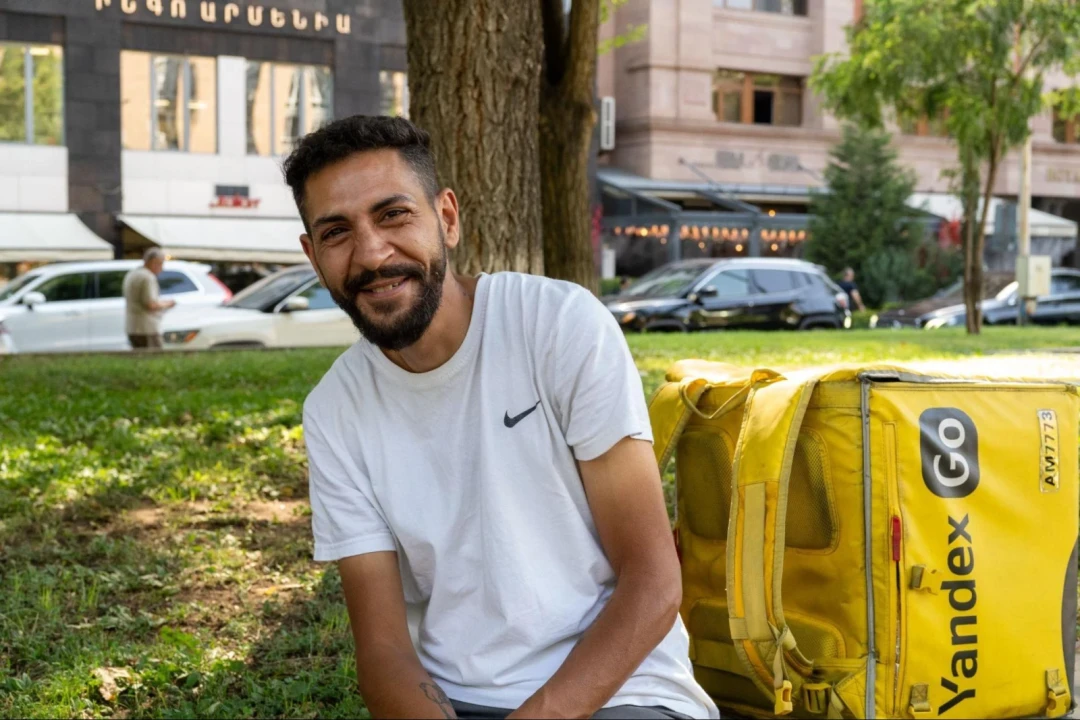
In Yerevan, Mohamed, a 36-year-old, university-educated Jordanian, survives by delivering meals for Yandex on a rented scooter. Deported from Georgia after two and a half months in detention, he moves from one delivery to the next, piling up accidents and debts along the way. Starting August 1, Armenia will require delivery riders to hold a valid health certificate. The state wants to monitor the diseases they could pass on to customers. But no one seems concerned about what the job itself is doing to the riders' health.
Starting August 1, delivery riders will need to prove they are in good health before bringing dinner to someone's door in Yerevan. The announcement came in late July: Armenia's Food Safety Inspection Body will begin carrying out "large-scale" checks on food couriers. A medical exam upon recruitment, another every six months, and a mandatory personal health record: riders who fail to comply will face administrative penalties. The delivery platforms, meanwhile, have asked for more time to bring their 2,000 to 3,000 couriers into compliance. Who will pay for the exams, where they will take place, and whether they will happen during working hours: the official statements do not say. For workers who are paid per delivery, with no contract, no salary and no insurance, the new rule looks like all the ones that came before it: one more requirement, one less protection. The state wants to make sure delivery riders do not contaminate the meals. No one is checking what delivering those meals does to the riders themselves.
Mohamed, for his part, would have plenty to show the inspectors. X-rays, for example. In four months of riding through Yerevan, the 36-year-old Jordanian says he has been in "more than fifteen accidents." The latest happened barely a month ago. "They pulled me out from underneath a car with my scooter. People and the police were saying, 'This man is dead.'" Covered in blood and unable to move his right hand, he had only one thing on his mind: his phone. "A police officer said to me, 'You're dying and you want your phone?' I said yes, because I had an order." He knew that unless he sent photos to customer support before going to the hospital, his account would be blocked. Seven hours later, his agency called. Not to ask how he was doing: "'Where is the order?'" The order, a T-shirt, was delivered by a friend. The following day, Yandex blocked him anyway. "For life. Not for a week, a month or a year: for life."
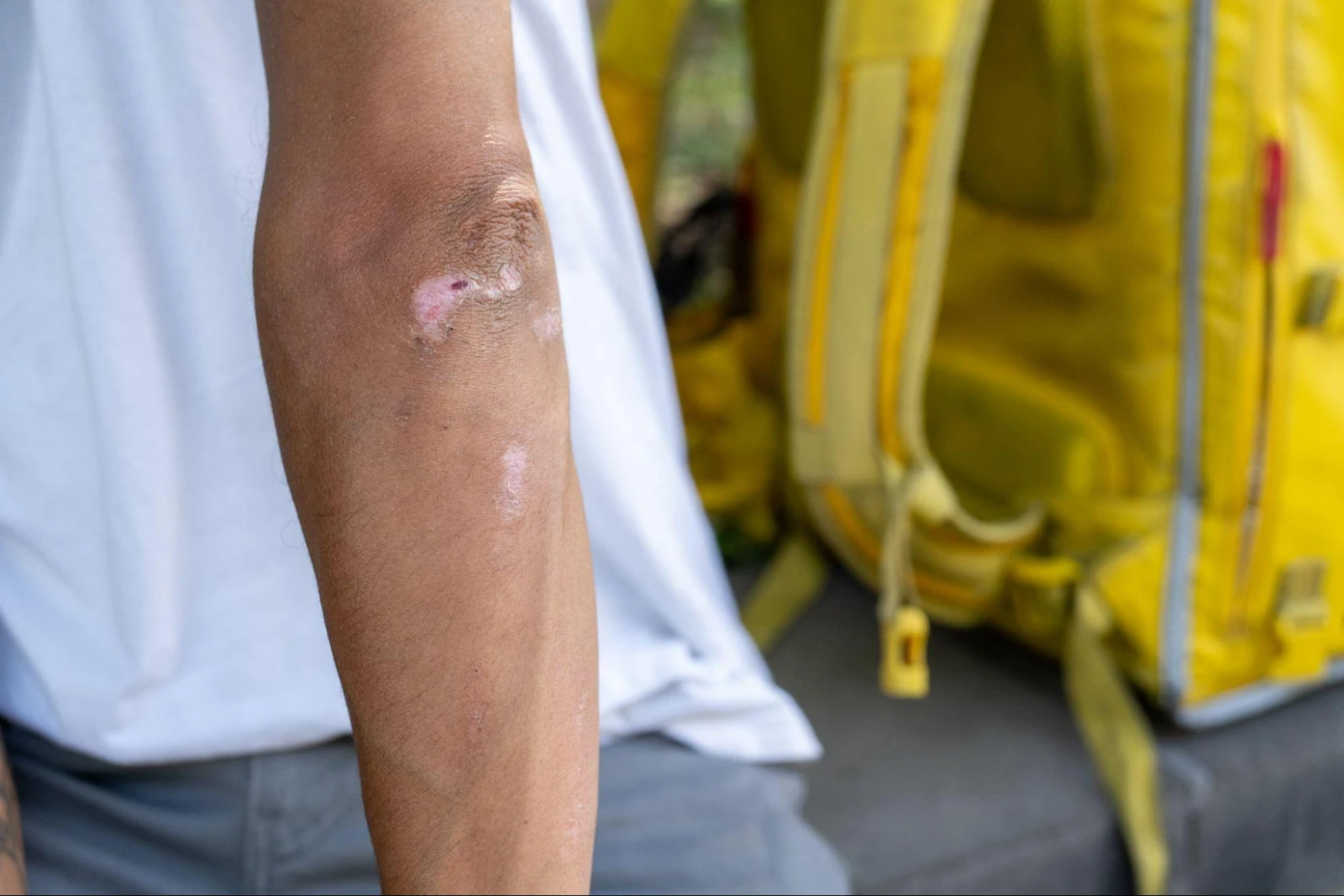
It took a month, an intermediary who "knew people at headquarters," a hospital certificate, the X-rays and a police report to get his account reopened. That was a month without income. Mohamed spent three days sleeping outside with his luggage, without eating and without asking anyone for anything. He owed several hundred euros to the woman who had rented him his scooter. "Just give me the scooter back. I want to work, because I've been sleeping on the street for three days." This is the man Armenia's government is preparing to ask for a certificate of good health, under threat of barring him from working.
From Amman to a Georgian dead end
Nothing, however, had destined Mohamed for life on a scooter. Trained as a graphic designer, with experience in television production, animation and business administration, he is also a DJ and techno producer who performs under the name DJ Amino. "I do many things in life. But here, in Armenia, I work as a delivery rider." He left Jordan, his home country, in search of room to breathe: a country where people are checked "every hundred meters," where you walk around "constantly afraid a police officer might appear."
Georgia, by contrast, was home for 10 years. He learned the language there and got a residence permit. Then the tide turned: stricter rules, waves of deportations. In the end, it all came down to a pack of cigarettes. "It was July 17 last year." That morning in Batumi, he was supposed to travel to Tbilisi to collect his renewed residence permit, valid for another five years, which was waiting for him at the Public Service Hall. His old permit had expired two months earlier. But someone had reported his address to the immigration authorities. He stepped outside to buy cigarettes and found two officers waiting for him. Handcuffs, 48 hours in a cell "without understanding what was happening." In court, the judge suspended the hearing, called Tbilisi and checked: the permit was indeed ready; he had been telling the truth. She wanted to help him. Immigration police then offered to take him to a "center" in Tbilisi while he collected the document. His interpreter whispered that he should refuse. He did not listen.
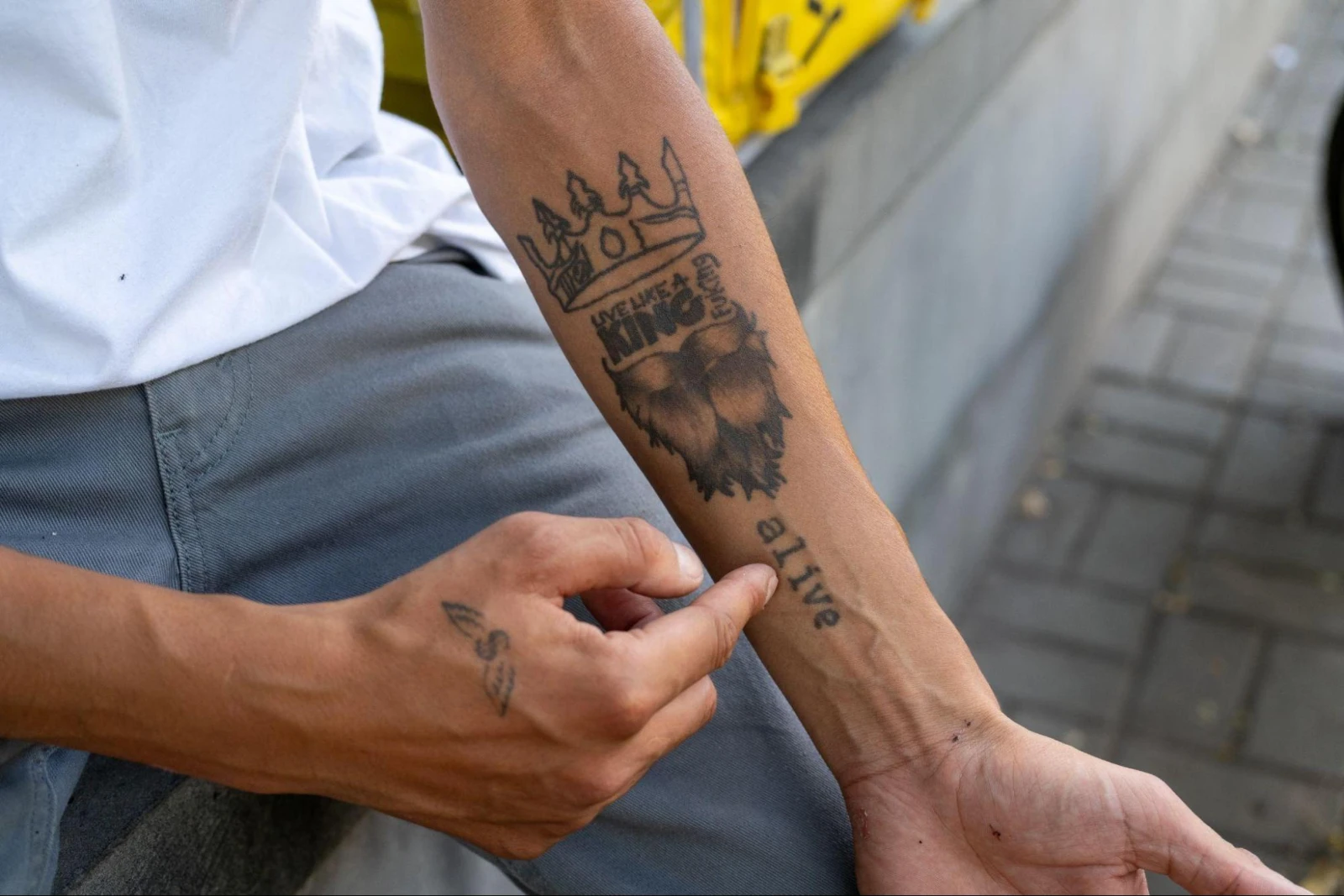
Six hours on the road without a single stop, fingerprints, a mugshot, a strip search, photos of his tattoos, then a dormitory with 15 beds. "In reality, it was a prison: it was impossible to leave." He was told he would be deported. "They had lied to me." Yet even his case manager confirmed his new permit was still waiting at the Public Service Hall. He would never be allowed to collect it. He stayed locked up for two and a half months. A second court hearing ordered his release; the authorities then produced an old, lost and expired passport, made him sign an undertaking to leave the country within 30 days, and promised he would be "welcome" to return with a new document. He paid for his own plane ticket and flew to Jordan, where it took six months of bureaucracy to get a new passport.
His return became a Kafkaesque trap. Back at the Georgian border with a new passport in hand, he was turned away: banned from entering the country for three years. Soon after, his Georgian bank froze his account. The tax authorities demanded $5,000 that had never come up during his 10 years in the country and required him to appear in person in a state he was no longer allowed to enter. "I don't understand their rules." Even a friend in the Georgian security services could do nothing. Since then, his Armenian visa has expired, the war involving Iran, Israel and the United States has sent airfares soaring, and a fine of 50,000 drams — around $140 — awaits him, along with deportation at the first identity check. "I'm trapped here, in Armenia."
Trapped, and shut out of everything, though not for lack of trying. For two or three weeks, he sent his resume to travel agencies, clubs, bars and hotels. The interviews went well, until the same question came up. "The last question was always the same: 'Do you speak Russian?' No. 'Do you speak Armenian?' No." English interested no one. "The software is in English and all the work is done in English. Why do I need Russian or Armenian?" Why not learn them, then? "I spent 10 years learning Georgian. Then they deported me from the country, and now I can't even use that language." Delivery work was what remained. "A foreigner who arrives in Armenia without speaking those languages is forced into delivery."
The math of survival
Even then, the job would need to provide a living. There are several thousand delivery riders on the streets of Yerevan, he estimates, too many for the number of orders available. And they do not work for Yandex directly, but for "partner" agencies that take a 24 percent commission, along with "partner fees" no one has ever explained to him. He has seven such agencies saved on his phone and moves between them depending on the bonuses on offer. An algorithm assigns the orders and demands selfies, sometimes two or three a day, along with a photo of the insulated delivery bag every three days. The aim is to make sure riders are not working under someone else's identity.
The day before we met, he completed 23 deliveries for around 12,000 drams, roughly $30, before "service fees" and "partner fees" were deducted. Against that, he pays 27,000 drams a week for his rented electric scooter and 4,000 a night for a hostel bed, while the repair debt grows after every accident. "At the end, you may have 500, 1,000 or, at most, 2,000 drams left in your pocket." Less than $5.
The humiliations are daily: a 1,300-dram delivery that was never paid, despite three hours spent at the agency office — three hours in which he could accept no other orders; a counterfeit 20,000-dram banknote handed to an Indian colleague, whom customer support blamed for failing to notice it — "But we are not banks"; orders riders must pay for out of their own pockets when customers select the "pay in cash" option.
And then there is the contempt at the counters. At Yerevan City Market, an employee dismisses him with a flick of the hand, without even speaking, as if to say: your order is not ready, go away. "We are not animals. We are human beings." He describes the looks directed at foreigners, "as if we had crawled out from underground." He praises the students, "respectful and polite," and the hostel owner who waits two or three days when Mohamed cannot pay, "without blaming me for anything."
Around him revolves an international community of people scraping by: an Iranian who cries because he receives only three or four orders a day; seven or eight Egyptians who also toil for Yandex; and two newcomers he recently met at the agency office, a Jordanian and an Egyptian, whom he refused to mislead. Without money set aside in advance, this job would not really help them. So why does he keep going? "Because I have no other option. Truly, I have none."
What remains are the rituals of a man who has learned to rely on no one but himself. "My true friend is my pocket, and my brother is my right hand." God, always, remains. "God has saved me every time." And so Mohamed feeds cats and dogs before feeding himself, gives them his sandwich when he has to, and hands his last 100 drams to someone poorer than he is.
Despite everything, he keeps up appearances. "Everywhere I go, I make myself look rich, richer than the people around me, even if it isn't true." At night, he makes music. Eight techno albums produced while he was still living in Georgia, 35 tracks published on YouTube, TikTok and Instagram, in the hope that one of them might eventually break through. He dreams of a house in the mountains, far from cities and people; of a laptop he cannot yet afford; of work equal to what he knows how to do. "I am intelligent. Wherever you put me, I can adapt and make money." His discipline can be summed up in a few words: five hours of sleep, never more. "I've been working since I was 18. I'm still working, and I'll carry on until I die."
Why entrust all of this to a stranger? "I like talking. Maybe I need to talk." Above all, he does not want anonymity: film him, photograph him, write his name. "Maybe someone will remember something from my story." Some days, Mohamed buys two coffees from the machine. "One for me, and another one for me too." Sitting on a bench on North Avenue, the two cups perhaps give him, for the space of a few sips, the illusion of having company. He watches people pass by, lets the second coffee grow cold, and catches his breath before climbing back onto his scooter. Shyly, he admits: "When I have enough money, I buy myself a few flowers." A small, frivolous luxury — and therefore an essential one.
Paul Van der Stegen is a French documentary filmmaker based in Armenia. He reports on social issues and the South Caucasus. While studying at Sciences Po Bordeaux, he directed Han's Call, a documentary filmed in Seoul that explores mental health.



 Stories