By Olivia Law
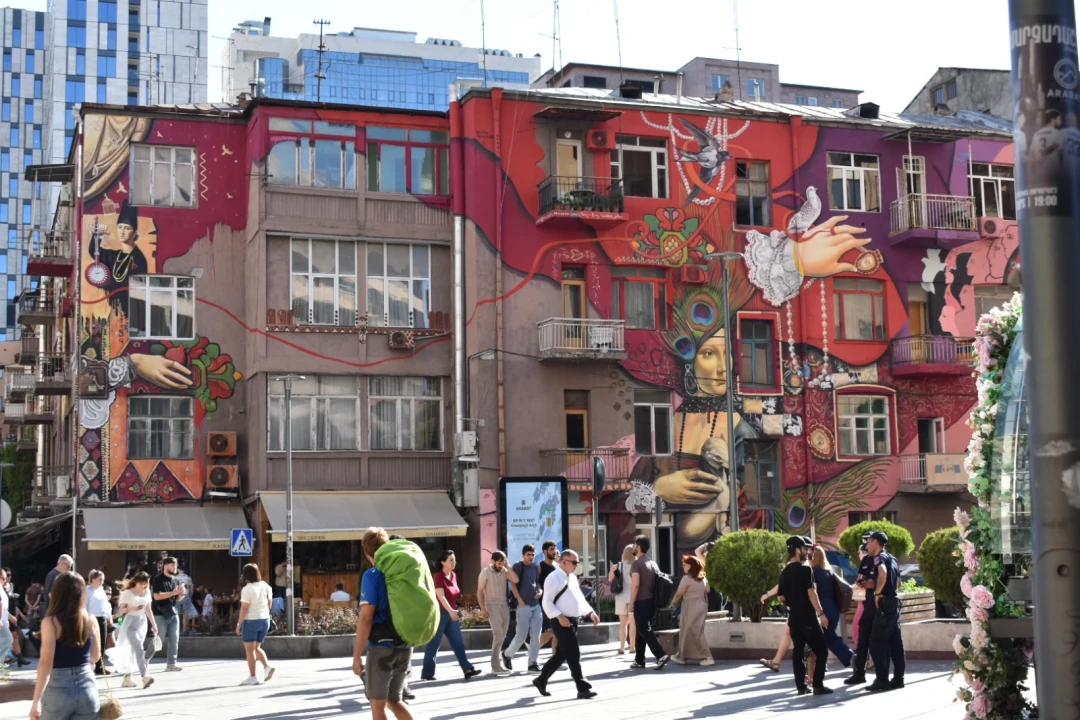
If you’re a tourist or a visitor in Yerevan, it is more than likely you’ll take a stroll down Northern Avenue and stop to admire the mural on Teryan street. Painted by local artists Garegin Harutyunyan and Harutyun Aghabalyan, the artwork pays tribute to acclaimed Armenian filmmaker Sergei Parajanov.
Most of those who pose and take videos by the decorated building are unaware that the mural, with its clocks, pearls, and peacock feathers, hides a much deeper side of Yerevan’s history.
Northern Avenue’s Vision
Over two decades ago, the now-painted building on Teryan street was among the tallest in the neighborhood. Fit within a cluster of low-income houses, the area was far from today’s bustling tourist center.
“The street was very quiet,” says Vladislav Janibekyan, co-owner of Tun Lahmajo and resident of the building on Teryan street.
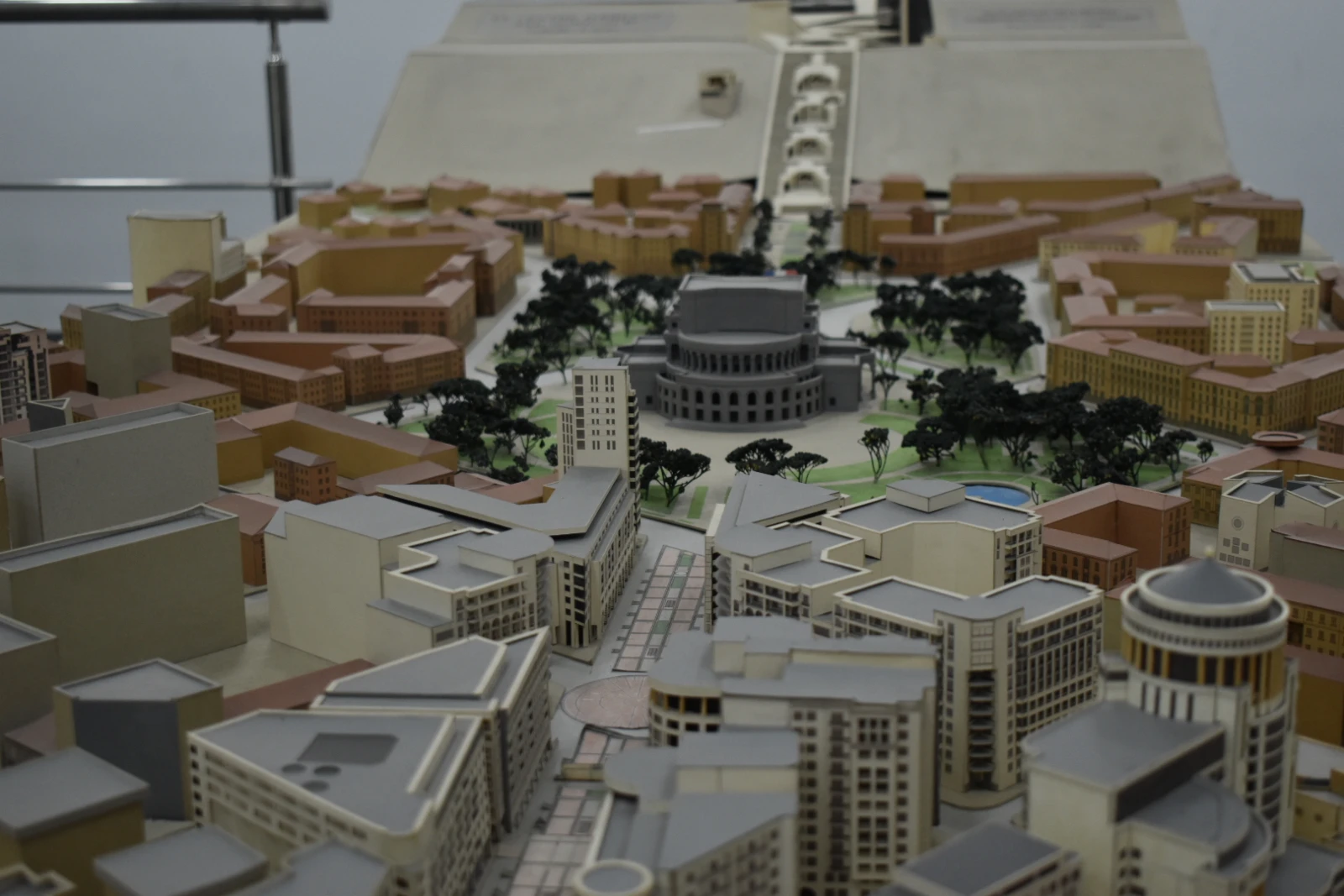
Northern Avenue was constructed in the early 2000s, first envisioned by architect Alexander Tamanian in his 1924 master plan for Yerevan.
“The idea of Northern Avenue is to connect the Opera House and the Republic Square: cultural and governmental centers,” Narek Sargysan, Armenia’s former chief architect, tells CivilNet. Re-imagining the project, Sargysan began developing the avenue in 2001.
“It was rather difficult,” he adds, “different generations tried to start the construction but failed.”
There was very little money in the country when building began — accomplishing a project of this size was considered unthinkable. But after discussing the project with different developers, the municipal government secured funding from private investors. With the approval of then-President Robert Kocharyan, the ten acre area was turned into a governmental project area.
Despite the successful funding, a major problem persisted. Unlike in Tamanian’s original 1924 plan, the land was already in use.
“People lived there. There were houses there, which were built in the late 19th century. Some of them even earlier,” notes Sevada Petrossian, a local architect and urban activist. When the Northern Avenue project went underway, “at least 10 blocks of the historic fabric of the city had already been established,” he says.
Eminent Domain
All of the land now-known as Northern Avenue, and the building on Teryan Street, were placed under eminent domain. The process, often used to build hospitals or roads, permits the forced purchase of private land by the government for public-facing infrastructure.
“The government overrides public interest and can get the land from the people who live there,” Sargysan tells CivilNet.
Private valuation organizations come in to value the land and pay the landowners — but “in that time in Armenia, no one was willing to give you compensation,” Janibekyan, owner of Tun Lahmajo, says. “People were forced to leave their homes, their houses, their apartments. They got very little compensation.”
Some residents were able to fight the prices they were offered, gaining better compensation through lawsuits. Some cases like Hakobyan and Amirkhanyan v. Armenia, went all the way to The European Court of Human Rights in Strasbourg.
In the case of the building on Teryan street, Janibekyan and his neighbors were offered payment significantly below market value. “They want to give us a compensation of $150,000. Even an apartment in this building would cost much higher,” he says.
Urban Activism
The construction of Northern Avenue drew attention from human rights advocates, architects and cultural heritage experts. Activists argued that the demolition of the neighborhood had both political and social ramifications.
“All of a sudden you break those social connections and people lose their safety net,” Petrossian says. “People lost their connection, not only to their immediate environment, but also to all their memories, their intangible heritage.”
Additionally, “a lot of those buildings were enlisted heritage sites,” Petrossian tells CivilNet. In the early 2000s, those buildings “were all taken out of the list of protected heritage sites,” to make way for the demolition. Historic monuments were also scattered throughout the expropriated property.
“Two of the monuments have been left in the same place” Sargysan notes. Two other monuments have been moved to another space and reconstructed in the same design.
Architect Sevada Petrossian protested against the demolition — putting on exhibitions and writing articles.
“But of course, we were just a bunch of very young and newly graduated students,” says Sevada. They were called names, disregarded, and the development continued.
The Building on Teryan Street
Many residents in the area refused to leave their homes. According to Janibekyan, the police came and took them out by force.
In a 2009 article, Miriam Gishyan details the demolition of her home on Lalayants Street (now Northern Avenue). Without warning, a tractor began to demolish their house in the middle of the night, forcing her and her family out onto the street within minutes.
But the building on Teryan Street, now home to Tun Lahmajo, a popular Armenian restaurant owned by Janibekyan and his father, is still standing.
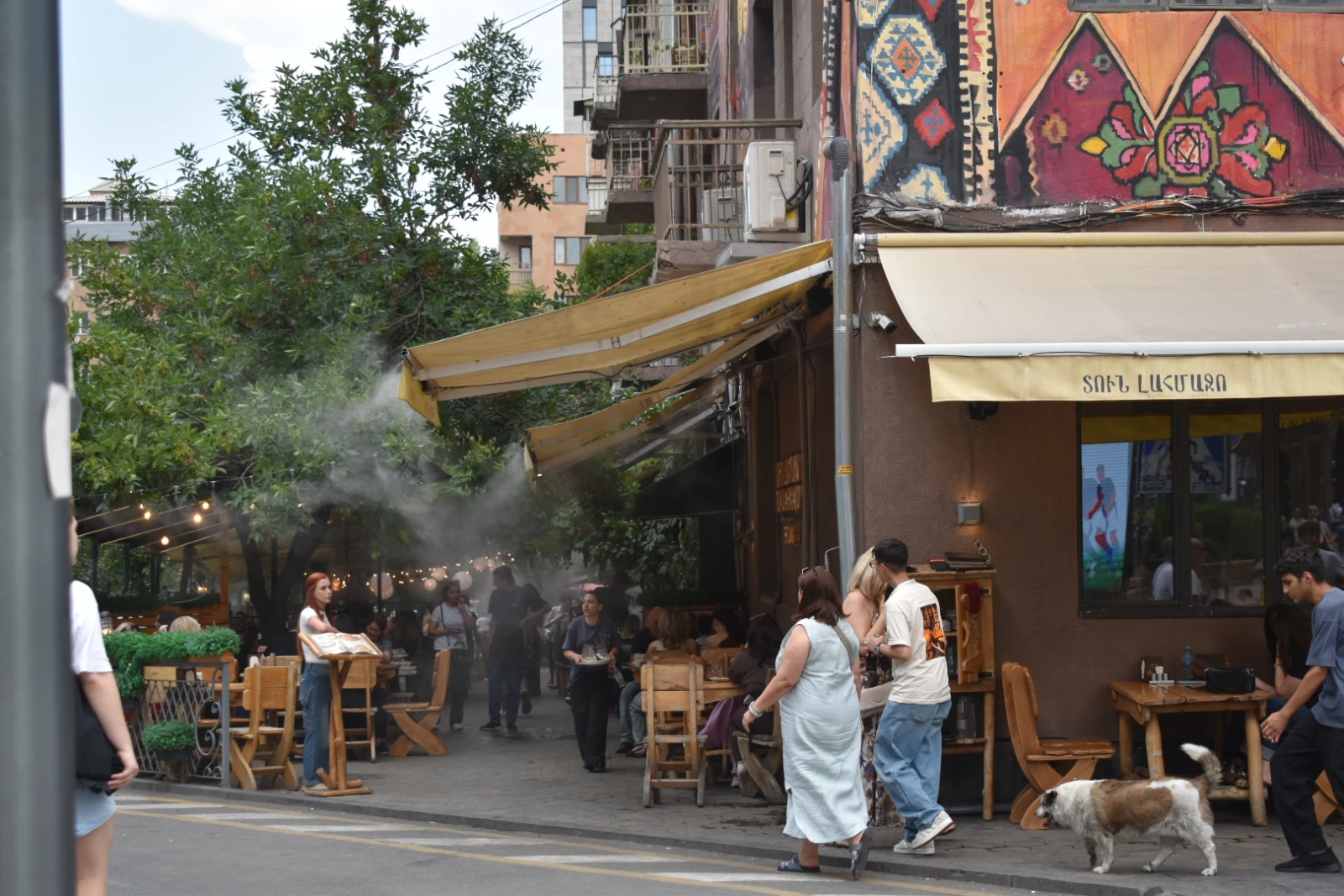
“This building was the last piece of the puzzle of this project called Northern Avenue,” he told CivilNet. Janibekyan’s father, along with other residents, pushed back against the expatriation. In 2015, the residents filed a counterclaim against Local Developers, the private company authorized to acquire the property. “We and our neighbors all became a shield,” he says.
The building, while a part of the Northern Avenue project, was allocated for a separate purpose — not entirely disclosed to Janibekyan or his neighbors. “Right now the lawsuits are still underway,” Janibekyan tells CivilNet, “No one knows what will happen.”
“We're still struggling, and we're still fighting 19 years later,” Janibekyan says. The mural on Teryan street is a part of that battle.
Through commissioning Harutyunyan and Aghabalyan to paint the historic building, they hoped to make the building a beloved and indispensable part of the community — resistant to government demolition. “Everyone takes pictures of the building so, hopefully, this will make it a cultural thing and [the government] will change their mind,” he says.
Northern Avenue Today
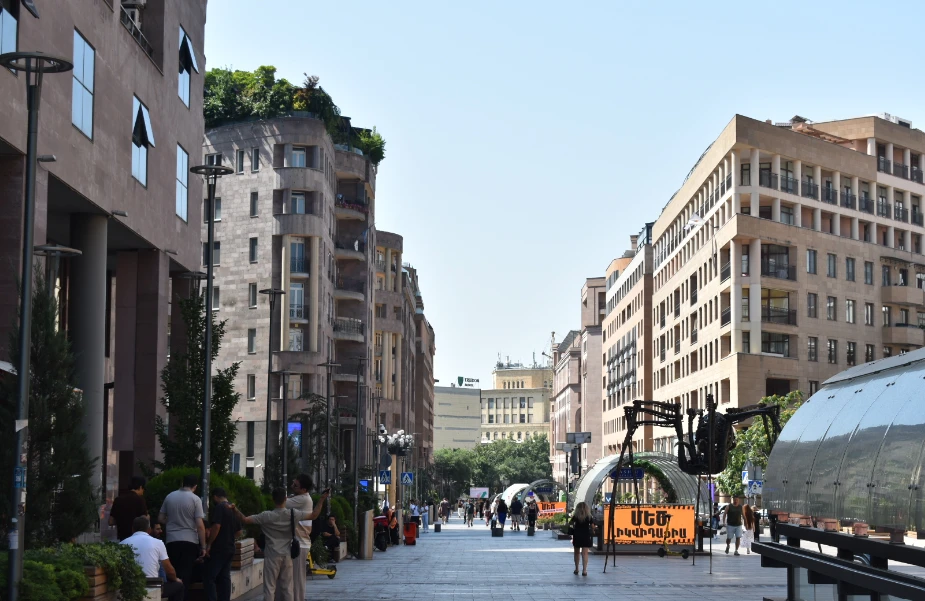
These days, the mural is just one of Northern Avenue’s many attractions. As the street becomes increasingly commercial, it has evolved into a tourist center. “Every year I see more and more tourists, and less locals and Armenians going through Northern Avenue,” Janibekyan tells CivilNet.
“We imagined that this avenue would become the most popular and most active part of the city, and it turned out just like that," Sargysan says.

 Stories