By Mohamad Rimawi
In a Yerevan cafe last year, an Armenian scholar of Hebrew and Jewish studies found herself sitting across from Israel’s then-ambassador to her country, Joel Lion. She had spent over a decade of her career earning this kind of meeting: she learned Hebrew when no one else in her graduate school cohort in Armenia would, then founded the first-of-its-kind Center for Hebrew Language and Jewish Culture at Yerevan State University with Israeli government backing.
The meeting was over in 15 minutes.
“He opened this list in front of me and colleagues that were visiting Armenia from the UK. And he said, ‘Listen, Israel did this, this, this, this for Armenia. What did Armenia do for us?’” she recalled. “I was really shocked because I thought, first of all, as an ambassador that’s very unprofessional and rude,” she continued. “Also, what do you mean Israel did this and that? You didn’t do the most important thing, which is recognizing the other nation’s genocide.”
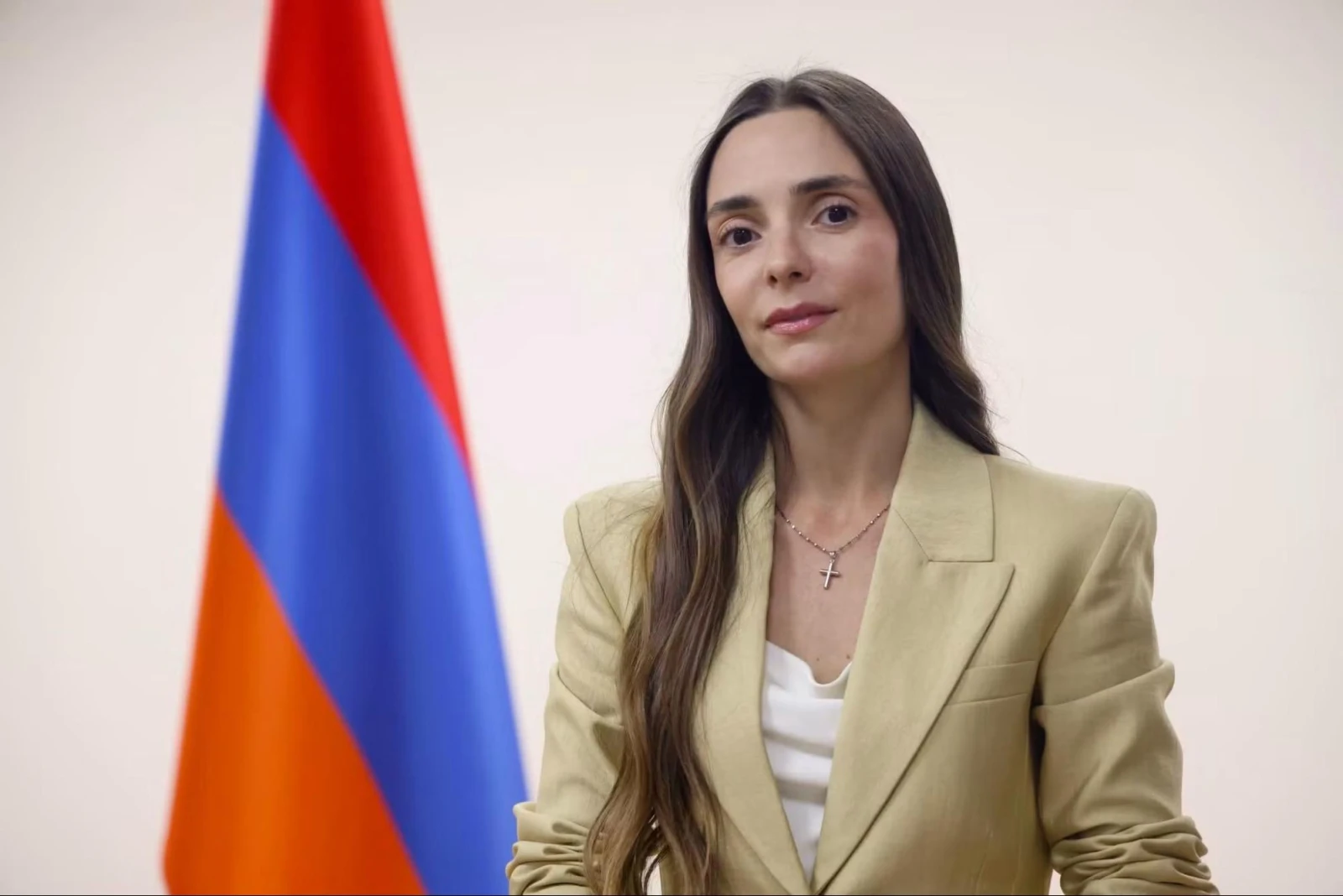
This account from Ani Avetisyan, who was appointed deputy foreign minister by Prime Minister Nikol Pashinyan in August, showcases Israel’s longtime intransigence toward engagement with Armenia. The Hebrew scholar’s appointment to the high-ranking diplomatic post, at the same time, signals an Armenian interest in closer cooperation with the Jewish state.
This interview was conducted a month before Avetisyan’s appointment was announced, and she did not respond to a request for comment afterward. The office of Israel’s honorary consul in Armenia said Lion, who was appointed chargé d'affaires of the Israeli embassy in Turkey last month, declined an interview request.
Avetisyan is part of a loose coalition of Armenians and Israelis who have for years pushed for their countries to mend their strained societal relationship. Many of them view the two countries, which both have large and influential diasporas, as bound by shared histories: victims of historical genocides that are now surrounded by perceived common enemies in the region. Through different organizations, initiatives and collaborations between Armenian-American and Jewish-American lobby groups, these advocates have tried again and again to achieve this goal, but each time ended up nowhere.
It turns out that few people in either country share their enthusiasm. Even the Hebrew and Jewish studies center that Avetisyan founded lasted only a year because there was little appetite for it amongst Armenian students. “We had to do a lot of work to convince them to choose Hebrew,” she said. The first year she said just five or six students signed up, and then the numbers dropped. “So not much interest,” Avetisyan lamented.
A bridge-building council that never got past Zoom
A recent attempt to narrow the gap between these two countries was made in 2023 by Save Armenia, a Washington-based nonprofit founded by James Tufenkian, an Armenian-American businessman whose name appears on luxury hotels and fancy restaurants throughout the small country. According to the group’s mission statement on its website, Save Armenia “mobilizes and unites American Christians to defend and support Armenia, the first Christian nation, amid ongoing existential threats.”
One of its flagship initiatives was the Armenian Jewish Friendship Council, which sought to serve as a “bridge” between Armenian and Jewish leaders – that is, Armenians in Armenia, Jews in Israel, Armenian-Americans and Jewish-Americans. The council itself was made up of around 30 people hoping to build people-to-people relations through cultural and academic exchanges, business opportunities, and security cooperation.
Political grievances, deemed too fraught to tackle right away, were to be set aside. Israel’s deep ties with Azerbaijan are a major sore spot for Armenia, and Israeli military support for Azerbaijan’s offensives in Nagorno-Karabakh in 2020 and 2023 only deepened the resentment. Another point of friction is the Israeli government’s failure to rein in Jewish extremists who regularly harass and intimidate Jerusalem’s historic Armenian community. Israel, for its part, has long been wary of Armenia’s friendly relations with Iran.
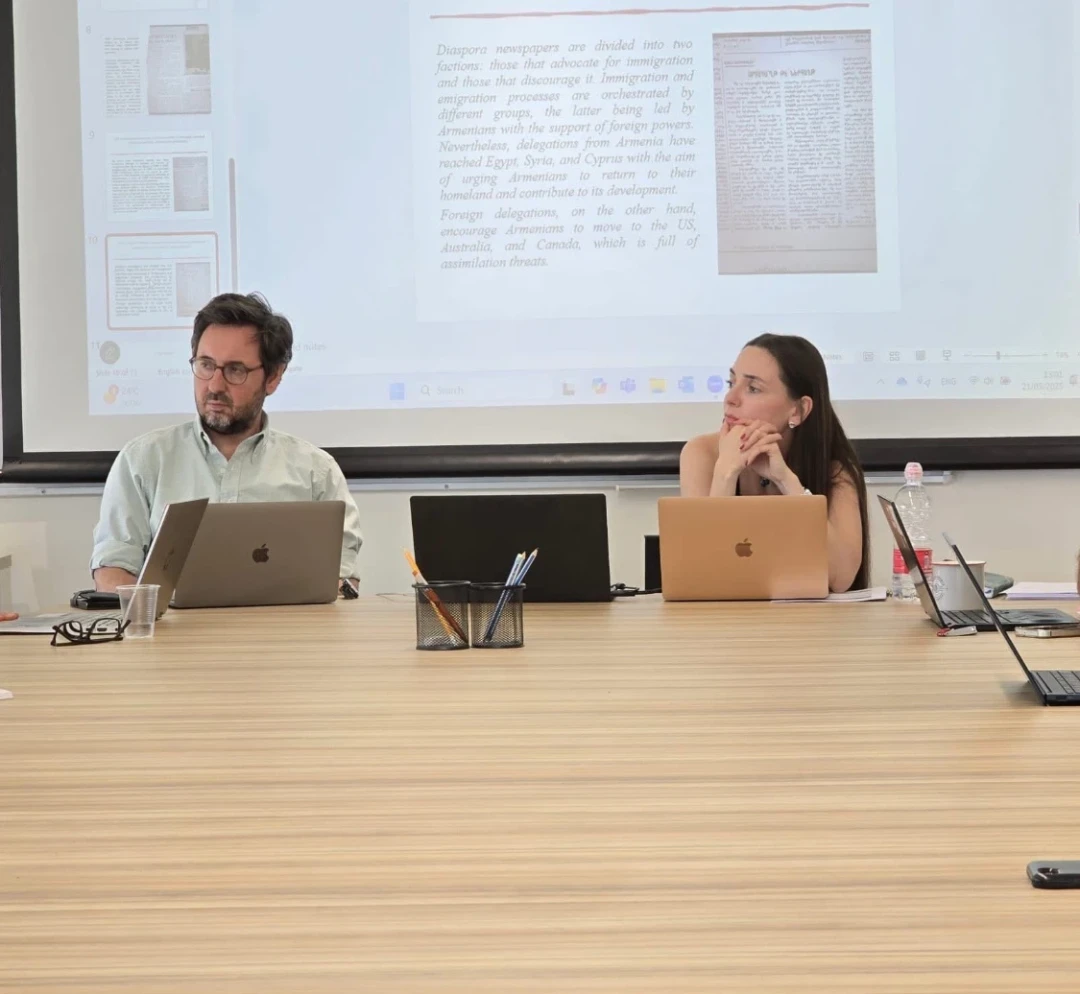
But the council never made it beyond tentative plans. Avetisyan, who led the group’s cultural and educational initiatives, had ambitious goals to create an Armenian-Jewish online museum, arrange for academics from Armenia and Israel to visit each other, and host joint conferences. Ultimately, though, she said they had two or three online meetings over the course of a year, and then “it went silent.”
Members of the council, whose pictures are still up on Save Armenia’s website, told CivilNet that their initiative failed due to a lack of funding and committed leadership. One member, who asked not to be named in order to speak candidly, said that Tufenkian, the council’s leader, had pledged funding support for projects that never materialized. "That is essentially where the initiative died,” the member said. “There was simply no money behind it.”
David Akopyan, a former UN official who also served on the council, described the need for a more focused approach. "When you have 25 people on a Zoom meeting, very few know each other, and you don't have a clear driving force behind it, it's very hard to reach any conclusions or next steps," he said. "I think there was a lack of leadership, someone to take the lead and make decisions on what is next." He has recently started his own initiative with Nathaniel Trubkin, a fellow council member and the Israeli founder of the Yerevan Jewish Home civil society group, focused on journalist exchange programs between Armenia and Israel. Akopyan believes that they have a better shot at success with fewer cooks in the kitchen.
Tufenkian, for his part, said the council “hit a brick wall” last year trying to make inroads with Israel. His contacts in the Israeli security establishment, he recalled, had “no interest whatsoever” in engaging with Armenia. “So we decided to let it cool for a while," Tufenkian said.
The Israelis, he said, grew concerned that such a rapprochement would anger Azerbaijan, a close ally of Israel and Armenia’s longtime adversary. Mired in wars with its neighbors since October 2023, Israel can hardly afford to jeopardize its military and intelligence bases in Azerbaijan.
But now, Tufenkian sees “some indication” that serious talks could restart, given the rapidly evolving geopolitical situation in the region. For Israelis concerned that improved relations with Yerevan would come at too heavy a cost to relations with Baku, Tufenkian is looking to pitch ideas on how Armenia and Israel can be more useful to each other.
“Turkey and Israel are increasingly in confrontation with each other in the region and both looking around for potential allies in their defensive structures,” he said. “So certainly with regard to Israel, that makes Armenia, with its border on the eastern part of Turkey, interesting in at least one way.”
The idea of offering Armenia’s territory to Israel for use as a forward base against Turkey is at odds with the current Armenian government’s strategy. Prime Minister Pashinyan has centered his political agenda around improving relations with Ankara and therefore has little appetite for greater military cooperation with Tel Aviv, according to Sergei Melkonian from the Applied Policy Research Institute of Armenia, a Yerevan-based think tank. “In terms of security, I don’t see a real overlap of interests between Armenia and Israel,” he said. “The current government’s key goal is to open borders with Turkey and normalize diplomatic ties.”
The view from Israel
Some Israelis, though, do perceive their country as strategically converging with Armenia. Gilead Sher, who served as former Israeli Prime Minister Ehud Barak’s chief of staff, supports fostering greater ties with Armenia now that his country is more free from the pressure imposed by its once close relationship with Turkey. "With the deterioration in the relationship between Israel and Turkey, Turkey is no longer a political or economic asset for Israel,” Sher said.
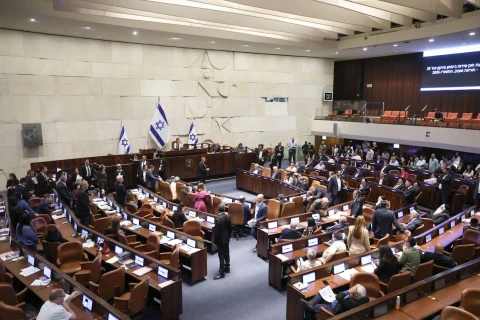
Mossi Raz, a former Knesset member, took over as chair of the Israeli parliament's Armenia friendship association in 2021. "I had never chaired a friendship association before and I wasn't even a member of any of them,” he said. “But I chose that one because I wanted to put pressure on the government to recognize the Armenian genocide."
Raz quickly became disappointed when few of his Knesset colleagues joined. Politicians have little incentive to take strong positions one way or the other in Armenia, he said, given the general indifference of the Israeli public toward the country. “Nobody would vote for you because you are for or against Armenia,” Raz said. Since Raz left parliament, it is unclear what the status of the friendship association is or if anyone has ever succeeded him as its chair.
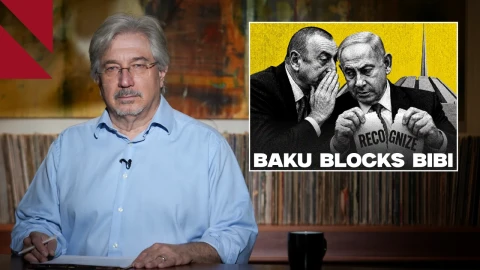
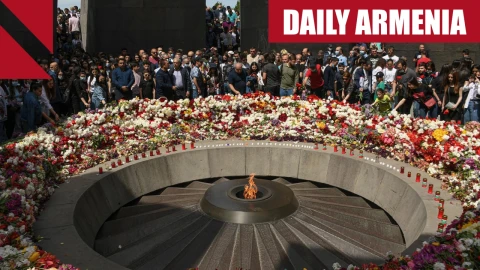
Israel came close to officially recognizing the Armenian genocide this summer, but abandoned the plan after pressure from Azerbaijan, according to Haaretz. That move, though, was widely seen as a way to anger Turkey, rather than an overture to Yerevan. "I am very skeptical of the motives behind a potential recognition," Avetisyan said. "If it only happens to serve a temporary political need, then I don't know what the long-term value is." Many Armenians, she added, feel cynical about the idea of Israeli acknowledgement “while they are being accused of committing their own genocide in Gaza.”
Grigor Hovhannissian, a former Armenian deputy foreign minister and ambassador to the United States, played a key role in opening Armenia's embassy in Israel in 2020. (Israel still does not have a resident ambassador in Yerevan.) He said that Armenia has a strategic interest in having good relations with a powerful regional country like Israel. "We're part of the greater Middle East, and those distances are very small," Hovhannissian said.
He noted that Israel’s increasing international isolation gives Armenia an opening. "A realistic approach would be to avoid overloading this relationship with expectations of a strategic alliance,” Hovhannissian said. “Both countries could pursue a step-by-step agenda built around economic cooperation, innovation partnership, academic exchanges, tourism, and political dialogue."
At least one Israeli group is starting to pursue something like that step-by-step agenda. The Israeli House, a state-linked organization that, according to its website, “enables optimal and effective hasbara” in 30 countries, is planning to open a Yerevan branch later this year. Hasbara refers to influence campaigns aimed at portraying the Jewish state and its actions in a positive light.
The Israeli House’s founder, Itsik Moshe, told CivilNet that he is focused on student exchanges, business forums, cultural collaborations and “encouraging parliaments to adopt resolutions against antisemitism.” He said that his work is “a complementary component of official diplomatic activity” and not a “replacement” for it. “From our perspective, public diplomacy activities in Armenia can bring the two countries closer together, not only at the governmental level but, first and foremost, at the level of people,” he said.
A new channel opens in Washington
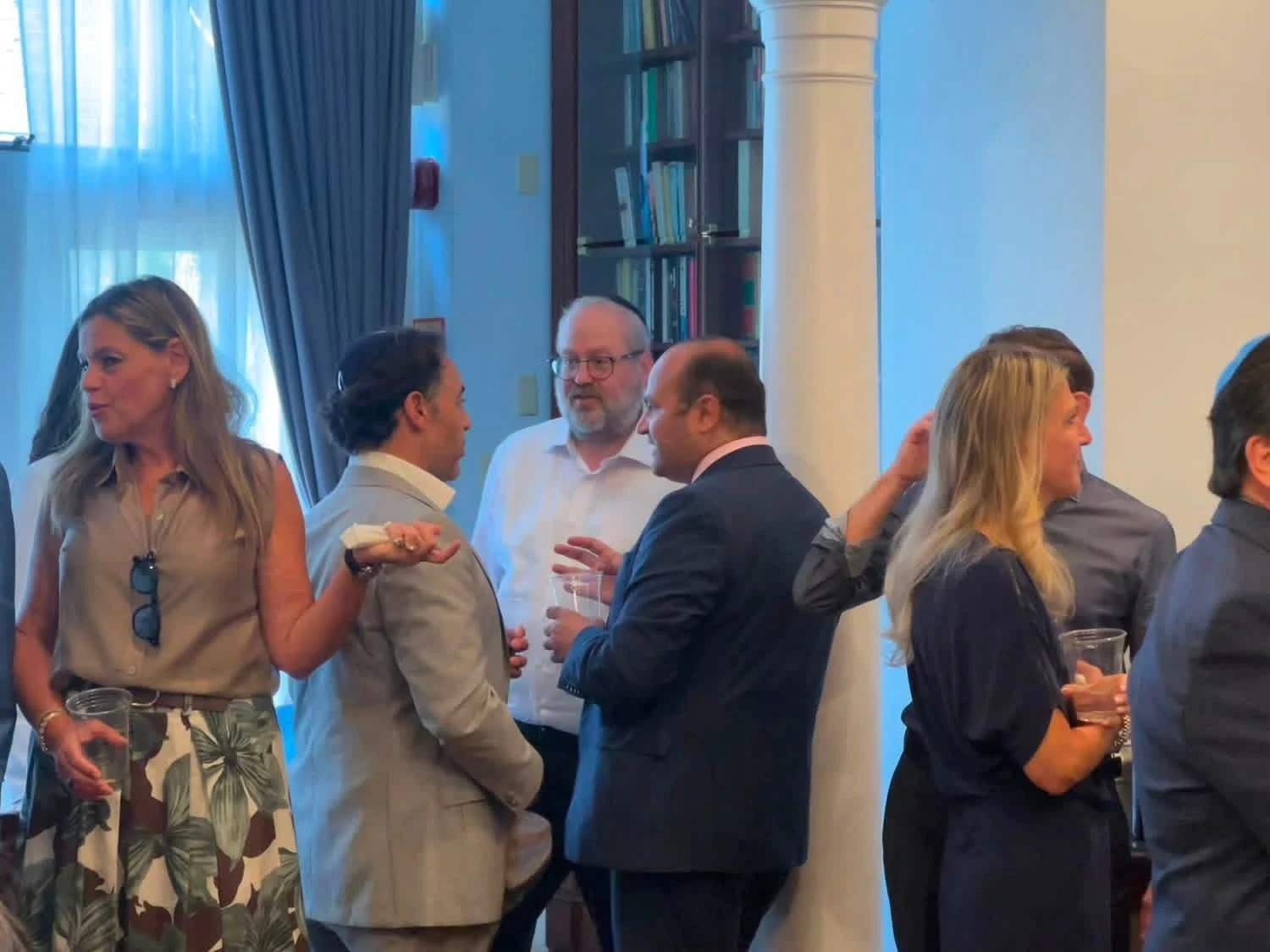
Robert Garson, a personal lawyer for US President Donald Trump, has taken an interest in Armenia in recent months. He visited the country in May and mingled with Armenian diplomats at their embassy in Washington at a July 4 Shabbat lunch celebrating the 250th anniversary of the US Declaration of Independence. Garson, whom Trump appointed to the US Holocaust Memorial Council after purging board members named under President Joe Biden’s administration, describes the Armenian-Israeli relationship as "at a nascent stage" but sees strong potential for growth.
Garson said that Armenia’s ambassador to the US, Narek Mkrtchyan, told him that Armenia intends to adopt the International Holocaust Remembrance Alliance (IHRA) working definition of antisemitism, which regards serious criticism of Israel as antisemitic. "I just think he was looking to signal there’s commonality in approach," Garson said. This exchange between Garson and Mkrtchyan has not been previously reported.
In response to a request for comment, Mkrtchyan directed CivilNet to an X post from the US State Department’s antisemitism envoy Yehuda Kaploun in January, which welcomed Armenia’s “willingness” to join the IHRA. Kaploun and Mkrtchyan were both present at Armenia’s US embassy Shabbat lunch in July. On the same day as that event, Mkrtchyan posted on social media a picture of himself with Miriam Adelson, the Israeli-American billionaire best known for using her fortune to advance Israeli interests and support Trump. She and her late husband Sheldon helped connect Trump with Kaploun, who has a longstanding relationship with the influential Adelson family.
Mkrtchyan’s overtures have pleased some Israeli onlookers. “He’s the best diplomat in the Armenian foreign ministry today,” said Trubkin, the Yerevan-based Israeli citizen. “As far as I can see, he has many contacts with the Jewish community in the US. I always follow his page, and I feel he’s the one person who is truly capable of uniting the Armenian and Jewish diaspora in the U.S.”
Uniting these two diasporas is more difficult than it may seem. Previous joint Armenian-Jewish initiatives by the Armenian and pro-Israel lobbies in the US, such as the Armenian Jewish Advisory Council, have met similarly short-lived fates to the Armenian Jewish Friendship Council. But even if such cultural ties were achieved, that would not automatically advance political rapprochement. The analyst Melkonian said that the dynamics between Armenia and its diaspora on one side, and Israel and the Jewish diaspora on the other, are completely different.
“Israel is more active using its diaspora as leverage to achieve its own goals,” he said. “When it comes to the decision-making process, they take into account the concerns regarding their diaspora. We don’t have such a political culture now in Armenia, because for decades the diaspora for Armenia was like an ATM and that’s it.”
Avetisyan, all things considered, showed no signs of giving up on the Armenian-Israeli relationship. “We need enough people to get things started and moving,” she said. “Professionally that is my responsibility, and personally that’s my curiosity and interest.”

 Stories