By Michael Stelzl
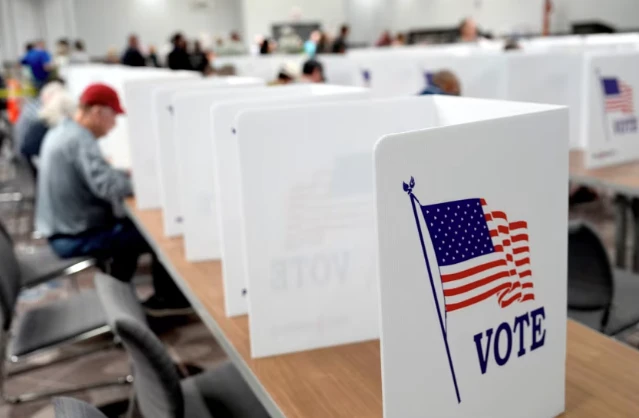
On Tuesday, November 3, American voters will choose new members of Congress. All 435 seats in the House are up for reelection as well as 35 of the 100 seats in the Senate. The election cycle will likely become the most expensive one in history, reaching more than 11.6 billion U.S. dollars in campaign spending.
Donald Trump’s Republican Party currently has a majority in both the House and the Senate. Whether the Democrats will gain control of one or both chambers remains to be seen. “Democratic victories in both the House and Senate are likely to produce more officials in important committee positions that tend to be more favorable to Armenia than to the regime in Baku,” Eric Hacopian, political analyst and host of CivilNet’s Insights, explains.
Though international politics is mostly driven by the president and his cabinet, certain Representatives and Senators have shaped US-Armenian relations in the past.
In Michigan, a state with a substantial Armenian diaspora, the incumbent Senator Gary Peters is not running for reelection. He has been a prominent supporter of Section 907 of the United States Freedom Support Act, which restricted U.S. assistance to Azerbaijan’s government. Later legislation exempted humanitarian aid and gave the president authority to waive the restriction annually under specified conditions, which every president has done for the past 25 years.
Abdul El-Sayed, the Democratic candidate appears to be following in Peters’ footsteps. “Armenian Michiganders are a treasured part of our great state, and they understand better than anyone what’s at risk in this election”, he said during his campaign. “The Trump administration’s blank check for military aid to Azerbaijan in the face of ongoing atrocities is a blatant violation of international law.” His Republican opponent Mike Rogers has not stood out as a strong supporter of pro-Armenian legislation during his 14-year tenure in the House of Representatives. Recent polls show a narrow lead for El-Sayed.
The second Senate race which could influence American politics in the Caucasus is taking place in New Hampshire. The Republican candidate John E. Sununu is the son of former New Hampshire Governor John H. Sununu, who sits on the board of Anglo Asia Mining. The company operates gold, copper and silver mines in Azerbaijan. After Azerbaijani troops took control of Nagorno-Karabakh, where Anglo Asia Mining has held mining rights since 1997, the company announced: “Once secure, the company plans to immediately start work.” Sununu Holdings LLC, the family’s investment holding company, holds about eight percent of the shares of Anglo Asia Mining.
His Democratic opponent Chris Pappas has been a strong supporter of Section 907 of the United States Freedom Support Act. He also has a long-standing record of opposing U.S. arms deals with Turkey. “Without any meaningful change on Turkey's part I will continue working to prevent F-16s or any other American-made weapons from falling into Erdogan's hands,” he said. Recent polls show Pappas leading by five to seven percentage points.
Even though he is not on the ballot, the midterm elections will greatly influence Donald Trump’s last two years as president of the United States. “A defeated President Trump will become a diminished political figure domestically, which could either weaken him internationally or have him focus exclusively on international politics since it is the place where he will have political sway,” political analyst Eric Hacopian explains.
The U.S.-brokered peace declaration during the Washington summit in August 2025 is widely seen as a great achievement of President Trump in international politics. If his domestic room for manoeuvre becomes restricted, there could be a possibility to put even more emphasis on his projects in international politics.
“The Trump Route for International Peace and Prosperity is the centerpiece of the U.S.-brokered Peace Declaration between Armenia and Azerbaijan,” says Timothy Jemal, president of the non-profit organization Global ARM.
He remains optimistic that Congress will exert more pressure on Azerbaijan to end its occupation of Armenian territory and release all political prisoners, no matter the outcome of the midterm elections. “There is widespread support throughout the Democratic Party for strong US-Armenia ties in both the House of Representatives as well as the Senate”, he says. “The ties between the United States and Armenia will remain strong.”




 Stories