By Siranush Adamyan
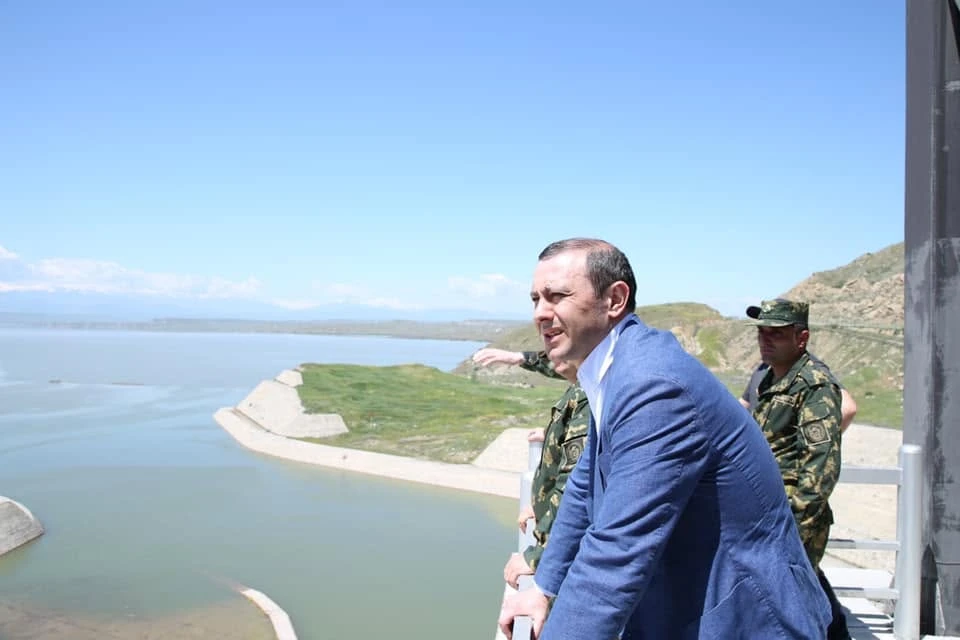
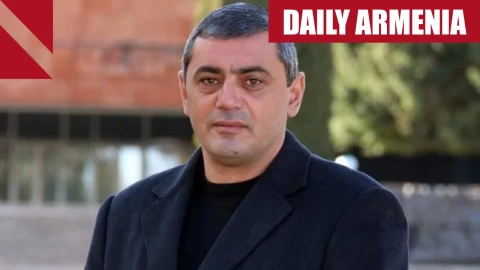
Former Armenian Security Council Secretary Armen Grigoryan has sharply criticized the country's pursuit of European Union membership, describing the prospect as unrealistic and warning that the policy could deepen Armenia's dependence on Russia rather than reduce it.
In an opinion article published by MediaLab on Wednesday, Grigoryan, who served as secretary of the Security Council from 2018 to 2026, questioned the political, economic and geographical feasibility of EU membership. He also warned that pursuing the goal could damage relations with neighboring countries and undermine Armenia's democracy.
"The idea of joining the European Union appears attractive at first glance," Grigoryan wrote. "But I believe that on this issue, we often confuse what we desire with what is possible." Grigoryan said Armenia lacked a realistic prospect of joining the EU and risked making itself more vulnerable to Russian pressure by pursuing an unattainable objective.
"In my view, every new step taken along this path does not reduce Armenia's dependence on Russia but deepens it further," he wrote.
His article follows a proposal by the pro-European Republic party, led by Aram Sargsyan, to include a provision on EU membership in Armenia's proposed new constitution. Grigoryan also responded to criticism from Sargsyan over his earlier remarks comparing dependence on the EU with dependence on Russia.
Armenia's parliament adopted a law declaring the launch of an EU accession process on March 26, 2025. President Vahagn Khachaturyan signed the legislation on April 4. The law expressed Armenia's aspiration to join the bloc but did not constitute a formal membership application. Armenia has not been granted EU candidate status.
Speaking at a Euronews EU enlargement summit in Brussels on November 3, Prime Minister Nikol Pashinyan said Armenia could realistically submit a formal membership application in 2027 or 2028. He described EU membership as a strategic choice aimed at protecting Armenia's democracy and strengthening its independence. Pashinyan acknowledged that membership in the EU and the Russia-led Eurasian Economic Union was incompatible, but said Armenians should have the opportunity to choose their country's future direction.
Russian pressure and the risk of greater dependence
Grigoryan argued that Armenia's recent history demonstrated the risks of attempting to move closer to the West without sufficient resources to withstand Russian pressure.
He cited two precedents: Armenia's growing military dependence on Russia during the 1990s and former President Serzh Sargsyan's decision in September 2013 to abandon a planned association agreement with the EU and join the Russia-led Customs Union.
In both cases, Grigoryan argued, Armenia's attempts to develop closer ties with Western institutions ultimately strengthened Moscow's influence over Yerevan.
He warned that the current European integration agenda could follow a similar pattern, potentially increasing the risk of Armenia being drawn into the Union State of Russia and Belarus.
Grigoryan said Armenia had made substantial progress in diversifying its foreign and security relations before adopting the EU accession law.
He cited the withdrawal of Russian border guards from several positions, the deployment of EU monitors along the Armenian-Azerbaijani border, growing military cooperation with European countries and the United States, and the launch of an EU visa liberalization dialogue.
"The absence of that law did not prevent Armenia from taking real steps to reduce its dependence on Russia and deepen cooperation with other partners," he wrote.
Grigoryan argued that Russia's political, cultural and economic presence had become more visible since the legislation was adopted.
Among the developments he cited were initiatives to establish additional Russian cultural centers in Armenia, discussions about Russian participation in the construction of Yerevan's Ajapnyak metro station and continued consideration of Russian technology for Armenia's planned new nuclear power plant.
He said Armenia lacked the economic and political resilience needed to withstand sustained Russian pressure without credible Western security guarantees.
Energy dependence and regional relations
Grigoryan questioned whether Armenia could afford the economic consequences of pursuing EU membership while remaining heavily dependent on Russian energy supplies and markets.
He compared Armenia's position to a rocket attempting to escape Earth's gravitational pull without reaching the necessary velocity. In his analogy, Armenia lacked the economic momentum required to escape the gravitational pull of Russia and the Eurasian Economic Union.
A prolonged EU accession process, he argued, could leave Armenia in an unstable position, depriving it of inexpensive energy and access to the Russian market without providing viable alternatives.
Grigoryan also warned that closer alignment with EU foreign policy, including sanctions against Russia and Iran, could undermine Armenia's economic and security interests.
He highlighted the potential implications for natural gas imports from Iran, which Armenia has considered expanding as an alternative to Russian supplies.
According to Grigoryan, adopting EU restrictions on Iranian gas could eventually force Armenia to halt imports from Iran and jeopardize the existing gas-for-electricity exchange arrangement between the two countries. This, he argued, would create a contradiction: while attempting to reduce dependence on Russian gas, Armenia could also restrict access to an alternative supplier.
Grigoryan raised similar concerns about the broader regional implications of EU accession. He argued that Iran could perceive Armenia's European integration efforts as part of an expansion of Western influence in the South Caucasus, potentially damaging relations with Tehran.
He also suggested that efforts to expand Western involvement in the region could create additional tensions with Turkey and Azerbaijan, which favor regional mechanisms for addressing security and political disputes.
In Grigoryan's view, Armenia should give greater priority to regional cooperation and maintaining a balance in its relations with Russia, Iran and Turkey.
Democracy could become another casualty
Grigoryan also challenged the argument that pursuing EU membership would necessarily strengthen Armenia's democratic institutions.
Drawing on his experience coordinating an interagency commission that monitored democratic development, he said Armenia's democratic progress had slowed after the 2018 Velvet Revolution, with some areas experiencing regression.
He argued that presenting EU membership as an overriding political objective could make civil society more tolerant of undemocratic behavior by political forces supporting European integration.
According to Grigoryan, violations that might otherwise provoke strong criticism could be overlooked or even justified in the name of a broader geopolitical objective.
He cited an incident involving a district official affiliated with the pro-Western Republic party who, according to his account, assaulted a civic activist. Grigoryan criticized what he described as a disproportionately mild public response and attempts to place the incident in a geopolitical context rather than focus on democratic accountability.
"We risk sacrificing the real democracy achieved through Armenia's 2018 revolution for a mythical democracy associated with EU membership," he wrote.
Grigoryan said the pursuit of an uncertain European future should not come at the expense of democratic standards already achieved in Armenia.
Cooperation with Europe without pursuing membership
Despite his criticism of EU accession, Grigoryan did not advocate distancing Armenia from Europe. Instead, he called for deepening political, economic and security cooperation with European countries without making EU membership a central foreign policy objective.
He argued that Armenia's security and political crises had been partly caused by excessive dependence on a single external power, a model that had already demonstrated its weaknesses during the country's alliance with Russia.
Grigoryan warned against repeating that mistake by replacing dependence on Moscow with reliance on Brussels. "Our goal was not to move away from one external center and rely on another, but to develop relations with as many partners as possible," he wrote.
He called for expanding cooperation not only with the EU and the United States but also with India, China, Central Asian countries, Gulf states, Japan and South Korea.
Grigoryan said Armenia should distinguish between the political objective of EU membership and the practical opportunities offered by cooperation with the bloc.
"The first is a political objective whose realization does not depend solely on us; the second is a practical opportunity that Armenia can take advantage of today," he wrote.
He concluded that the success of Armenian foreign policy should be measured not by progress toward EU membership but by the extent to which the country reduces its external dependencies and strengthens its ability to make independent decisions.

 Stories