By Gevorg Tosunyan
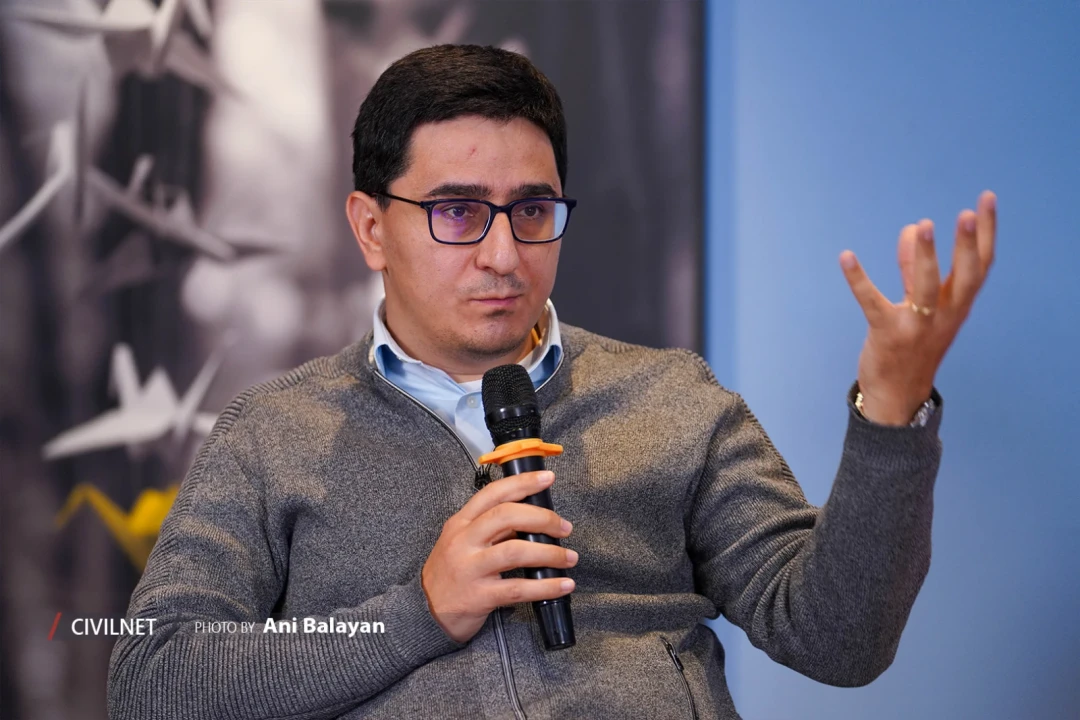
Discussions about withdrawing Armenia’s international lawsuits against Azerbaijan as part of a peace agreement are already having a negative impact on the legal proceedings and raising concerns among victims of the conflict, according to Yeghishe Kirakosyan, Armenia’s former Representative for International Legal Affairs.
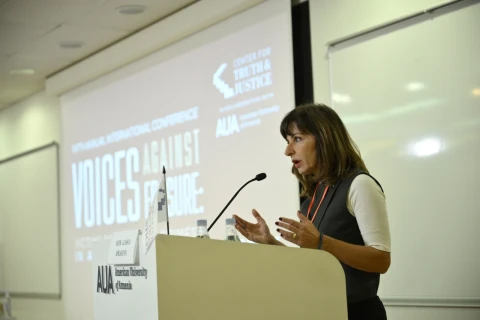
Speaking at the Voices Against Erasure: Victims of Atrocity Crimes in an Age of Impunity international conference at the American University of Armenia in Yerevan on November 13, Kirakosyan said the prospect of withdrawing the cases was making it more difficult to present Armenia’s legal arguments before international courts.
"My impression is that this is already having a negative impact on the cases," he said. "The rhetoric used to present the cases, the legal arguments and the way they are presented in writing, and especially orally, are becoming more complicated."
The issue has gained urgency since Armenia and Azerbaijan initialed a U.S.-brokered peace agreement in Washington on August 8, 2025.
Under Article 15 of the agreement, both countries would be required to withdraw, dismiss or otherwise settle all interstate legal claims related to disputes predating the agreement's signing within one month of its entry into force. The provision covers proceedings before international courts, including the European Court of Human Rights (ECHR) and the International Court of Justice (ICJ).
The agreement has not yet been formally signed or entered into force.
The lawsuits concern alleged human rights abuses, racial discrimination, the treatment of prisoners and other violations arising from decades of conflict between Armenia and Azerbaijan, including the wars over Nagorno-Karabakh.
In September 2023, Azerbaijan seized full control of Nagorno-Karabakh, an internationally recognized part of Azerbaijan that had been predominantly populated by ethnic Armenians. The military offensive followed a nine-month blockade and triggered the ethnic cleansing of the region, forcing more than 100,000 Armenians to flee to Armenia and leaving Nagorno-Karabakh almost entirely without its Armenian population.
Growing concerns among victims
Kirakosyan said political statements about withdrawing the lawsuits, along with the relevant provision in the peace agreement, were already having a chilling effect on the proceedings.
He explained that pursuing Armenia’s cases requires legal assessments of Azerbaijan’s actions based on specific facts and circumstances of the conflict. Such arguments, he said, do not always align with the political language currently used in the peace process.
The former legal envoy warned that discussions about dropping the cases had also heightened anxiety among victims, particularly families of missing persons and Armenians displaced from Nagorno-Karabakh.
According to Kirakosyan, these groups have become increasingly concerned about their prospects for securing justice and protecting their rights.
Although individuals can pursue complaints before the ECHR, he said such applications cannot fully replace interstate proceedings.
"The impact of interstate cases is very different," he said. "Replacing them with individual applications, in my opinion, cannot fully compensate for the impact of these broader legal proceedings."
Interstate cases allow governments to challenge alleged patterns of human rights violations involving large groups of people, rather than addressing only individual complaints.
Kirakosyan expressed hope that Armenia’s cases would proceed to judgments on their merits, including possible decisions on compensation for victims.
Resignation amid debate over lawsuits
Kirakosyan’s comments come more than a year after his resignation from the position responsible for coordinating Armenia’s international litigation.
He stepped down in March 2025, after Prime Minister Nikol Pashinyan had repeatedly indicated that Armenia was prepared to withdraw its lawsuits against Azerbaijan on a reciprocal basis if doing so helped secure lasting peace.
The government said his departure followed a personal request and an agreement reached several months earlier. Kirakosyan subsequently explained that he wanted to concentrate on academic, scientific and professional activities.
No direct connection between his resignation and the proposed withdrawal of the lawsuits has been established.
Kirakosyan had represented Armenia before the ECHR since November 2018 and headed the Office of the Representative for International Legal Affairs since its establishment in August 2020.
In December 2024, following Pashinyan’s initial statements about potentially abandoning the cases, Kirakosyan told reporters that withdrawing the lawsuits was not on the agenda and that legal proceedings were continuing.
Armenia and Azerbaijan have brought competing claims before the ICJ under the International Convention on the Elimination of All Forms of Racial Discrimination.
Armenia has accused Azerbaijan of discriminatory treatment of ethnic Armenians, including prisoners, and attacks on Armenian cultural heritage. Azerbaijan has filed its own allegations of discrimination and rights violations against Armenia.
The ICJ has issued several provisional measures in the dispute. In November 2023, the court ordered Azerbaijan to ensure that Armenians who had fled Nagorno-Karabakh could return safely.
Kirakosyan noted that the ICJ and the ECHR operate under different legal frameworks and procedures. While ECHR proceedings are largely conducted in writing, the ICJ has already held public hearings on requests for provisional measures in the Armenia-Azerbaijan cases.
At least one of Armenia’s cases before the ECHR, concerning alleged violations during the 2020 war, has been referred to the court’s Grand Chamber.
Beyond the legal procedures, Kirakosyan emphasized that international justice depends heavily on political will and the decisions of individual states.
"Putting the international justice system into action requires considerable work, effort and determination," he said. "Unlike domestic judicial systems, there are additional obstacles. The political will of states, differing approaches and decision-making processes must all be taken into account."
Despite these limitations, Kirakosyan argued that the difficulties of obtaining justice through international institutions should not become a reason to abandon legal efforts.
"They do not mean that we should simply sit back and do nothing," he said. "On the contrary, we must find ways to make the system more effective and functional."

 Stories