By Celeste Noraian
Armenia has no shortage of cultural heritage or creative talent, but turning that potential into a driver for development remains a challenge.
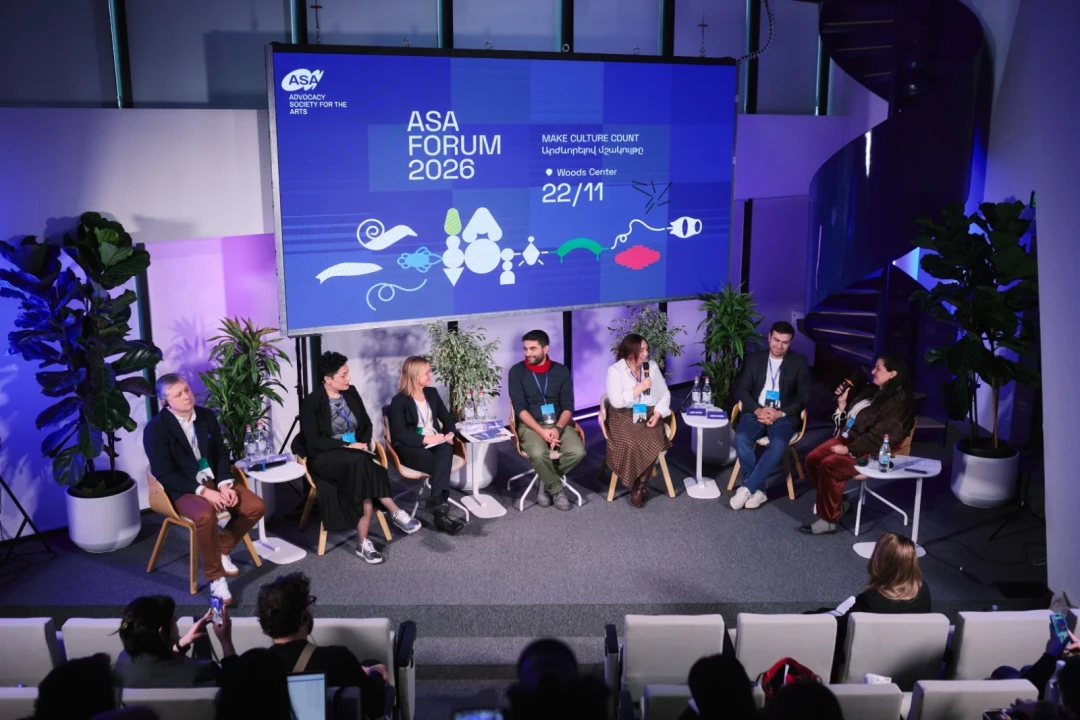
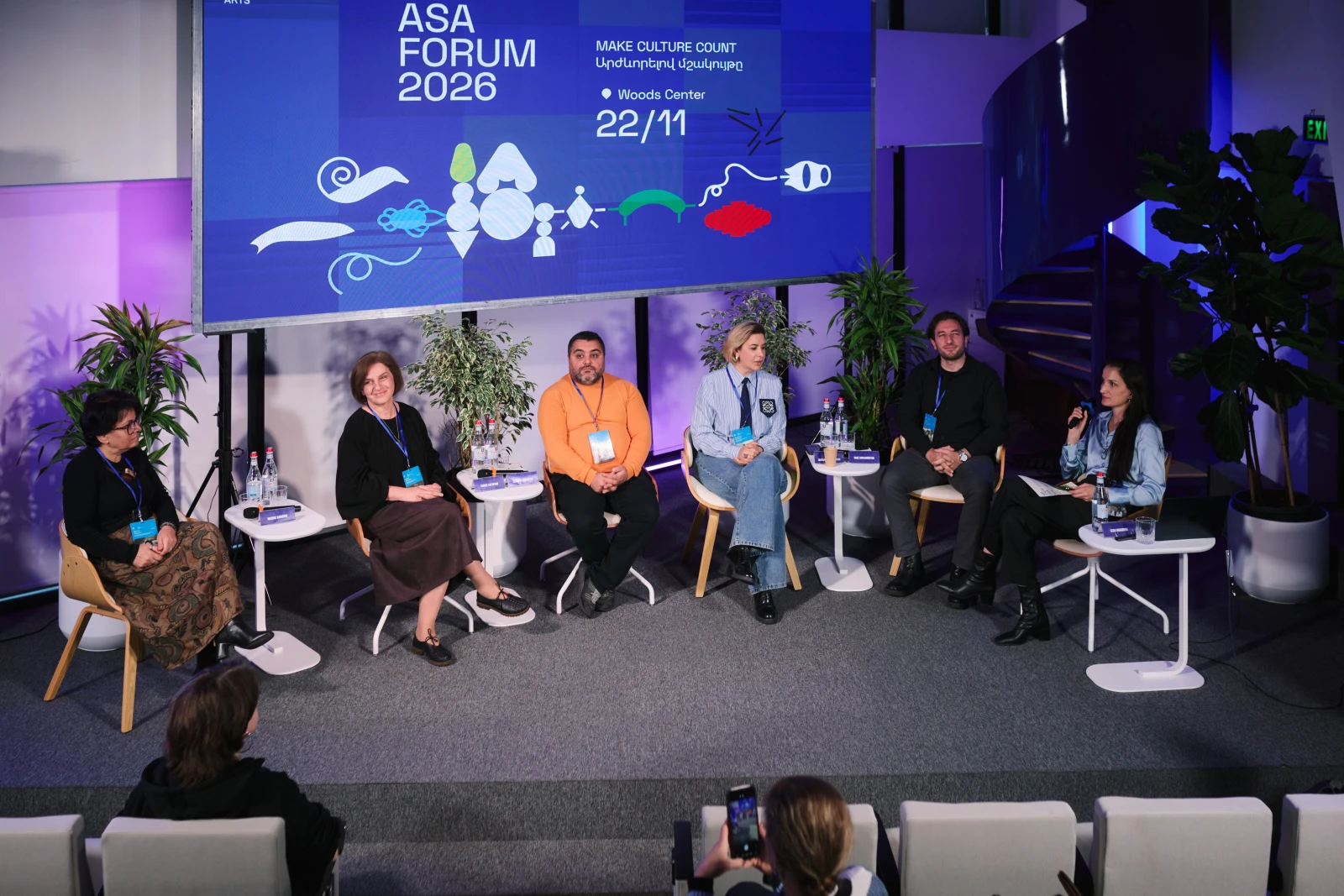
The “Make Culture Count” forum, held on November 22, and organized by the Armenia-based Advocacy Society for the Arts (ASA) in collaboration with the European Cultural and Creative Industries Innovation Policy Platform (ekip), brought together cultural professionals to discuss challenges facing the industry and explore ways to strengthen it.
A study presented at the forum found that the country’s average cultural participation index stands at 25 out of 100, while 44 percent of respondents said they barely participate in cultural activities.
Researchers covered 991 households through 601 face-to-face and 390 telephone surveys. They also conducted nine focus groups in 72 participants in Ijevan, Charentsavan, Yerevan and Goris.
The study, commissioned by Armenia’s Ministry of Education, Science, Culture and Sport in cooperation with The Audience Agency, points to a gap between how much people value culture and their actual participation in cultural activities. Limited access to cultural venues emerged as a significant barrier, while lack of time was also cited, though to a lesser extent. Only 29.7 percent of respondents said they had a local theater, and interest in attending was considerably higher among those who said they would visit if such facilities were available. Just 7.4 percent said they were not interested in cultural activities.
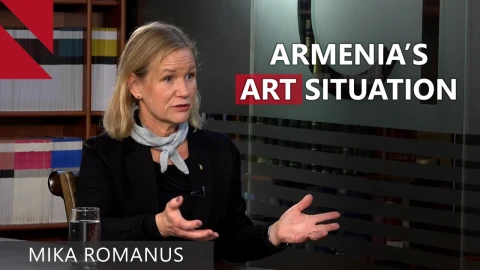
“I think it’s very exciting to see such a broad engagement for the field of culture here in Armenia,” said Mika Romanus, director general of the Swedish Arts Grants Committee. “Armenia has a very strong cultural heritage and there is a lot to build onto.”
Romanus said the combination of Armenia's cultural identity and emerging contemporary art initiatives offers a strong foundation for the sector. She also emphasized the value of bringing cultural professionals together to exchange experiences and consider how other countries have addressed similar challenges.
Forum discussions also explored ways to strengthen the sector. Ideas emerged of improving conditions for artists, building stronger professional networks, and expanding public access.
Building a stronger creative community
One of the central themes of the discussions was the need for artists and cultural professionals to organize and work together.
Romanus said professional associations, trade unions and other organizations play an important role in representing artists' interests and creating opportunities for dialogue with decision-makers.
Artists often work independently or under fragmented conditions, making it difficult to bring their concerns together, she noted. Professional organizations can help identify common challenges and advocate for better working conditions.
She pointed to Sweden's long tradition of cultural organizations, which has helped shape its cultural policies through grassroots initiatives and collaboration.
Romanus also stressed the importance of recognizing artistic work as professional work, with the rights and protections that come with it.
“Artists' rights do not sustain themselves, we sustain them together,” she said.
She also raised concerns about artistic freedom, saying that pressure, censorship and threats against artists can lead to self-censorship and limit cultural expression. The development of artificial intelligence presents another challenge, particularly regarding copyright, consent and compensation when artists' work is used to train AI systems.
She added that Sweden has much to learn from countries such as Armenia, where culture, history and identity carry particular significance in a society shaped by conflict.
Collaboration over competition
Another speaker at the forum, Ragnar Sill, Founder and Managing Partner of Creativity Lab and Director of the Board of the Cultural Policy Designers Network, argued that the cultural sector's strength does not necessarily depend on having larger organizations or bringing everyone under a single structure.
Instead, he emphasized the importance of connecting smaller creative communities and allowing different professional groups to work together.
“It's not about more creativity. There's enough creativity,” Sill said. “We all are amazingly creative communities. It's all about connectivity.”
Drawing on Estonia's experience, he described how professional guilds can provide representation for different groups within the film industry, including directors, screenwriters, producers, animators and sound engineers.
He argued that this approach can give professionals a more direct voice while recognizing the different needs of individual creative fields.
Sill also cautioned against simply adopting cultural policies from other countries without considering local conditions.
“Sweden is an amazing source for experience, particularly individual rights, cultural, artistic rights,” he said, while emphasizing that international examples must be adapted to the realities of each country.
He challenged the idea that small creative industries are at a disadvantage. Referring to the experience of the financial crisis and the COVID-19 pandemic, he argued that smaller organizations can be more flexible and adaptable.
Sill described this approach as a “swarm economy,” in which independent creative groups become stronger through collaboration rather than operating in isolation.
The goal, he said, is not necessarily for everyone to agree on everything, but to work toward a shared direction.
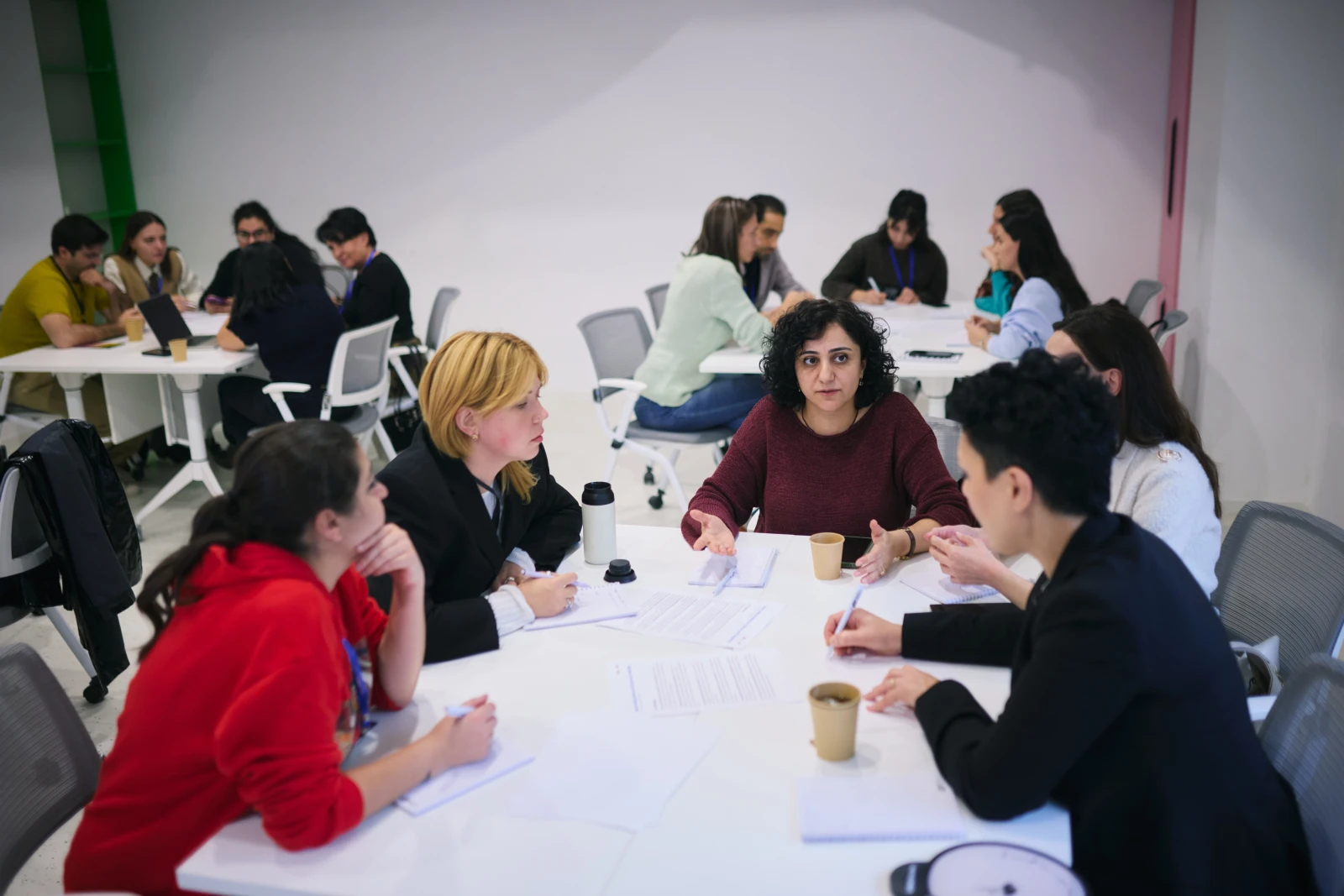
Following Sill’s presentations, participants broke into groups to discuss challenges facing Armenia’s cultural and creative industries and consider possible ways to address them. The discussions focused on three areas: the opportunities and challenges artificial intelligence presents in this space, how new funding models could support collaboration and developments, and how creative spaces could better connect people and resources.
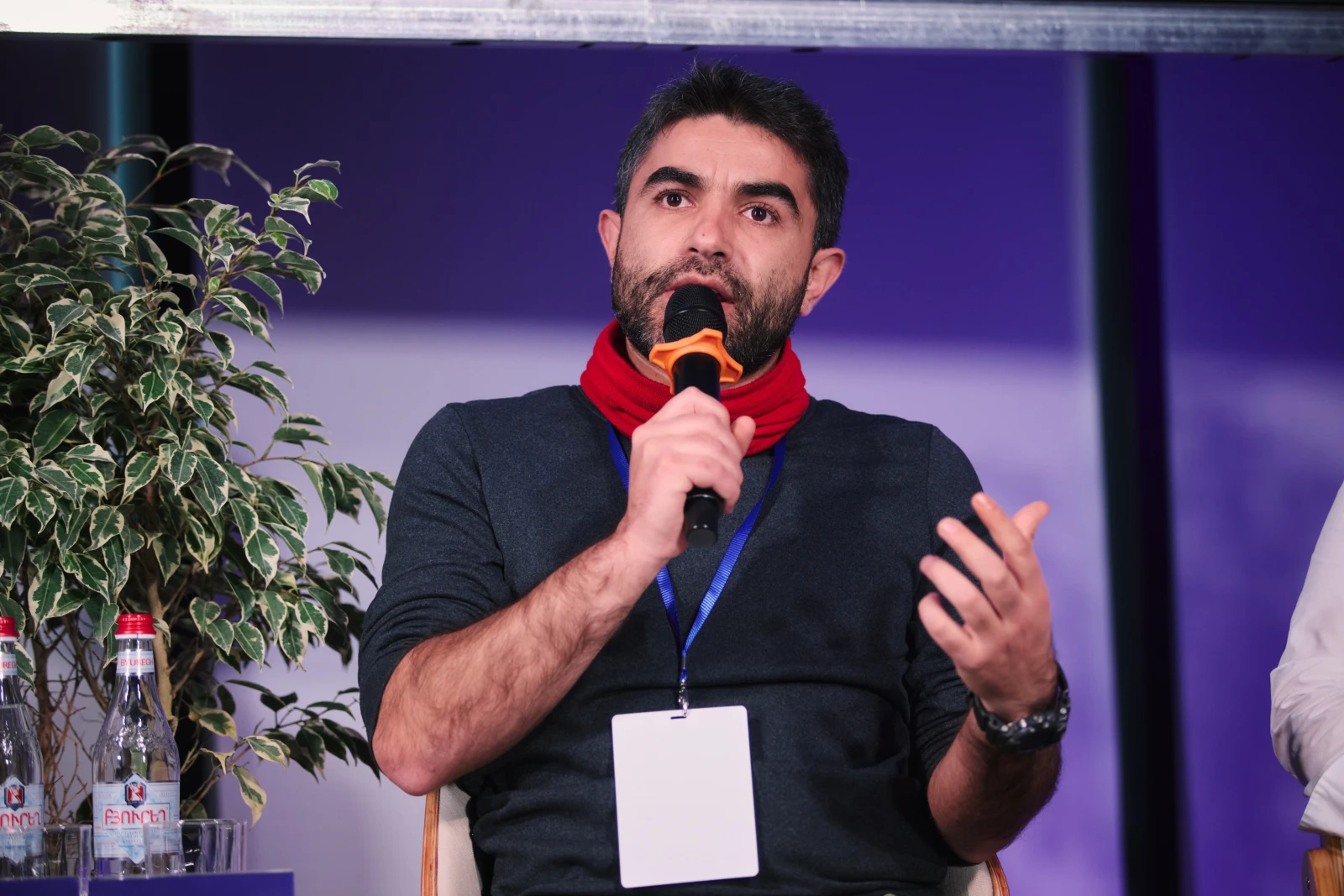
Tigran Arakelyan, director and co-founder of ONoff Studio and president of the Animation Association of Armenia, said the opportunity to meet professionals from different creative fields was valuable in itself.
“We can learn from this kind of conference,” Arakelyan said. “Being unified will allow us to shape our cultural environment.”
Making culture more accessible
Beyond the professional challenges facing the industry, the forum also raised questions about how audiences discover and participate in cultural events.
Sevak Vivek Bhvsar, an English and Communication student at the American University of Armenia, said he appreciated the range of subjects discussed at the conference, particularly the different perspectives on art, artificial intelligence and the future of the creative sector.
He also pointed to a gap between public interest in cultural activities and the availability of information about smaller events.
“I think the problem is not that people are not interested in going there, but that they can't really access that information,” Bhvsar said.
He explained that he enjoys smaller, more personal cultural events rather than only large-scale productions, but finding them can require considerable searching.
He hopes to see more cultural events across Armenia, along with better ways of sharing information about them.
“I'm absolutely sure that people would love to attend this kind of event and, in general, spread it among friends and family,” he said.
For Romanus, bringing people together and creating opportunities to exchange experiences is essential to strengthening the cultural sector. Armenia’s cultural heritage provides a strong foundation, she said, but its future will depend on the people and organizations working to develop it.
For Armenia’s cultural sector, the challenge ahead is to turn existing public interest into greater participation while creating the conditions for artists and creative communities to thrive.

 Stories