 Civilnet
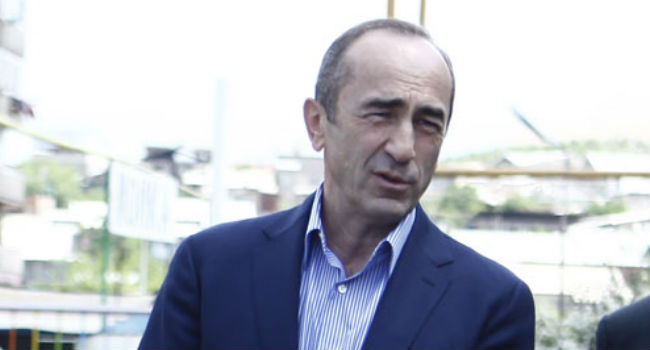
 The Second President of Armenia, Robert Kocharyan, has given an interview to www.2rd.am in which he discusses constitutional reforms, the change of the Prime Minister, and other issues. We present the interview below:
- Mr. President, one of the main political discussions in the last couple of months has been about the constitutional reforms initiated by the President. What is your opinion of the country’s leader’s new initiative and the proposed amendments?
The first question that I have is whether the time is ripe for such reforms or not. Does the current Constitution not allow the authorities to respond adequately to the challenges they’re faced with? I can say with confidence that there is not one critical issue that today’s Constitution cannot solve. There is no foreign pressure based on possible shortcomings of democratic principles in the constitution either. Nor has the public been anticipating any constitutional changes, that is certain. The initiative for constitutional changes belongs solely to the ruling authorities; the explanations for those changes have not been convincing, but have been extremely unclear. This has opened the way for serious doubts on the part of the people concerning the real aim of the proposed reforms.
The situation today is the complete opposite of what the country was facing prior to the 2005 reforms. Back then, the Constitution gave clear dominance of power to the institution of the president at the expense of the Government and National Assembly. Accordingly, the President would ratify all decisions the Government made. Moreover, the Prime Minister would conduct government sessions by order of the President. The President also had the actual power to dissolve the National Assembly. Basically, the separation of power between the ruling branches and the democratic perceptions of a balance of power between them were distorted. At that time, constitutional reforms were a crucial issue on the country’s political agenda and one of the main obligations arising from membership of the Council of Europe.
Hence, by 2005, three main factors were at hand for constitutional change – a shared consciousness of inconsistencies of democratic norms, public expectations for necessary changes, and a commitment to meet the membership standards of the Council of Europe. None of these factors exist today. Nevertheless, during my term at that time the opposition still doubted my intentions. They believed that I wanted to retain power by being reelected for a third term or by becoming Prime Minister. Despite my many statements to the contrary, I was not able to convince my opponents (by the way, I stood up to my word and left my position without gaining any new ones).
Today, they are proposing to radically change the country’s model of state governance. It is necessary to guarantee that these reforms do not aim to serve the ruling elite’s interests and won’t turn into a tool for perpetuating that elite.
Any constitutional change for the sake of the interests of politicians is a sign of a country’s political degradation. The whole meaning of the Constitution and any constitutional right is to limit these types of personal incentives by politicians. Constitutions weren’t established to eternalize the rule of those in power; quite the opposite. Dictatorships don’t need a constitution.
Constant constitutional changes give grounds for doubt. I’m not referring to refining certain articles of the Constitution, which is a natural process of improvement through modification. I’m referring to the issue of constant changes in the field of state governance. These kinds of changes require serious expenditure of organizational resources from those in power. Moreover, the people are always in a state of inertia and get used to such changes over a long period of time. In this case, the ruling institutes also need a long period of time to adapt. I believe a great number of problems have accumulated within the country without this concern. The ruling authorities can focus on solving these issues. In short, it’s necessary to change the Constitution when it’s impossible not to.
- In one of his speeches, President Sargsyan expressed the opinion that no one should have the right to be re-elected president more than twice. Can we assume that one of the aims of the proposed reforms is to ensure this limitation?
There is no need to change the Constitution for that. It’s necessary only to change the word “consecutive” in Article 50 of the Constitution. Only one word. However, replacing that word cannot have retroactive power, and hence cannot influence the current political landscape.
- Mr. President, let’s discuss two or three other important issues. After the resignation of Prime Minister Tigran Sargsyan, the President evaluated his work highly. In your opinion, what was the reason behind that?
I don’t know how and what he assessed positively about the work done by the former Prime Minister. However, by judging the overall picture, the results of Tigran Sargsyan’s work have nothing to do with the President’s evaluation. According to comparable figures and in dollar terms, the size of the economy is still worse than it was before the recession. To this we can add a debt that has been tripled and a vast increase in poverty. With these kinds of results, you would think there would be no reason to be proud.
- It’s interesting to know what your opinion is of the new Prime Minister.
During my presidency, Hovik Abrahamyan was a good Minister of Territorial Administration and Deputy Prime Minister. Time will tell what kind of Prime Minister he will be. He has inherited a heavy burden. I sincerely wish him good luck.
- And the last question – the President, during his speech at the last Republican Party Council Session, made a slight allusion to you by saying that former senior figures look for their success in the failures of the present ruling authorities. What is your answer to that?
I’m not willing to debate with him, because this is about his subjective feelings. Especially since my work within senior positions in Armenia and the Republic of Nagorno-Karabagh is in no way connected to the productivity of today’s ruling authorities. I regret that the President wasn’t able to differentiate between honest distress about the country’s fate and mocking the appalling results of the work that has been done by the ruling authorities.


 Stories