 Civilnet
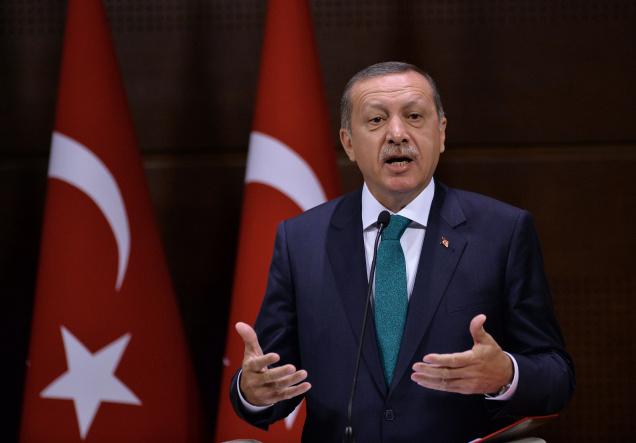
 After months of preparation followed by several week’s delay, on September 30, 2013, Turkish Prime Minister Tayyip Recep Erdoğan finally unveiled his Reform (Democratization) package at a press conference in Ankara.
The reforms, which are meant to address some of the demands by Turkey’s ethnic and religious minorities, are regarded as a crucial step towards stopping bloodshed in Turkey. Almost all the reforms made toward minority groups had been long standing disputes with the government. The government was in dialogue with many minority representatives for a number of issues in order to solve and present them in the reform package, except seemingly without the Armenian and Jewish communities.
Discussion of the package had intensified in late summer when the PKK began to express their dissatisfaction with the regime, and then decided in early September to halt their withdrawal from Turkish territory to protest the slow process of reform by the Turkish government. The announcement of the package has been repeatedly delayed over the past month.
Many issues were included in the reforms, but according to Erdogan those left out or not mentioned have not been rejected completely. He said that this reform package will not be final, and that it will not meet everyone’s expectations. The package is not the “first, but also not the last,” and it will put Turkey among “modern” nations.
Erdoğan noted that one of the demands not met concerns Kurdish-language education. He said that teaching in Kurdish language will be allowed in private schools. Kurdish politicians have been demanding full Kurdish language education in public schools.
The long-awaited lifting of the headscarf ban within public institutions was included, except for judges, prosecutors, polic officers and for members of the army. The mandatory primary school oath, which is considered a militaristic throwback to the republic’s founding ideologies, was also lifted and made voluntary.
Of all the reforms announced, that of the electoral system will potentially have the greatest impact, but what form it will take remains unclear, as Erdogan outlined three options for the parliament to choose from.The first is the preservation of the 10% threshold for a party to enter parliament. The second is lowering the threshold to 5%, while implementing a single-member district constituency system in groups of five. The third is eradicating the threshold system altogether and instituting a single member district system.
Political parties’ access to treasury money has become easier with the lowering of thresholds.
Other issues that were discussed were the reinstating of pre-1980 names of villages and towns, with the exception of the Zaza-populated city of Tunceli that will revert to its pre-1934 name of Dersim.
The Nevşehir University located in the Alevi-populated Nevşehir Province will be renamed after Hacı Bektaşı Veli, an Islamic mystic who allegedly started preaching Alevism in Anatolia. Very little was discussed regarding any other Alevi demand, but after the press conference Deputy Prime Minister Bekir Bozdağ claimed that the “Alevi initiative” is being worked on separately. The most important issue for Alevis is for places of worship, the cemevi, to be legalized.
The Mor Gabriel Monastery in the province of Mardin will be given back by the state to the Syriac Orthodox Church. Erdoğan also said that the return of other confiscated church properties will be implemented in the future.
Other issues were the lifting of the ban on letters like q, w and x, which are Kurdish letters that don't exist in the Turkish Latin alphabet. They can now be freely used. A Roma language institute will also be created.
One issue that contrary to expectations was not mentioned in the package was the reinstating of the Halki Greek theological seminary on Heybeli island.
Kurdish BDP co-chair Gulten Kışanak criticized the package as not addressing the need for democratization and broadening freedoms and rights, but rather as an electoral package. She also claimed that it will not help to resolve problems or address the stalemate in the settlement process.
Some members of the Republican People’s Party (CHP) were also disappointed with the new package and believe it fell short, in particular with regard to Alevi rights. Party leader Kemal Kılıçdaroğlu is to comment publicly on October 1st, the day the new Parliament reconvenes after its recess.
Peter Stano, spokesperson for Stefan Fule, the EU Commissioner for Enlargement and Neighborhood Policy said the European Union will closely monitor implementation and hopes to see “concrete steps”. He also urged Ankara to engage with opposition parties regarding the reforms while their implementation and said that the changes would reflect in the EU's October 16 progress report of Turkey as a state seeking membership. The package can also be seen as a way to polish Turkey’s tarnished image after the summer’s Gezi Park unrest.
The new parliament session begins on October 1, and it is most likely that the reform package will be discussed and debated in the near future.

 Stories