 Civilnet
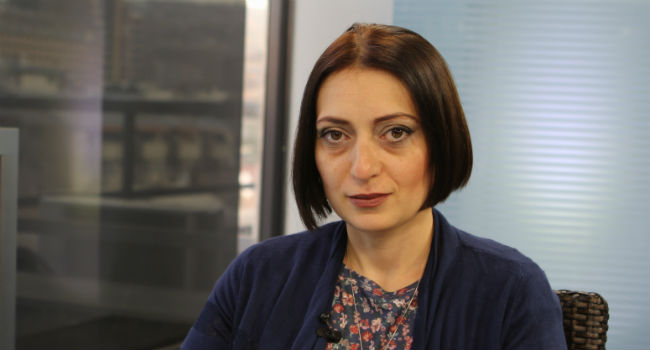
 Azerbaijan is already a ‘contributor’ country to "Islamic State," says Arax Pashayan.
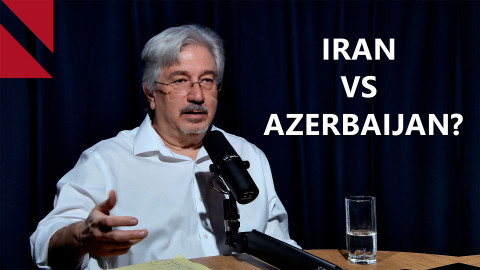
Middle East Specialist Arax Pashayan, author of "Islam in Azerbaijan: Past and Present” spoke to CivilNet’s Karen Harutyunyan about the growing role of Islam in Azerbaijan. She does not rule out that Islam will constitute a solid base for future opposition movements in Azerbaijan. Arax Pashayan is a senior fellow at the Institute of Oriental Studies, Armenian National Academy of Sciences.
Karen Harutyunyan: What phases of development did Islam undergo before and during the Soviet era in Azerbaijan?
Arax Pashayan: Islam has had a major role in the socio-political processes in the area that is now Azerbaijan. The Turkishness, the Iranian civilizational influence and the Russian influence played a major role in shaping Islamic identity and in the political process in general. Certainly, after Russian domination Islam was subjected to various formulations and reforms and suffered as a result of Russian influence and the influx of secularism.
The Soviet era came to cause great harm to all existing religious institutions in the Soviet Union, and Islam in Azerbaijan declined noticeably, the country lost its ties to religious institutions, the decline also affecting the mujahid institute. In fact, Azerbaijan, like other Soviet republics, became a secular state, but Islam somewhat retained its position in the public consciousness, and although a part of the population did not follow the fasting of Ramadan, many religious traditions such as attending the Ashura celebrations, Bayram, were preserved in the family.
After independence, there was an Islamic revival in Azerbaijan. Of course, in the initial period, under presidents Mutalibov and Elchibey the Turkishness was more dominant. In particular, during Elchibey Pan-Turkism in Azerbaijan blossomed, and they chose to develop closer ties with Turkish politics and civilization, constantly fearing Iran's growing religious influence. And naturally, secularism found place in the country’s Constitution and in the public consciousness.
So this was the picture before Heydar Aliyev came to power. He entirely changed Azerbaijan’s national vision. During that period, Azerbaijan was a target of external religious influences. Turkey, Iran and the Gulf Arab states were competing to see who would impose their influence on Azerbaijan, and religious currents were moving to Azerbaijan from all centers. As a result of all this, it appeared that Azerbaijan's national security was under threat. In the mid-1990s Heydar Aliyev realized very well that he needed to counteract these external religious influxes, because Azerbaijan was fertile ground from a religious aspect, and it was easy for any religious movement to settle there and start establishing roots. Aliyev understood the need to create a so-called "brand of Islam in Azerbaijan," trying to rid itself of Turkish, Iranian and Arab influences and present Azerbaijan as a country of unique civilization and culture.
KH: It is interesting that the dominant branch of Islam in Azerbaijan is Shiite, while Turkey and the Gulf Arab states are adherents of Sunni Islam. In addition, since 1990, during the war in Karabakh, militants came from Afghanistan, and later Islamic states within the scope of the Organization of Islamic Conference unequivocally supported Azerbaijan. How can we explain this phenomenon? Is the differentiation between Shia and Sunni Islam not a factor in the specific case of Azerbaijan?
AP: First, I should mention that Azerbaijan's religious and ethnic religious mosaic is quite interesting, because 65-70% of the Muslim population are Shiite Muslims, but the rest are Sunnis, mostly indigenous ethnic minorities - Lezgins, Tsakhurs, Avars and others who live in the northern regions.
Azerbaijan’s Muslims are often referred to as secular Muslims. In the Soviet and post-Soviet period, they did not even distinguish between Sunni or Shia followers of Islam. That is, the Arab Sunni and Salafi Islam from the Arab Gulf countries had a very good breeding ground for spreading their vision as there were a lot of problems in Azerbaijani society: modifications of aesthetic values, decline of moral values after the collapse of the Soviet Union. If we add to this the impact of Turkish Sunni Islam, it is clear that after Azerbaijan gained independence, the influx of Sunni Islam increased.
Even many Azerbaijani intellectuals who come from Shiite families, consider that Shiite Islam is a result of some distortions in Islam, and that Sunni Islam is the only true interpretation of Islam. Additionally, during the Russian-Chechen wars, Azerbaijan was subjected to the influx of Salafism and Wahhabism. Thus, Sunni Islam entered Azerbaijan.
As to the Mujahids issue, I must say that, yes, mujahideen from Afghanistan, part of which were the Arab mujahideen who had participated in the Afghan war, and that same Khattab, went through its next probation in Karabakh War. Of course, after Azerbaijan’s failure in the Karabakh war, part of the mujaheddin who survived the war, returned to their homeland, another part, especially the so-called "Arab Afghans" took part in anti-Russian battles in Dagestan, Chechnya, and the other part remained in Azerbaijan.
And thus, as a result of various factors, Sunni Islam also found its place in the religious landscape of Azerbaijan. For example, the same Gulen movement which has serious support in Azerbaijan, has Sunni Islam and Sufism mixture at its base. That is, Sunni Islam slowly but consistently paves its way into Azerbaijan. There really is Sunni base in Azerbaijan, and radical Islamist circles, and this resource is supplied to the international jihadist movements.
KH: In countries where the social polarization is great, Islam becomes the source or basis for social justice. To what extent is this factor present in Azerbaijan, and in general, what are the prerequisites for the spread of Islam in Azerbaijan?
AP: As to the spread of Islam as an ideology, let me say that we always consider Azerbaijan a secular state, but it is becoming Islamicized, since there is no other ideology: There is a political and ideological vacuum in Azerbaijan.
In general, Azerbaijan is an authoritarian state, and in addition to ‘Heydarism’, there is no other ideology here, because over the years they destroyed any opposition - Leftists, Rights, Liberals. Arif Yunus predicted that the time will come when political Islam in Azerbaijan will become a real force. And so it happened. Today, only political Islam can challenge Heydarism because there is no other ideology in that field. And if we add Azerbaijan's social problems, injustices, grievances against the authorities, religious repressions, the obstacles of forming a civil society - all of these will ultimately contribute to the Islamic factor. It is possible for Islam to become a real social and political power in Azerbaijan, and even likely, it will become a pretty solid basis for further opposition movements, as well as a specific factor in ethnic circles against the government in its wrong national policy. That is how I imagine Islam’s future in Azerbaijan, since all the real bases are already present.
KH: But in general, we can consider Azerbaijani society a secular society.
AP: Of course, Azerbaijani society is largely secular. But we shouldn’t overlook these issues. We should also take into consideration that the volume of Azerbaijan's religious fervor is growing, interest towards Islam is growing, people are beginning to study the Koran, the number of those fasting in Ramadan, attending mosques, wearing hijab etc., is also growing. In other words, the activation of the Islamic factor is present there.
KH: To what extent did the defeat in the Karabakh war affect Islam spreading in Azerbaijan?
AP: As far as I have tried to understand, that factor has not contributed to the spread of Islam. It is a topic related to the foreign policy failures of Azerbaijan. There are far more serious issues fostering Islamic fervor.
KH: Is there a possibility that Azerbaijan will become a country that provides the Islamic State with fighters?
AP: Azerbaijan is already a ‘contributor’ country, because even if ten mujahideen take part, this means that Azerbaijan is a base which provides people for jihadist movements. There is data that not only Sunni mujahideen are participating, but also Shiites, who are involved in various groups. Of course, the majority of them are Sunnis. This issue has become a ground for discussion in the Azerbaijani society.
The authorities have serious concerns. They realize that this is a threat to the national security of Azerbaijan, because that resource can return and destabilize the country’s political situation. In addition, the public debates that if there are people in Azerbaijan, who can take up arms and fight on different fronts, why shouldn’t these same people participate in the Karabakh war. This is a major headache for the government, for the public.
In any case, our neighboring country does participate in these movement, and for us it is a matter of concern to an extent, because we do not know what conflicts jihadist resources will become embroiled in tomorrow.
Read the interview in Armenian.
Watch the interview in Armenian:

 Stories