 Civilnet
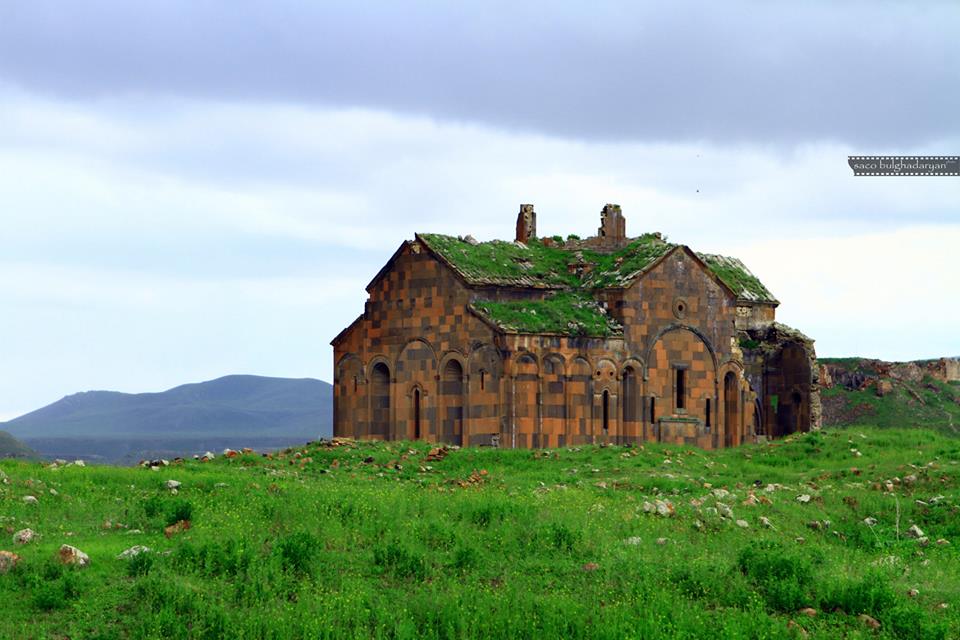
 Archaeologists in Turkey have begun a 40-day excavation project in the ancient Armenian capital Ani in the province of Kars, Turkey, which borders Armenia. The excavation is being funded by a 110,000 Turkish lira ($55,000) grant from the Turkish Ministry of Culture and Tourism. The project is being undertaken in cooperation with the World Monuments Fund, which has already been working in cooperation in Ani since 2011.
Ten experts (including one from Kars Museum, four Pamukkale University professors and five other experts from the Kars Kafkas University) and 30 local workers are taking part in the project. Dr. Fahriye Bayram, an Art History Professor from Pamukkale University, is leading the team.The acting president of the excavation team is Captain Zeynel Abidin Yaşlı, the director of the Kars Museum.
The team began by clearing vegetation in and around the Church of the Holy Savior (Surb Amena Prkich). Work is taking place around the Ani Cathedral, where they are digging around its surrounding walls and cleaning the ground to facilitate drafting the plans for the restoration. According to Osman Kavala, Anadolu Kultur President, they are now carefully erecting scaffolding around the Cathedral in order to “excavate” it.
The World Monuments Fund conducted documentation and survey work in 2011 in preparation for stabilization measures carried out in mid-2012 for the Church of the Holy Savior. Seen in this video on the World Monuments Fund site, scaffolding has already been constructed within the Church of the Holy Savior. The team’s chief architect for the Church of the Holy Savior consolidation project is Yavuz Ozkaya, who has a background in Georgian medieval art in Ani.
The excavations and/or restoration are meant to boost tourism in the province of Kars. Quoted in Haberler.com, the Governor of Kars, Eyup Tepe, stressed Ani’s importance to tourism and stated that the current measures are not enough. He said that at the current pace, it will take 50 years before Ani ranks as a tourist attraction.
Even though Ani is an Armenian city, the word ‘Armenian’ exists no where on official Ani posters and guides. Armenian specialists and archeologists were not invited or asked by the Turkish Ministry to become involved. The Armenian Ministry of Culture said that they are not involved in the excavations because of the lack of a bilateral agreement, which makes local partners necessary in foreign countries.
Pavel Avetisyan, director of Armenia’s Institute of Archaeology and Ethnography said they are not in contact with Turkish academic institutions.
The World Monuments Fund’s local partner is Anadolu Kultur, which is known for its engagement in promoting Armenian-Turkish dialogue. The final phase of the WMF’s role in the restoration program involves promoting public awareness of the cathedral and improving conditions for visitors to the archaeological zone. According to Osman Kavala, a workshop will be organized at the end of September. A joint group of academics and architects, including Armenian representatives, will visit monuments outside Ani’s walls.
Excavation and cleaning work was carried out in Ani from 1989-2004, and restoration projects took place during 2007-09 which were led by Dr. Yaşar Çoruhlu. Çoruhlu resigned two years ago with no one to replace him, after which the Kars Museum took over the excavations and formed the current team. The most recent excavation was in 2010, said Kars Culture and Tourism Director Hakan Doğanay.

 Stories