 Civilnet
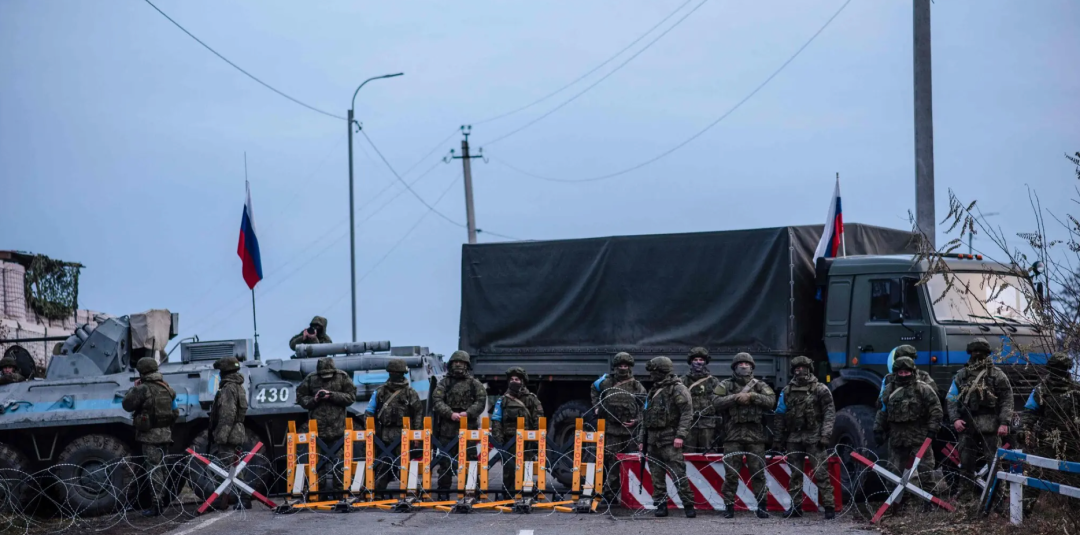
Since our last round-up, the situation in Nagorno-Karabakh has gotten more precarious, as has the efficacy of Azerbaijani propaganda trying to prove that there isn’t an ongoing blockade. Whereas last time the story was of how Armenians were mostly screaming for help while the world was looking elsewhere, now social media is flooded with articles exposing the situation and a long list of concerned people tweeting about what’s going on.
How a blocked road in the Caucasus underlines the reshaping of the region’s geopolitics by the war in Ukraine: https://t.co/rzWiJDusRy
— Anton Troianovski (@antontroian) January 17, 2023
An important sign that the world was finally waking up to what is happening in Nagorno-Karabakh was when the “paper of record”, the New York Times, printed an article about it. The number of articles and diversity of outlets has continued to increase daily as interest increases, no easy feat considering all the attention focused on Ukraine and the complicated if not confusing nature of this story to the casual observer. One journalist noted that whereas an on-line press conference held by Nagorno-Karabakh State Minister Ruben Vardanyan a month ago was only attended by a handful of journalists, a recent one was heavily-attended including those from major outlets.
I asked @GOVUK what conversations we are having with @USAID and our allies to ensure #medicine, #food and #energy are reaching the 130,000 #Armenians blocked off in Nagorno Karabakh, where a humanitarian catastrophe is unfolding. pic.twitter.com/UbcQIrrL3k
— Lord (David) Alton (@DavidAltonHL) January 17, 2023
In our December round-up, we cited tweets by Samantha Power and numerous American elected officials condemning the blockade. Power tweeted again about the situation on January 13, calling for the immediate opening of the blockade, and her tweet was cited in the House of Lords during a discussion of the blockade, asking what the United Kingdom is doing to ensure medicine, food, and energy reach the affected population.
I spoke with Prime Minister Pashinyan about steps to restart bilateral peace discussions with Azerbaijan, the only path for a durable peace between the two countries. I also expressed deep concern over the worsening humanitarian situation in Nagorno-Karabakh.
— Secretary Antony Blinken (@SecBlinken) January 18, 2023
At an even higher level, the American Secretary of State tweeted the following day about his “deep concern” for the situation in Nagorno-Karabakh. It’s worth noting that Azerbaijan now insists that Nagorno-Karabakh no longer exists, and some parties now refrain from using that term for fear of upsetting it, but the Biden administration’s policy has been to use it.
David Phillips of Columbia has proposed that the
— John M Evans (@EvansinAmerica) January 21, 2023
U.S. threaten to rescind the waiver on Section 907 if the blockade of the Lachin corridor is not lifted. It ought to have been rescinded by the Biden Administration as one of its first actions, but now is fully warranted. https://t.co/7B2jYxY58t
Ultimately, while all this “concern” and rightful attention to the subject is positive, what really matters is what actions, if any, will the United States actually take about it? Former US Ambassador to Armenia John Evans declared that the time is well overdue for a rescinding of the waiver of Section 907 which provides Azerbaijan with US financial assistance. Statements not backed up by action are hollow, and Aliyev knows that.
“Starving #Armenians” in #Karabakh. They have nothing to eat as you can see in these photos. #Azerbaijan “keeps them in blockade”. Liars of God level ??? #CaliberAz #facts #ArmenianLies pic.twitter.com/WCiK0uHbu5
— Caliber.Az English (@CaliberEnglish) January 21, 2023
While the world calls the blockade for what it is, a cohort of Azerbaijani English-language tweeters continue to create social media content reflecting their government’s official position that the blockade doesn’t exist. The tweet above is of note because the Caliber outlet appears to be indirectly if not directly linked to the Azerbaijani Ministry of Defense based on its past behavior, while the Azerbaijani government claims it has nothing to blockade. It’s tweet mirrors tweets by another user, who we will not be linking to, who has spent what seems to be hours a day trolling Instagram accounts based in Stepanakert in order to find any photo or reel of people with food, as if to prove that because a piece of food exists anywhere in the region there is no food shortage. The ones they find are sometimes absurd and lacking in critical thinking, like in Calber’s tweet notice the first photo is of pickled preserves, which would have been grown in local gardens and canned long before the blockade started. The second photo is of meat, which would be derived from livestock kept by local farmers. Pomegranates are also grown locally, while the last photo contains nothing but a few pieces of bread. From this, the tweet mockingly calls Armenians liars for claiming there is a food shortage, invoking the term “Starving Armenians”, which more likely than not is a crass reference to the Armenian Genocide of 1915.
The Azerbaijani “blockade truthers” often use the ads of upscale restaurants displaying food, even though it is impossible to tell when the photo was even taken, or how representative such places are of the average civilian’s daily struggles. Another tweeter, a digital marketer by trade, has spent weeks at the blockade (he claims strictly on a volunteer basis) producing daily videos of Russian Peacekeeping vehicles and Red Cross trucks passing through. His videos feel a bit like “Groundhog Day”, the same thing over and over claiming how seeing a Red Cross vehicle is definitive proof there is no blockade, even though the whole point of the Red Cross is to assist during humanitarian disaster and has negotiated the right to pass through. In fact, he has still yet to document even one civilian vehicle passing through independently, which only reconfirms the fact that the blockade on the Armenian population is in place.
New #Deconstructed podcast: @RyanGrim speaks to @joshuakucera , @lilithiumm_ , and @AliTahmizian about the Azerbaijan blockade, cutting off more than 100,000 ethnic Armenians in Nagorno-Karabakh from the rest of the world. https://t.co/SyIYDoWPgt
— The Intercept (@theintercept) January 20, 2023
Azerbaijani propaganda has completely failed throughout this ordeal because it has no coherent narrative. They started off with the “eco-protesters” who claimed to have nothing to do with the government, while everyone knows independent protests aren’t allowed in Azerbaijan, and further that the Shushi region where they are taking place is a military zone which requires government permission to visit. While Azerbaijani social media creators mostly work in a vacuum showing the same Red Cross vehicles over and over expecting it to somehow change the narrative, the true story is being spoken in parliaments, newspapers, and on podcasts like the one above by the Intercept. From the very start, the host pointed out the ruse of “eco-protesters”, undermining the very core of the Azerbaijani argument. While Azerbaijan undertook this blockade as a soft kind of ethnic cleansing to encourage the entire population to leave on their own, it has also succeeded in getting the world talking about the threat faced by Armenians there like never before. Unlike during the war which could simplistically be portrayed as two countries fighting, this story has a clear aggressor and victim, and has largely undermined all of Azerbaijan’s propaganda goals such as showing that the “conflict is over” and that Armenians face no threat from the Azerbaijani government.
The NGOs participating in the actions organized by the ?? government in Lachin corridor are presented as NGOs specializing in ecology. We watched more than 50 videos and researched the NGOs there, and they have nothing to do with ecology and environment. pic.twitter.com/rPrVYv3qc3
— Mikroskop Media in English (@MikroskopEng) January 17, 2023
Speaking of the “eco-protesters”, there has long been indications that many of them are actually members of the Azerbaijani military, while the actual military stands guard at the blockade site. Now an independent Azerbaijani media outlet has researched the various other “activists” who have been interviewed at the blockade, and found that none of them have anything to do with ecology. As the weeks went on, the blockade would be manned by all manner of government-approved organizations and student groups, so it hasn’t even been a consistent protest but one with a rotating cast just to keep up appearances. This also makes one wonder about the coincidence of the “volunteer” digital marketer serving as their content producer who just happened to show up at the start of the protest to help out. Is anything really a coincidence?
This film depicts the incredible story of 16 incredible teenagers who were trapped in Goris, Armenia following the Junior Eurovision Song Contest in which their Armenian contest Nare was runner-up with her song Dance! It took place on December 11, 2022 ...https://t.co/8IRklz0pqX pic.twitter.com/aV6nfpdm5Y
— Sascha Klamp (@SKlamp) January 19, 2023
While much of the attention has been on those causing the humanitarian crisis, the proper focus should be on its victims. This documentary follows some of the children from Nagorno-Karabakh who were separated from their families for over a month as they were in Yerevan at the Junior Eurovision Song Contest when the blockade began. They spent a month living in a hotel while the “non-existent” blockade kept them from their families, living with the uncertainty of when or if they’d ever get home. The children spent their days singing and forming a family of sorts, supporting each other through the ordeal. As is said of the children: "I am sure the world will be proud of them, because there are such champions here, which is a great success for Armenia.”
?MAJOR - 19 minors separated from families since the #NagornoKarabakh blockade started in December were brought back from #Armenia through #Russia peacekeeping mediation. #Azerbaijan authorities manning the roadblock stopped the vehicle and reportedly harassed the minors. pic.twitter.com/jZYAZY1nFr
— Nagorno Karabakh Observer (@NKobserver) January 17, 2023
After journalist Gabriel Gavlin wrote an article for The Spectator highlighting the children’s story, the Azerbaijani government got in contact with him about arranging for the children to go home. As has been seen repeatedly, the main outcome of the blockade, besides making life extremely difficult for a threatened population, has been to expose the cruelty of the Aliyev regime. While they were aware of this situation for weeks, it was only after it got bad press did they seek to rectify it. The children finally went home, but not before one last bit of terror, as described in this thread. Even in trying to fix bad press, Azerbaijan ended up creating more of it.
If you’re wondering what is written on my jacket… I was honored to perform last night at iHeart’s ALTer Ego for @ALT987fm alongside Muse, Red Hot Chilli Peppers, Jack White, Fall Out Boy and more. It felt like a dream. pic.twitter.com/T2mYwIuF6V
— Rosa Linn (@rosalinnmusic) January 19, 2023
As the blockade drags on, Armenians with platforms are finding ways to bring attention to it. Singer Rosa Linn wrote a message of ending the blockade on her outfit while she performed at a concert in Los Angeles headlined by “Alternative Rock’s Biggest Names”.
While Russia’s Karen Khachanov plays without a flag by his name at #AusOpen, there are other flags in the stands for him: those of Artsakh (aka Nagorno-Karabakh), the embattled region which the ethnically Armenian Khachanov has urged support for during the tournament. https://t.co/57RKyFghoW pic.twitter.com/4aoZ416D6e
— Ben Rothenberg (@BenRothenberg) January 24, 2023
Tennis player Karen Khachanov similarly went viral for writing messages of support for Artsakh - on the lenses of cameras that approached him after he won his rounds at the Australian Open - a cool Australian tradition. After doing it in the first round, the Azerbaijani Tennis Federation sent a letter to the International Tennis Federation protesting this “hateful act”. But oops, after winning the next round Khachanov did it again. It is enlightening to consider the mindset from which one would find telling a besieged population to “stay strong” to be an act of “hatred”, but such rhetoric has become the norm. Nevertheless, Khachanov’s action grabbed the attention of Australian media who covered the blockade and questioned the legitimacy of Azerbaijan’s ‘environmentalists’.
Armenians are receiving rationing coupons as we speak, like Americans during the Great Depression.
— Rep. Ro Khanna (@RepRoKhanna) January 20, 2023
Azerbaijan has blocked the Lachin Corridor for over a month, leading to major food and medicine shortages. The U.S. must use its leverage to end the blockade of Artsakh.
Congressman Ro Khanna summed up the situation with a parallel which would be simpler for his audience to understand.
“The Armenian language is the home
— Ilya Kaminsky (@ilya_poet) January 23, 2023
and haven where the wanderer can own
roof and wall”
—Moushegh Ishkhan, translated by Der-Hovanessian
*
Horrific things are happening to Armenian people at this moment. Why is Western media so quiet about it?
Azerbaijan self-proclaimed "eco-activists" have blockaded Nagorno-Karabakh, Armenia. The blockade has trapped 120k Armenians since Dec. 12. No one has gone in or out of the city for over a month. This is a time bomb waiting to go off. Take a look.pic.twitter.com/1f5cuJhcVk
— Steve Hanke (@steve_hanke) January 14, 2023
Solidarity also came in other forms from non-Armenians with large followings, such as through a number of Armenian poems posted by Ukrainian-American poet Ilya Kaminsky and videos of the blockade posted by economist Steve Hanke.
Distinguished Australian scientist London-based #PR firm BTP+Advisers tricked him into signing an inflammatory op-ed paid for by #Azerbaijan. BTP+Advisers then pitched it to EUobserver.https://t.co/xwkYQ7dR0q
— EUobserver (@euobs) January 18, 2023
Oh and recall how early we mentioned how the Azerbaijani government claims it is not behind the protests? Well thanks to a ham-fisted propaganda attempt, it was revealed that it in fact is paying at least one lobbyist group in the United Kingdom in an attempt to legitimize the “ecological” aspect of the protest. If they are orchestrating propaganda as far away as London and Australia, to think they have nothing to do with financially supporting the actual protest blockade is hard to believe.
We regret that Andrew Rettman grossly violated professional standards & ethical norms in his article on ?? Emb. in ??. Our answers to his questions on a PR firm were falsified by him & presented in a distorted way. Authentic written answers provided to him speak for themselves. https://t.co/E0Gz5YVSpX pic.twitter.com/NuKWWNnWPc
— Ramil Taghiyev (@RamilTaghiyev) January 20, 2023
An Azerbaijani diplomat did not take this expose well, condemning it with not-very diplomatic language. There is a long pattern of Azerbaijani diplomats losing their temper and throwing fits when it comes to anything regarding Armenians, undermining their very occupation.
It is quite surprising how Pakistan is the only country that doesn’t recognise Armenia as a state yet Armenians have had a vast presence in our regions for hundreds of years. Armenians travelled, traded, and settled across South Asia.
— Huzaifa (@MHuzaifaNizam) January 18, 2023
Old Lahore had an entire Armenian quarter. pic.twitter.com/3H7g3EMyFv
Finally, we’ll end with two interesting tweets about Armenian history. This user brought attention to the long history of Armenians in Pakistan, and questioned why the modern state should still refuse to have diplomatic relations with Armenia.

 Stories