 Civilnet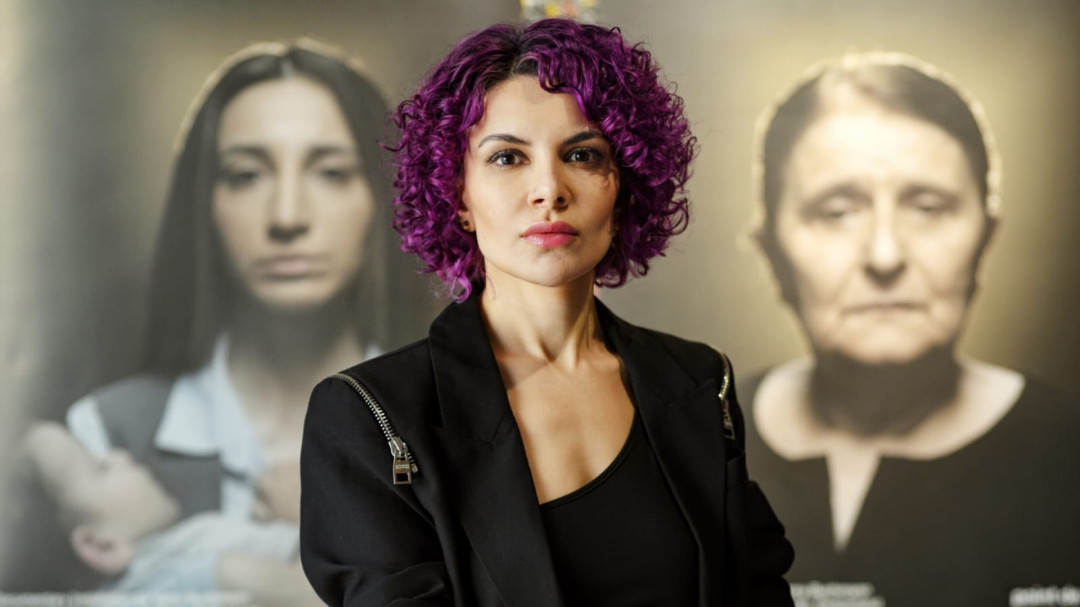
By Alik Garibian
From September 26 to 28, Latitude Art Space in Yerevan hosted the premiere of They Say We Have to Leave, a compelling documentary installation by Swiss-Armenian filmmaker Varsy Buchmann. The work gives voice to 120 deported Artsakhtsi women in a shared emotional space, inviting visitors to experience, witness, and empathize with the lives of those affected.
“The idea was born two years ago,” Buchmann recalls. “On September 19, 2023, the bombing started in Artsakh. Six days later, on September 25, there was the explosion at the fuel depot in Berkadzor. It was terrifying. Something exploded inside me that day. Hadn’t these people suffered enough? They had to go through this as well — I realized then I had to do something.”
Unable to travel to Artsakh since the road was blocked (people could only get out but not get in), Buchmann chose to channel her perspective as a filmmaker. “I am an artist. My job is to tell stories. The only thing I knew was that this story had to be told. It needed to exist in a form that could be shared.”
Designing a space of empathy
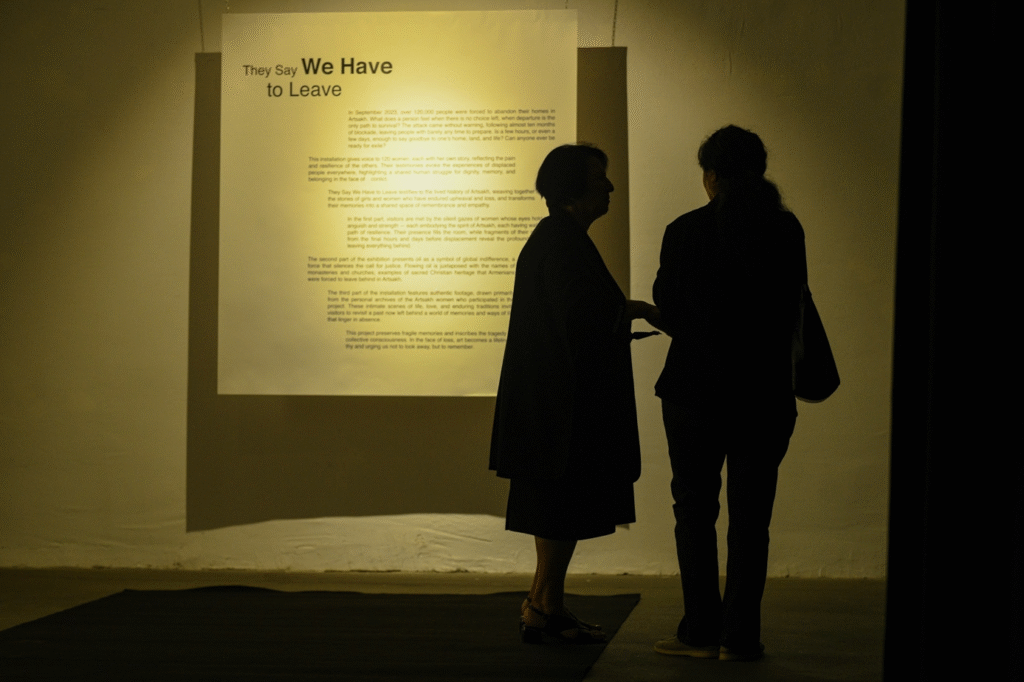
Unlike a traditional documentary film, the installation is spatial and physical. Visitors are invited to stand, move, or sit on the floor as they encounter the stories of 120 women. Only a handful of chairs are provided for those who need them.
“I didn’t want to give any kind of comfort to the spectator,” Buchmann explains. “Standing, tiring, reliving it — this is part of the experience. As they live this pain, they start to share it. And that is the first step toward empathy. How do you make someone feel all of this? How do you make it resonate — especially for foreign audiences, who don’t know the depth of our pain… I wanted them to feel, even a little, what we feel.”
The focus on women stems from the unique emotional insight they provide, as well as the deliberate aim to create a representative sample. “These are not just 120 women at random,” Buchmann explains. “We carefully selected women of different ages, professions, and social backgrounds.”
The women included in the installation represent a wide spectrum of experiences and personalities. “There were so many people who surprised me,” Buchmann recalls. “Beyond sharing their experiences of displacement, my other aim was to show who the Artsakhtsi woman truly is: strong, resilient, and powerful. These women could not only convey their own emotions but also recount stories of their husbands, brothers, fathers, and sons, creating a richer, more complete vision of what happened.”
Witnessing the work for the first time
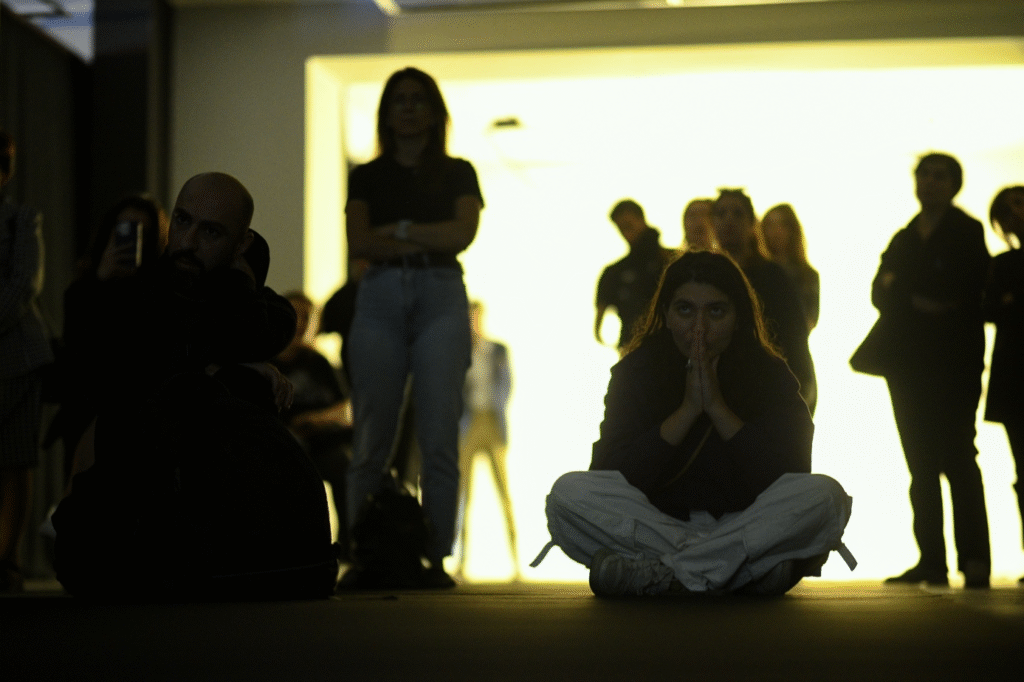
At the Yerevan premiere, many of the women who participated in the project were present to see the installation for the first time. “It was an emotional moment,” Buchmann recalls. “The room was dark, calm, solemn — almost like a church. Here, in the dark, intimate space, people can express their grief and emerge cleansed. I saw many who stayed crying for one, one and a half, even two hours.”
Still, the installation represents only a small fraction of the stories. In fact, it’s only 120 minutes of the more than 100 hours of interview material that Buchmann collected from the 120 women. And they are only a microcosm of the 120,000 deported from Artsakh. “This project is a single drop in the ocean — a concentrated capsule attempting to represent what happened. To capture the entirety of this tragedy, we would need to create this project a thousand times over.”
A Window into a Vanished Life
Alongside the voices of the 120 Artsakhtsi women, the exhibition unfolds in two additional sections that broaden the scope of the story. In the second part, Buchmann juxtaposes the image of oil — a symbol of greed and silence — with the visual richness of Artsakh’s spiritual and cultural heritage.
“It’s not just indifference,” she explains. “I wanted to reflect a society obsessed with profit.”
The third section of the installation takes visitors back — not to the war, but to the life that existed before it. “Artsakh was a place where people truly lived,” Buchmann explains. “Until the very last moment, despite impossible conditions, they stayed on their land because they didn’t want to be separated from it. They stayed to live on the land they loved so deeply. I wanted to show what that life was like — the everyday moments, the little joys, the things people clung to and didn’t want to leave behind.”
To capture this intimate portrait, Buchmann asked the 120 women she interviewed to share videos stored on their phones. The result appears on six screens in the final room of the installation — a collage of life as it was in Artsakh, through the eyes of its inhabitants. These are not polished documentary shots with professional framing; they are authentic glimpses of daily existence: a child on a swing, a street seen from a balcony, a dog playing, someone planting cucumbers, selfies, TikToks, moments of ordinary life.
“Each clip is a small window into the past, into the heart of the lives that were lived there,” Buchmann says.
The installation’s emotional depth is heightened by Arsène Babadjanian’s evolving score. “Music carries much of the emotion in video,” Buchmann notes. “It opens a pathway to our emotional world.”
Beyond Armenia
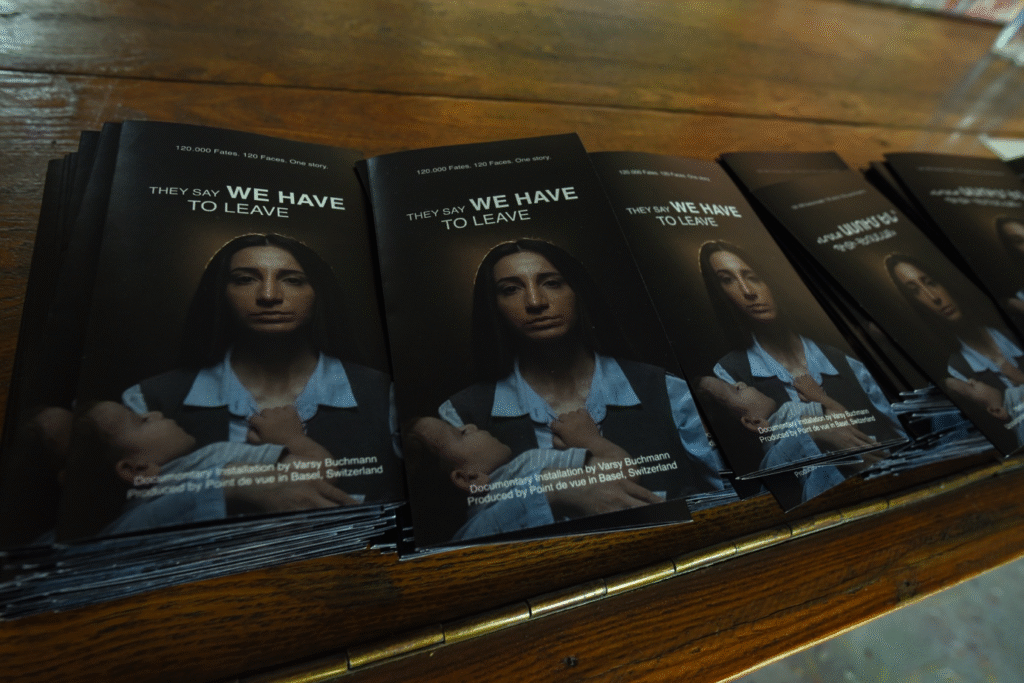
After its debut in Yerevan, the installation is set to travel abroad — to Basel on October 31, followed by other Swiss cities, with hopes of touring across Europe and potentially worldwide. Buchmann aims for the work to reach audiences beyond the Armenian community.
“We Armenians know our pain,” she explains. “But for a foreign visitor who doesn’t even know where Artsakh is on a map — how can they care if they don’t feel it? That’s my goal: for them to feel, to understand, to act.”
For the Armenian public, she believes the stakes are different. “Remembering doesn’t mean looking back,” Buchmann concludes. “Every time we remember, we rebuild our story and our identity. That is how we safeguard our existence — and ensure that no one can erase it.”


 Stories