OPINION: Pashinyan’s weapons display is more politics than defence
 Civilnet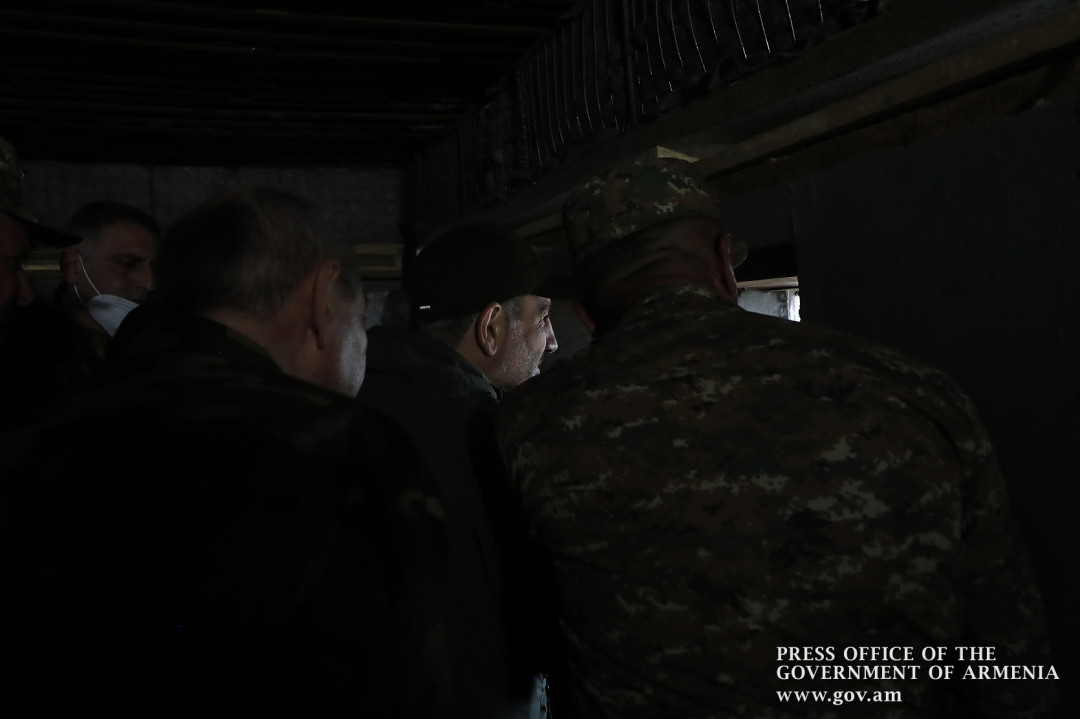
By Eduard Arakelyan
This week, Armenian Prime Minister Nikol Pashinyan said during a government Q&A session in parliament that a significant number of citizens had asked the government to show the weapons Armenia has purchased and the engineering fortifications it has built. He said a special viewing would soon be organized for this purpose, adding that Defence Minister Suren Papikyan had made a similar proposal to lawmakers.
The immediate trigger for Pashinyan’s statement was a recent interview by former president Serzh Sargsyan, who noted that in the first hours of the 2020 war, Armenia lost a significant number of air-defense systems — a sign, he said, of unpreparedness and poor management. Pashinyan responded to these remarks publicly.
Pashinyan’s initiative to show new weapons and fortifications to interested groups is part of an information-political strategy: it frames military procurement and engineering works as evidence of government activity.
Armenia is carrying out, and plans to continue, large-scale arms purchases primarily from India and France. These include air-defense systems, artillery, multiple-launch rocket systems, communications equipment, and optics. Armenia is rearming its army after losses in recent years.
However, the scale of purchases alone does not create a new defence system. Reforms remain selective and incomplete. Even the issue of replacing military uniforms has taken nearly three years, reflecting slow decision-making in areas that do not require complex solutions. The government, nevertheless, highlights procurement and fortification projects as indicators of progress. In practice, these are routine processes for any state seeking to strengthen its defences.
It is noteworthy that groups of citizens have previously been taken to view fortifications — typically students, bloggers, journalists, political scientists, and NGO representatives. These visits to engineering installations on the border with Azerbaijan create a circle of individuals who later publicly recount what they saw. Their accounts circulate as independent confirmation and reinforce the government’s narrative.
Showing weapons and fortifications shifts public attention from systemic issues in the army, such as training, personnel policy, and strategic management. A display presents equipment, but combat capability depends on much broader factors.
A display can reveal what assets exist, but it cannot demonstrate how effectively they function within a unified system. Combat readiness requires integrated command structures, trained personnel, logistics, mobilization-ready reserves, and the capacity to sustain prolonged combat. Armenia’s weaknesses in 2020 were linked not only to equipment and fortifications but also to leadership, command, training for mobile warfare, reserves, intelligence, and the speed of decision-making.
Real readiness is measured through regular exercises and institutional work.
One possible rationale for such displays is demonstrating budget accountability and the use of taxpayer money. Azerbaijan, for example, holds frequent military parades and weapon showcases aimed at projecting power. Israel, by contrast, rarely holds weapon displays, relying instead on parliamentary oversight and internal reporting.
Pashinyan’s initiative presents foreign-policy and defence-related steps — procurement, fortifications, military-technical cooperation — in a public format.
Under current conditions, showing weapons and fortifications is also a way to assure society that the situation is improving after the defeats of 2020 and 2023. At the same time, questions about strategic miscalculations and responsibility are not addressed.
Eduard Arakelyan is a military analyst at the Yerevan-based Regional Center for Democracy and Security.


 Stories