 Civilnet
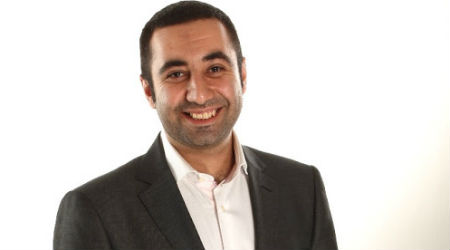
 For CivilNet’s weekly Turkey Wrap-up, Maria Titizian spoke with Aris Nalci, a journalist from IMC TV in Istanbul. Nalci spoke about the appointment of Etienne Mahcupyan as Chief Advisor to Turkish Prime Minister Ahmet Davutoglu, another mine disaster in Turkey and the crisis in Kobani. Below is the full text of that interview.
Maria Titizian: Welcome to CivilNet, my guest today is journalist from IMC TV in Istanbul, Aris Nalci. Aris, thank you for joining us.
Aris Nalci: Thank you.
MT: We will be doing our weekly Turkey wrap-up to find out what’s going on in Turkey. There are a number of stories. I want to start with one particular development that has not only the Turkish world talking but the Armenian world talking. It’s the appointment of Etienne Mahcupyan as the Chief Advisor to Prime Minister Ahmet Davutoglu. Let’s talk about that. There are many conflicting and passionate voices being heard.
AN: Yes. The thing that I’ve seen is that first of all we’re forgetting that at one time he was the Editor-in-Chief of Hrant Dink’s newspaper, Agos. I have also worked with him. For the past several months they have been writing and trying to push the idea that Etienne Mahcupyan is working for government, that he has sided with Erdogan and AKP, Davutoglu. The thing we forget is that Etienne Mahcupyan has been working as a journalist for almost 20-25 years and he was also consulting for think-tanks in Turkey. He’s a writer and also a critic. But they’re always focusing on which paper he wrote for.
MT: Pro-government newspapers?
AN: Yes, it was Zaman, now it’s something else. But they fail to mention that he was always writing in Turkey. It’s a new era, this journal opened a new era before Radical newspaper, opened a new era and new point of view in journalism. We forget about everything and we’re just focusing about an Armenian becoming part of the government. It’s important for us to see what he was saying lately in his articles. He was friends with Davutoglu for many years, so now he becomes his advisor. And something the Armenian world forgets that if a Turkish official has an Armenian advisor, we have to understand that it is a way for us to reach the government. But the opposite reaction is taking place.
MT: So instead of looking at the negative aspect, we could look at it from the point of view that we have someone in the inner circle at the highest levels of Turkish government, somebody who has the ear of the prime minister in this case, but there are others who argue that his appointment, aside from the fact that Mahcupyan and Davutoglu have a long-standing relationship, ahead of the 100 Anniversary is to show to the world that they are open and transparent. Can you not argue that his appointment is an attempt by the Turkish leadership to alleviate tensions with the Armenians?
AN: Sure. What happened was not a coincidence, because if you recall, during the 95th anniversary of the Genocide, Turkey was trying to push Daron Acemoglu as a Consul in Paris. Daron was living in the US and he rejected the proposal. He is one of the top 100 economists of the world, and when the US government wants reports about the economy in Turkey, Acemoglu is the person they go to. He rejected to become a member of that system five years ago. Now there’s another step that we see. Yes, it’s not a coincidence that Etienne Mahcupyan is becoming a part of Davutoglu’s team, but also we have to see that after Erdogan was elected as president of Turkey, and Davutoglu became prime minister, Turkish policy changed a bit. Turkish policy about the Genocide was related to Turkey-Armenia relations but now the focus is on Turkey and Diaspora relations. Davutoglu has more connections in the Diaspora than he has in Armenia. When Davutoglu was in Yerevan meeting with Nalbandyan, he was not satisfied with the meetings, he said that during the press conference.
MT: Sure I remember, we were there covering it as well.
AN: Yes, we were covering the story together, so we saw that ambience, and Davutoglu was not satisfied with that. What is satisfying for him is that Diaspora is not homogeneous, it’s heterogeneous, it operates through associations, foundations, organizations, and he is in touch with these. The thing is, I don’t think the Diaspora and the Armenian world or the Armenian government are naive, or childish enough to fall into this trick. We’re not that stupid.
MT: We’re undermining ourselves sometimes, aren’t we?
AN: Yes, I think this is a step..yes, it’s right, Turkey is trying to show the US Congress and the European community that they are trying to improve relations. We understand that. How come on one hand you can appoint an Armenian advisor and also remember that Erdogan wrote a letter to Armenians on 23rd of April, to kind of “apologize,” and on the other hand still have the case of Hrant Dink. So the solution of the problem is maybe going to be another step, but we have to see Etienne Mahcupyan’s appointment as a step, a step that we can also use, a step to reach the government to directly say some things.
MT: Whether they hear what he has to say or not is a secondary thing, but we do have that bridge now. Just a final question about Etienne before we move on to other issues that I want to talk about. Do you think he will continue to write? Has he come out with any kind of statement after his appointment?
AN: Officially the position of Chief Advisor has been offered, and he has accepted. It will start in a couple of months. Other advisors of Davutoglu and Erdogan are still writing in newspapers and doing some TV shows in Turkey. So this depends on the person, whether he wants to continue or not. But I think he’s going to continue to write. I think it’s the best thing to do, because as an advisor you don’t have many policy areas where you can advise Davutoglu, but writing your opinion is more clear. So I think he’s going to continue to write.
MT: Well, we will definitely be following what happens. Just this morning we heard that there was yet another mine explosion in Southern Turkey, near Mersin. A few months ago there was the Soma mine explosion, which was followed by a huge controversy in Turkey because of the way it was handled and how the media’s coverage was obstructed. What news do you have about this new mine explosion, and how many victims?
AN: The thing is we’re using the term killings in our reporting because these are murders.
MT: That’s a strong statement to make.
AN: Yes, but we’re using that term. The government privatized that mine about 3-4 years ago because they know it had problems. It’s a private company running that mine. In the Soma mine there were over 300 people killed in there but that is the official government figure because they don’t know exactly how many died. As we were covering the event in Turkey as IMC, we investigated and collected information from the families and the real number is closer to 400 dead but the official statement was 300. We all know that there is a large number of Syrian immigrants in Turkey now, and they’re looking for jobs, they’re working in the black.
MT: Undocumented, so that they don’t appear in anybody’s records...
AN: Even Turkish people who work in those areas work in the black because working in a mine is a good way to earn cash and because no one knows who’s downstairs. This new incident at the mine, well as I said, the government established this mine and then sold it to a private company. About three months ago they were fined by the government for shortcomings in safety precautions. And now 18 people are trapped in the mind and they still don’t know how they’re going to reach them. There’s a big water source over the mine. It is forbidden to open a mine under the water source. But there is a big water source, and yesterday night I called my colleagues and they said it’s almost 10 million cubic meters of water and it appears that there is no hope. This is a big issue in Turkey.
MT: So, there needs to be stricter regulations.
AN: Yes. Let me give you a final example which is so horrible. Six months ago, Ismail Saymaz from the paper Radical, told me about a mine company. There was accumulation of gas in the mine, and every week someone has to go to clean that mess and come back. The lift in the mind was broken, so they made the workers go in one by one. One went, the second went, third went...nine people died down there, each one trying save the other one. And do you know how much the cost was to fix that lift? Less than $200.
MT: To have fixed that lift
AN: Yes, but they didn’t fix it and nine people died. What happened? They opened a case, the company said that the chief was responsible. The chief was the last one to go there, who was also dead.
MT: So they’re putting the blame on a dead man.
AN: This is so important. This shows the value that the Turkish government or Turkish companies operating mines place on human lives.
MT: Just as a final question, Aris. We can’t do a Turkey wrap up without talking about what is happening in Kobani. According to latest reports, Kurdish Peshmerga from Northern Iraq are making their way, they still have not reached Kobani. When do we expect them to be able to reach Kobani, and what is the situation now?
AN: Let me say this. First of all, I was confused that the Peshmerga, the Northern Kurdish army were going to reach Kobani without their missiles, without their weapons. But apparently they are going with 37 vehicles and one ambulance. The vehicles are full of peshmerga forces, heavily armed.
MT: I saw photos that were being circulated on twitter, a convoy of the heavy machinery and equipment that’s being transported.
AN: Yes, they’re transported and they’re in Mardin now, they will go to Suruc which is close to Kobani, they will pass from Suruc to Kobani through a passage secured by the Turkish government. However, the number of fighters and equipment is not enough to beat ISIS.
MT: But we’re reading that the Kurds in Kobani had been able to push ISIS back, so they are making gains. Now with this additional equipment, you still don’t think they would be able to..
AN: They will be able to, but this is ongoing war. We saw the reports about women and 14 year old kids fighting there. Putting peshmerga there is ok, good but Turkey, Europe and the US have not put their boots on the ground. They just want Kurds to be fighting.
MT: And they will be supplying some air cover.
AN: They will be supplying sources. We see that they send some generals from US and Britain to Turkey to advise and train Kurds from Kobani to fight. But to train someone...you can’t create an army in three weeks. You can’t just say that you’re fighting, they say in Kobani we’re not fighting, we’re just here to keep ourselves alive, and to keep our houses. So you can’t expect 14-year-old kids to become professional fighters or professional killers.
MT: Aris Nalci, thank you for this fascinating conversation, a lot to think about. I’d like to remind our viewers that my guest was Aris Nalci, a journalist with IMC TV in Istanbul..

 Պատմություններ