 Karen Harutyunyan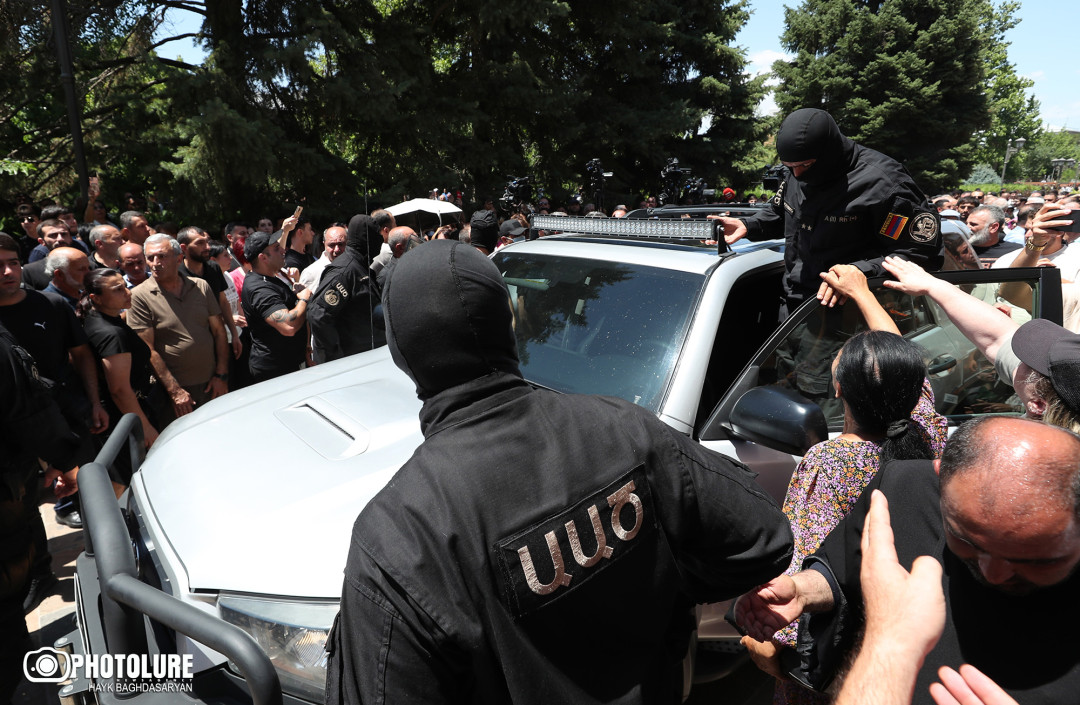
Human Rights Watch has published its annual report on the human rights situation in Armenia. To avoid asking a leading question, I asked ChatGPT what was missing from the report. It identified six broad omissions, the first of which was the following:
“The report does not contain a separate assessment of the recently escalating tensions between the state and the Armenian Apostolic Church, including, criminal cases against clergy, issues related to the church’s internal autonomy, the impact of government rhetoric on religious freedom.”
What follows is my own assessment.
In recent days, concerns over religious freedom in Armenia have been raised by Christian Solidarity International and FOREF Europe. Both organizations cited alleged violations of religious rights guaranteed under Armenia’s constitution.
The Human Rights Watch report addresses freedom of expression, state surveillance, the rights of persons with disabilities, the LGBT community, domestic violence, and the social challenges faced by Armenians displaced from Nagorno-Karabakh, among other issues.
Strikingly absent, however, is any systemic assessment of the government–church confrontation, criminal prosecutions of clergy, interference in the church’s internal autonomy, or the impact of government rhetoric and actions on religious freedom.
There is also no mention of the highly politicized criminal case brought against businessman and billionaire Samvel Karapetyan, his arrest on questionable grounds, or what critics describe as a campaign against his businesses driven by political considerations. Karapetyan’s detention, notably, took place immediately after he expressed support for the Armenian Apostolic Church.
The section on freedom of expression also makes no reference to the detention of podcasters Narek Samsonyan and Vazgen Saghatelyan.
Human rights defender Zarui Hovhannisyan warned in an article published months ago that pretrial detention in Armenia continues to function as a form of punishment. She noted that for several years the number of detainees held in penitentiary institutions has exceeded the number of convicted prisoners, pointing to the systematic overuse of pretrial detention.
Also read: More Detainees than Convicts: Pretrial Detention in Armenia Still functions as Punishment
Taken together, these cases deepen concerns that the law enforcement system is gradually being transformed into a tool for restraining political and ideological opponents. This perception is particularly dangerous in the context of religious freedom, where state neutrality should be a fundamental principle.
Meanwhile, Democracy Watch — a joint initiative of the Regional Center for Democracy and Security and CivilNet — addressed Armenia’s democratic backsliding in its 2025 year-end review, framing it not as a series of isolated incidents but as systemic, anti–rule of law developments.
At the core of the report is the instrumentalization of law enforcement and judicial institutions, which, it argues, have increasingly been used for domestic political purposes, undermining the fundamental principles of the rule of law and the right to a fair trial.
Also read: 2025: A Year of Democratic Backsliding in Armenia
The problem is not limited to individual cases, but rather to an environment in which criminal prosecution becomes the primary language for resolving political disputes.
Among Armenia’s international partners, there is at times a perception that a “democratic government is fighting anti-democratic forces,” and that within this logic, certain rights violations are acceptable as “collateral effects.” I do not believe the Human Rights Watch report was written from this perspective. Nevertheless, the omission of critical developments cannot but be regarded as a matter of principle.
Human rights protection cannot be conditional, depending on our sympathies or antipathies toward specific political or other actors. Principles must stand above individuals, parties, and political preferences.



 Stories