 Alexander Pracht
After decades of sourcing most of its weapons from the Soviet Union and later Russia, India has nearly tripled its domestic arms production since 2013 as part of a push to turn itself into a global defence supplier. While remaining the world’s largest importer of weapons, India exported more than $2.3 billion worth of defence equipment in the 2023/24 financial year and has set a target of exceeding $5.5 billion in arms exports by 2029.
In recent years, Armenia has emerged as India’s largest buyer of defence equipment. Like India, it had relied almost entirely on Russian arms for decades, but Yerevan began pursuing a diversification strategy after Moscow halted arms exports following its invasion of Ukraine in February 2022. As a result, Yerevan turned to other suppliers such as France, purchasing CAESAR self-propelled howitzers, but most notably to India, sourcing a wide range of weapons and military equipment.
For several years, Armenia refrained from publicly disclosing the existence of its arms purchases from India, though details repeatedly surfaced in Indian media. The deadlock was broken last week with an unusually long, four-day visit to Armenia by India’s Chief of Defence Staff, General Anil Chauhan. The trip culminated on Saturday in a weapons display of Indian-made systems supplied to Armenia.
Shopping list
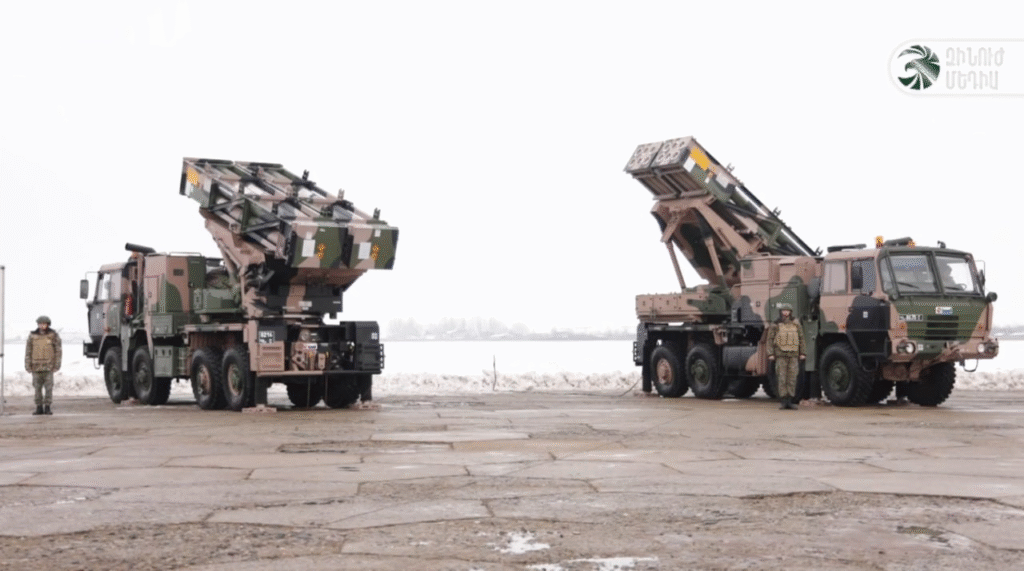
Armenia has reportedly purchased four batteries of India’s Pinaka multiple rocket launcher system, totaling 24 launchers, each carrying 12 rockets and mounted on Czech-made Tatra trucks. Manufactured since the mid-1990s, the systems supplied to Armenia are believed to include three variants, among them a version equipped with satellite guidance and an effective firing range of up to 75 kilometers, though the exact breakdown of variants has not been disclosed.
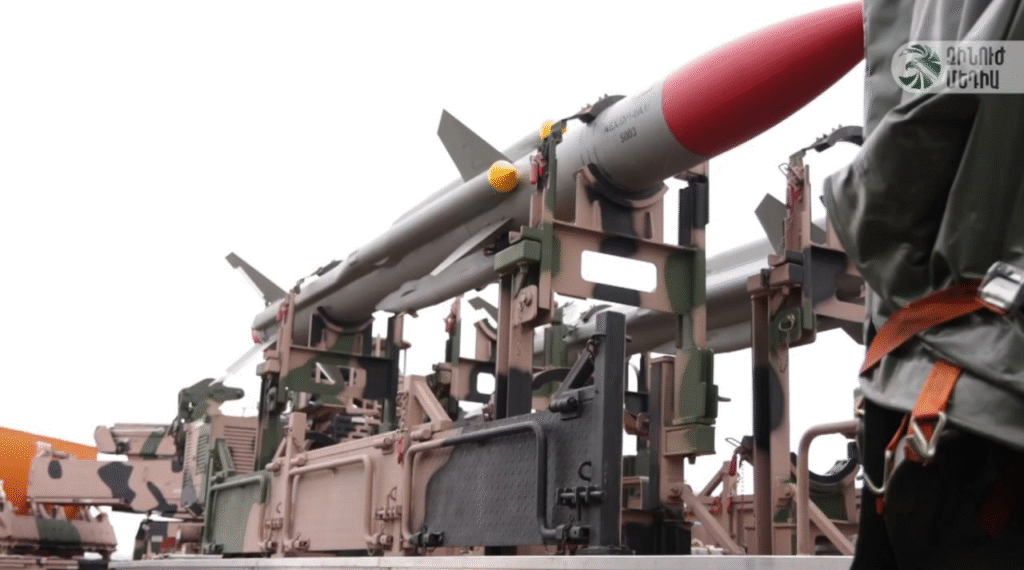
Armenia has reportedly acquired 15 Akash-1S surface-to-air missile launchers along with around 400 missiles under a deal estimated at about $720 million. It is an air defense system designed to intercept fighter aircraft, cruise missiles, and drones at altitudes of up to 18 kilometers and at ranges of up to 35 kilometers.
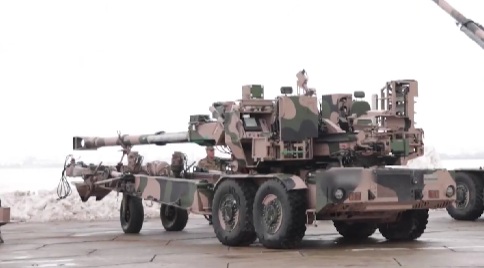
Armenia has reportedly procured no fewer than 90 ATAGS towed howitzers from India, featuring a NATO-standard 155 mm calibre and a firing range of up to 45 kilometers.
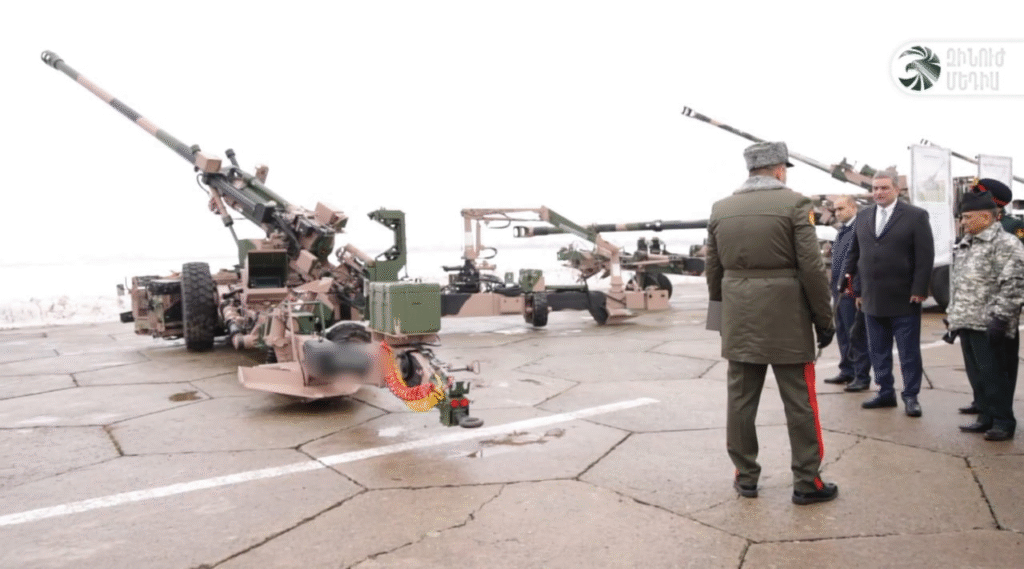
Unlike the ATAGS, the Trajan howitzers have a shorter firing range of 30 kilometers and a lower level of automation.
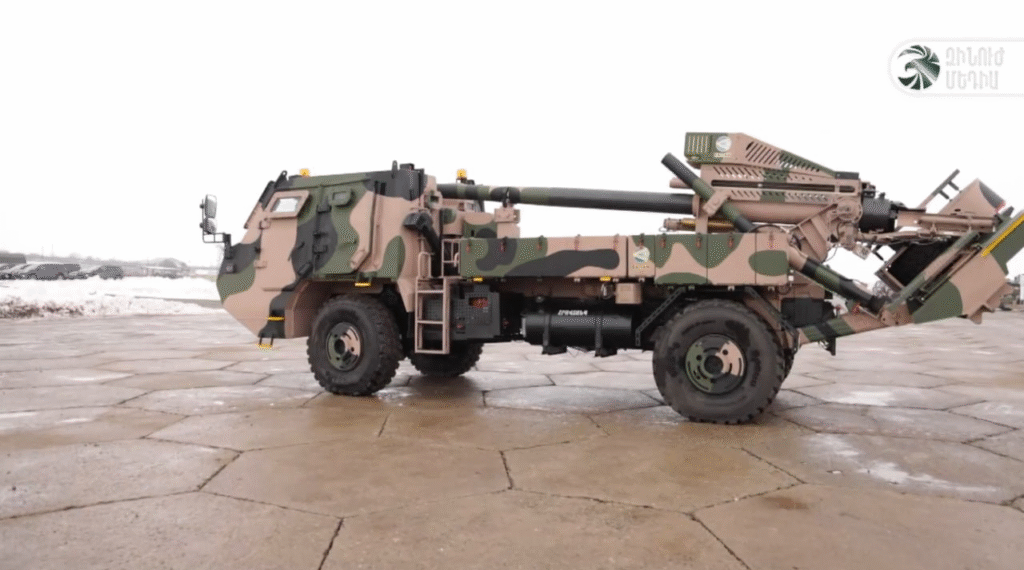
Armenia has procured MArG self-propelled howitzers, also in a 155 mm calibre, reportedly amounting to four regiments, or a total of 72 guns.
Weapons front
India moved quickly to fill the gap in Armenia’s defence needs after Russia’s pullout, but the relationship appears to go beyond straightforward commercial logic. New Delhi’s growing military ties with Yerevan have unfolded in parallel with deepening defence cooperation between Azerbaijan and Pakistan: last year, Baku received JF-17 fighter jets produced jointly by Pakistan and China.
Armenia and Azerbaijan have also consistently taken opposing diplomatic positions in the India–Pakistan conflict over Kashmir, backing New Delhi and Islamabad respectively. Yet even these alignments do not fully explain India’s interest in large-scale arms deals with Armenia.
“This new cooperation reflects India’s broader economic goals. They are trying to become a major player in the global arms market, and Armenia, as the first buyer of many types of Indian weapons, apparently helps them a lot in that regard,” Leonid Nersisyan, a military analyst with the APRI Armenia think tank, told CivilNet.
After decades of relying almost entirely on Russian equipment, India is increasingly shifting its arms production toward Western, NATO-compatible standards. This trend is visible across a range of systems, from artillery to missile platforms.
“In recent years, India’s military industry has clearly been moving westward,” Nersisyan told CivilNet. “In some cases, you see an interesting blend: for example, certain mortars or rocket systems maintain connections to older Soviet designs, but the electronics and guidance systems have been extensively modernized. When it comes to artillery, systems like the ATAGS or MArG are fully 155 mm NATO-standard, meeting Western specifications in every way. Different approaches exist, but the overall trend is unmistakably toward Western standards.”
India’s mix of Soviet and Western standards is not unique. Armenia itself has relied on Russian equipment for decades, and it still forms the backbone of its arsenal. Similarly, many NATO countries in Eastern Europe, including Poland, Czechia, and Slovenia, operated large inventories of Soviet-era weapons and aircraft long after joining the alliance. Most of these systems were later transferred to Ukraine following Russia’s invasion, and replaced with Western European and U.S.-made equipment under the rotation policy.
“NATO standard doesn’t mean that a French radar and an American radar would be interoperable out of the box,” Nersisyan explained. “But what matters is that everything produced in the last decade comes with a computer, and these systems can be integrated into digital command networks, with a central interface acting as a bridge, allowing, for example, Indian, French, and even older Soviet radars to work together.”
However, logistical challenges remain for Armenia. Heavy systems such as mortars or large rocket launchers are rarely transported by air, and shipments from Western suppliers typically have to pass through Georgia, a route that could be complicated by Tbilisi’s sour relations with the West and potential pressure from Baku.
Indian weapons, by contrast, usually arrive via Iran, but ongoing political and economic instability in the country may pose its own set of risks for timely delivery and sustained supply.



 Stories