 Civilnet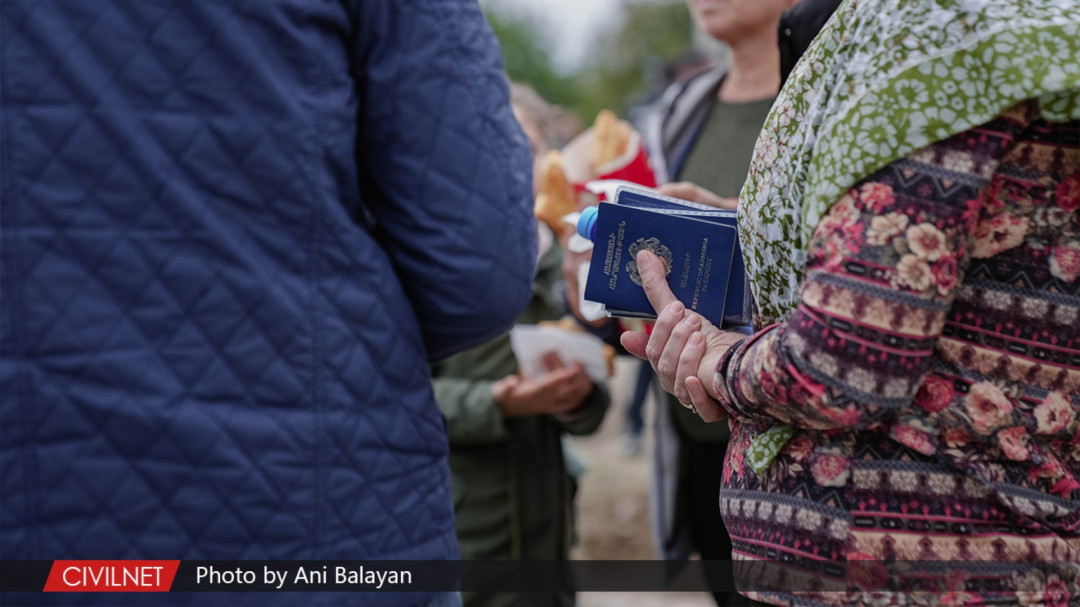
By Siranush Adamyan
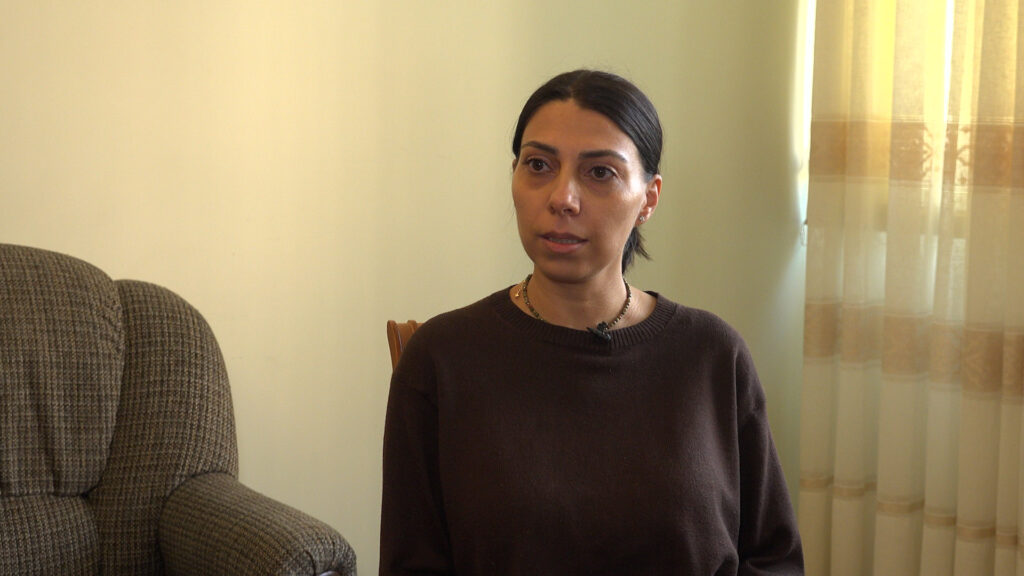
Anush Abrahamyan spent more than three months trying to restore her birth certificate before she could move forward with an application for Armenian citizenship.
Displaced from Nagorno-Karabakh, Abrahamyan discovered that her Soviet-era, Russian-language birth certificate listed her surname as Abramyan instead of Abrahamyan. The discrepancy has stalled her paperwork.
“The notary told me I would not be able to change it and that I had to apply to the local civil registry office,” she said. “They explained that the process consists of several stages — restoration and correction of the error. First, the documents have to be entered into the local database, and only then can the mistake be corrected.”
According to Abrahamyan, correcting her birth certificate also requires updating her parents’ birth certificates and their marriage certificate.
Her case reflects a broader problem facing thousands of people forcibly displaced from Nagorno-Karabakh. For many, the process of obtaining Armenian citizenship does not begin with submitting an application, but with restoring lost or inaccessible documents.
Document restoration challenges
Birth certificates, marriage certificates, and parents’ records were often left behind in Nagorno-Karabakh. Restoring each document can take weeks or months. In some cases, the process must go through the courts.
“Our 101-year-old grandmother’s birth certificate was left in the village. Now they are asking for her parents’ marriage certificate from 1918, as well as her parents’ birth or death certificates. Those documents remained in the village that was captured in 2020,” said another displaced resident.
Aram Melkonyan, deputy head of Armenia’s Migration and Citizenship Service, said the required documents are stipulated by law.
“The documents are clearly specified in legal acts, and individuals are not at a dead end when it comes to restoring them. They have the opportunity to recover certain documents through the Civil Status Acts Registration Agency,” Melkonyan said.
Asked whether the restoration process could be simplified, given that some documents left in Nagorno-Karabakh are difficult to retrieve, the Ministry of Justice requested a written inquiry.
Delays in granting citizenship
Beyond document restoration, delays in processing citizenship applications have become another obstacle.
Abrahamyan’s family wants to apply for the state housing program. However, since October 3, her mother’s citizenship application has remained under review, despite the legal 90-working-day deadline having passed.
Because the citizenship process is delayed, the family is paying rent on the home they hope to purchase to avoid losing the opportunity to buy it.
In November 2024, the Interior Ministry announced that displaced residents of Nagorno-Karabakh could obtain Armenian citizenship through an accelerated procedure within 1 to 2 months.
“At least do not announce that you will process applications faster than the law requires — within one or two months instead of 90 working days — so people can plan their home purchases,” said Abrahamyan’s husband, Smbat Petrosyan.
On February 13, Interior Minister Arpine Sargsyan said the delays were due to a significant increase in applications following the launch of an online citizenship platform on January 1.
“When our compatriots apply separately and indicate that the presidential decree has not yet been issued, but they have already found an apartment and want to finalize the process, we pay special attention to those cases so that no procedure is delayed,” Sargsyan said.
. . .
Following Azerbaijan’s September 2023 attack on Nagorno-Karabakh and the subsequent ethnic cleansing, the region’s entire remaining Armenian population — about 100,000 people — was forcibly displaced to Armenia.
Of that number, 26,099 people had applied for Armenian citizenship between 2023 and February 5, 2025. Of those applicants, 20,769 were granted citizenship by presidential decree. In addition, 9,715 minors acquired Armenian citizenship through passportization.
Applications increased after the housing assistance program was launched in May 2024, with a sharper rise after the program was opened to beneficiaries in all phases in July 2025.



 Stories