 Paul Vartan Sookiasian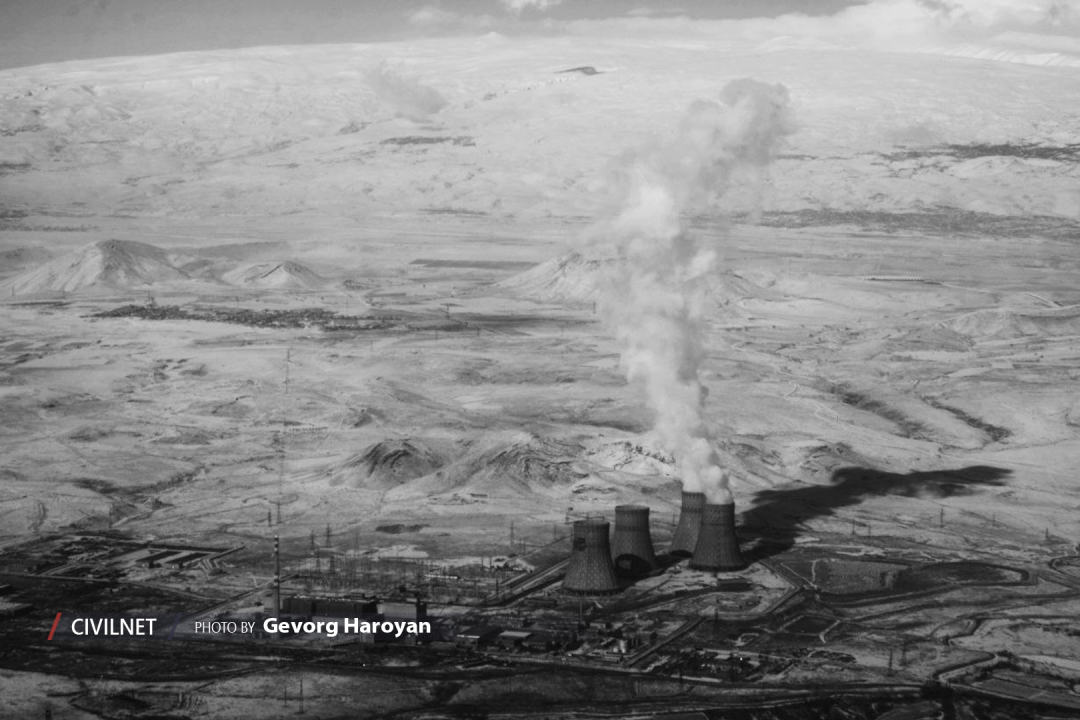
As agreed during U.S. Vice President JD Vance’s visit to Yerevan earlier this month, Armenia plans to invest up to $9 billion in American-built small modular reactors (SMRs) to replace its aging Metsamor Nuclear Power Plant.
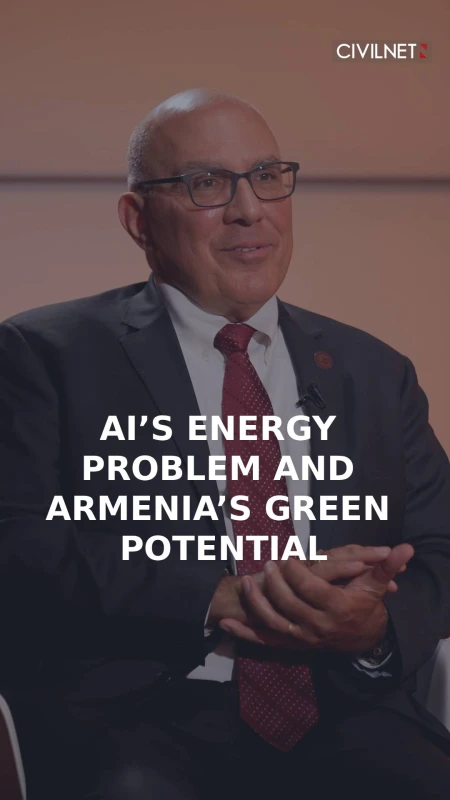
The proposal has sparked skepticism, with critics arguing that SMRs are not yet widely deployed commercially and could turn Armenia into a proving ground for emerging nuclear technology. In an interview with CivilNet, however, former U.S. Ambassador to the Marshall Islands and nuclear affairs officer Thomas Armbruster said those concerns are exaggerated.
Armbruster argued that SMRs are not a novel or experimental concept. Variations have existed for decades, particularly in military contexts. What is new, he noted, is their adaptation for large-scale civilian electricity generation, the type envisioned under Armenia’s proposed plan.
As Metsamor creates more than 30% of Armenia’s total electricity, finding a replacement is vital, and Armbruster posited that SMRs should use less nuclear fuel and be safer than conventional plants.
Those who warn about the limited track record of U.S. SMR development point out that Russia and China currently have significantly more hands-on experience in the field. China alone is building at least 30 reactors, including SMRs, while the United States has constructed only a handful of conventional plants in recent years, and no civilian-use SMRs to date.
However, as Associate Professor of Nuclear Science and Engineering at the Massachusetts Institute of Technology Dr. Areg Danagoulian highlighted, the situation is not so black and white.
“The decision to build a nuclear reactor is first and foremost a business decision. It depends on the alternatives available in a given electricity market and their prices,” he said.
The United States built a large number of reactors between the 1950s and 1980s and still operates more nuclear reactors than any other country. However, the fracking revolution, which unlocked inexpensive natural gas, made constructing new nuclear plants economically impractical, while environmental constraints in China pushed it toward nuclear power.
Danagoulian noted that while the United States’ expertise has eroded after decades of limited new builds, U.S. financial markets are showing renewed appetite to fund nuclear projects and there is growing political appreciation of the industry’s strategic importance.
In addition, the rapid expansion of artificial intelligence has driven a surge in electricity demand, with SMR technology being developed in part to power massive data centers. As these projects move forward, Danagoulian said “experience will be rebuilt, knowledge will be restored, and supply chains will be strengthened.”
Ambassador Armbruster agreed, noting that “Google, Microsoft, and other big companies are investing billions of dollars right now in this technology,” he said.
Armbruster also sees an important benefit of SMRs in their scalability. Instead of building one massive facility, countries can deploy modular units and expand capacity over time as demand grows.
“Because it is small, it’s scalable,” he said. “As your energy needs increase, you can add on components.”
While some observers voice fear about Armenia pivoting away from decades of nuclear cooperation with Russia to the U.S., and question the latter’s commitment, Armbruster called the agreement signed in Yerevan “very significant.”
Known as a 123 Agreement, it is a formal legal framework under U.S. law that enables peaceful nuclear cooperation between the United States and a partner country, covering about 50 countries. In practical terms, Armbruster said, it opens access to American nuclear technology, fuel, expertise, and know-how.
Armbruster also stressed that the symbolism of the signing matters. Vice President Vance traveled to Armenia and signed the agreement in person, something Armbruster described as a clear political signal that “there’s real high-level interest in this relationship.”
However, even with growing momentum, nuclear development is not quick, with the first commercial SMR power plants not expected to come on-line globally until the late 2020s, and wider adoption planned by around 2035. In that context, Armbruster does not expect Armenia’s replacement SMR to be ready for at least a decade, with 15 years a reasonable timeline for completion.
Armenia’s challenge is that Metsamor plant is currently scheduled to be decommissioned by 2036, creating a potential gap between the end of Metsamor’s operation and the time it would take for any kind of replacement to come online.
This likely explains why Armenian officials have recently floated the idea of extending Metsamor’s operating life once again to 2046, allowing time for the technology to mature and for the necessary expertise and industrial capacity to be rebuilt.
As the technology is not yet widely understood by the public, Armbruster suggested the Armenian government lead a public education campaign to explain what SMRs are and why they are considered safe and clean.
He noted that nuclear energy still triggers public fear in many societies, often tied to historical disasters like Chernobyl. While Armbruster believes those fears have lessened, he warned that governments should not assume the public will automatically support nuclear expansion.
Metsamor will need to be replaced one way or another, and for any plan to succeed, realistic timelines, public trust, and sustained high-level commitment on both sides will be required.





 Stories