 Civilnet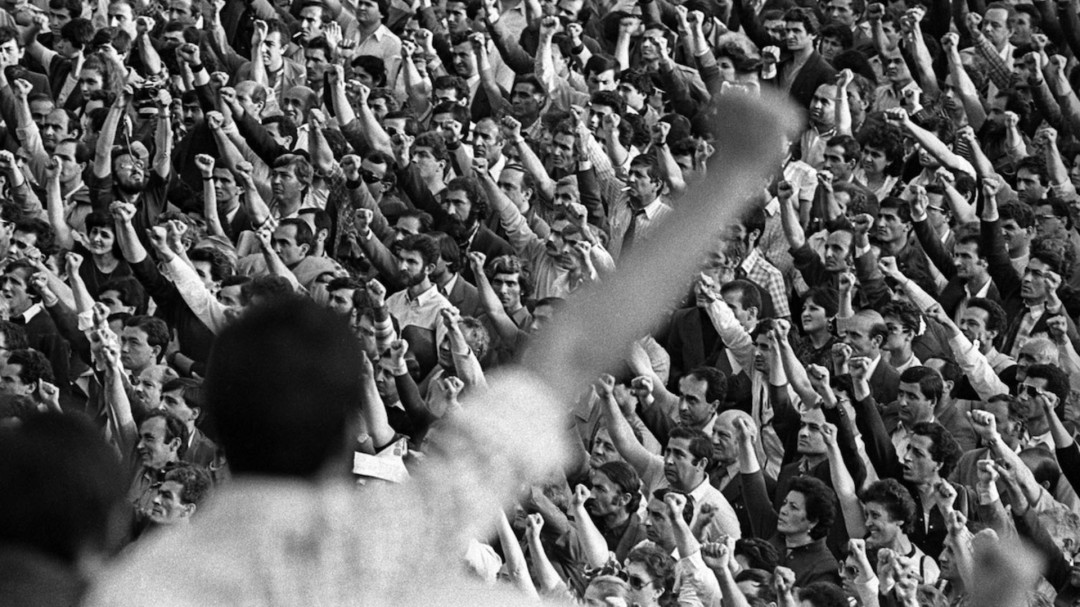
By Hasmik Hovhannisyan
A Yerevan court has banned the screening and distribution of a film about Armenia’s independence movement, siding with a lawsuit filed by the country’s public broadcaster.
The film, Our Path to Independence, directed by Tigran Paskevichyan and produced on commission by Public Television of Armenia, will not be publicly screened in any format following the ruling.
The decision effectively prevents audiences from seeing a portrayal of events between the 1988 Karabakh movement and the declaration of independence in 1990, Paskevichyan told CivilNet.
The broadcaster argued in court that it owns the rights to the film because it financed the project.
“They say, we paid for it, so we bought it,” the director said, adding that he would have accepted such a claim from a private company, but not from a public broadcaster.
The lawsuit was partly based on a screening held on May 2, 2025, at the headquarters of the opposition Armenian National Congress political party. Paskevichyan said he showed the film not only on that date but on multiple other occasions.
Before the legal dispute, the director had asked the broadcaster for permission to screen the film on other platforms but received no response. Despite the ruling, he said he plans to continue organizing screenings.
The chairman of the Public Broadcaster’s Council, Vasak Darbinyan, told CivilNet he was unaware of the case. Other council members could not be reached either.
This is not the first time Paskevichyan has faced obstacles in screening his work. His earlier film, Armenia’s Lost Spring, about the March 1, 2008 violence and the events that preceded it, also struggled to secure venues. He said similar restrictions existed under both former presidents Robert Kocharyan and Serzh Sargsyan, but described the current situation as unprecedented.
“Something has always been banned under every administration, but reaching the point where you are not even allowed to show your own film is the lowest level,” he said.
Independence narrative under renewed scrutiny
The controversy comes amid broader political debates over Armenia’s independence narrative. The 1990 Declaration of Independence, which references the unification of Soviet Armenia and Nagorno-Karabakh, has become a point of tension in both domestic and foreign policy discussions.
Azerbaijan has called the reference a challenge to its territorial integrity and has demanded constitutional changes as part of peace negotiations. Armenian authorities have launched a constitutional reform process, and a new draft is expected to remove references to the declaration.
Prime Minister Nikol Pashinyan said in parliament last week that the declaration had embedded a “logic of conflict” in Armenia’s statehood.
“If you build your independence on conflict with all your neighbors, you make it impossible to live in your environment without external help,” he said, adding that such a framework increases dependence on outside actors.
The government says the constitutional changes are not driven by Azerbaijan’s demands, but questions linger.



 Stories