 Tigran Grigoryan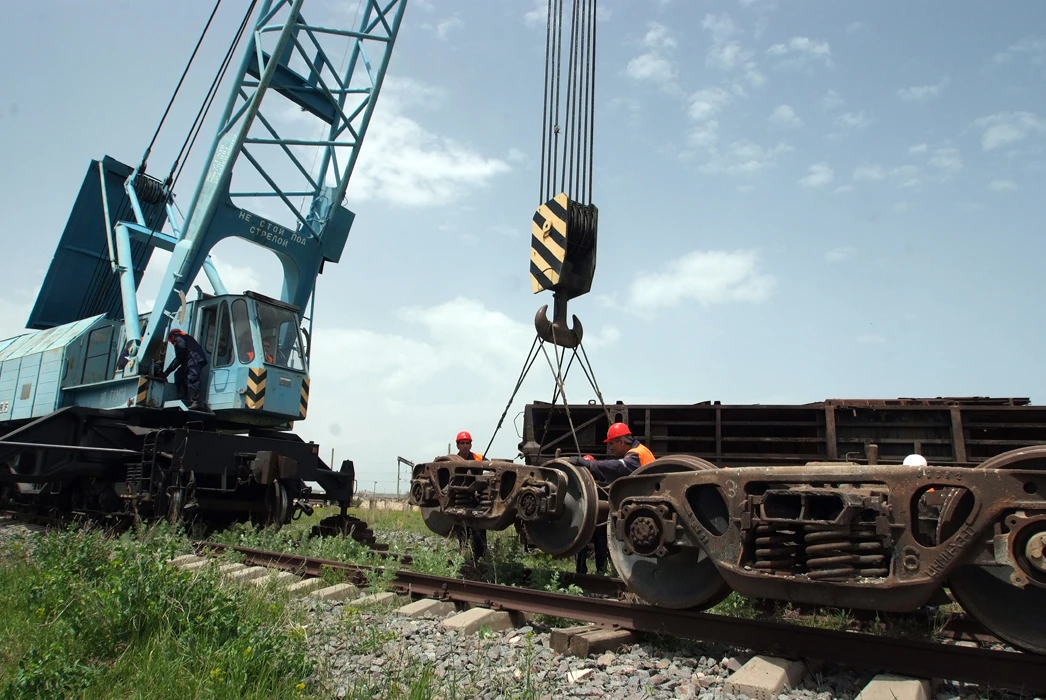
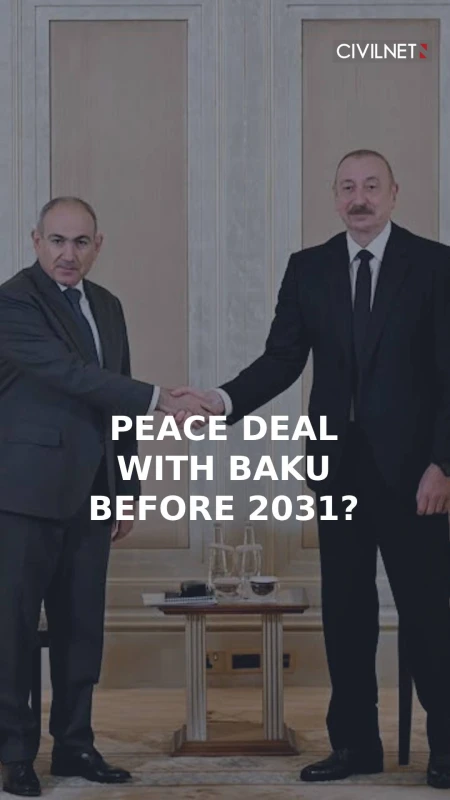
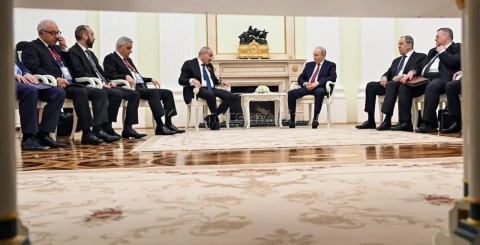
On April 1, Armenian Prime Minister Nikol Pashinyan paid a working visit to Moscow, during which he met with Russian President Vladimir Putin. The visit was notable both for the statements made during the public segment of the leaders’ meeting and for the comments made before and after it.
Based on these statements, it is possible to understand what issues were on the agenda of Pashinyan’s visit to Moscow.
Most likely, one of the main objectives of the visit was to discuss the future of control over Armenia’s railway infrastructure. This is suggested by statements and interviews by Russian officials on this topic both before and after Pashinyan’s visit, which will be addressed below.
Discussions about the future of Armenia’s railway system have intensified in recent months. On February 13, during a briefing, Nikol Pashinyan stated that Russia’s control over Armenia’s railway system could hinder the regional unblocking process.
He specifically said: “Within the framework of TRIPP, there are now forces saying: let’s arrange things so that after Meghri, when the railway enters Nakhichevan, it bypasses Armenia. They argue that Armenia’s railway is under Russian management.” Pashinyan noted that a possible solution to this situation could be for a country friendly to both Armenia and Russia to purchase the concession management rights from Moscow. During that briefing, he mentioned Kazakhstan, the UAE, and Qatar as potential buyers. On March 26, Pashinyan confirmed that negotiations are underway with the Russian side to transfer the management rights of the South Caucasus Railway to a Kazakh company.
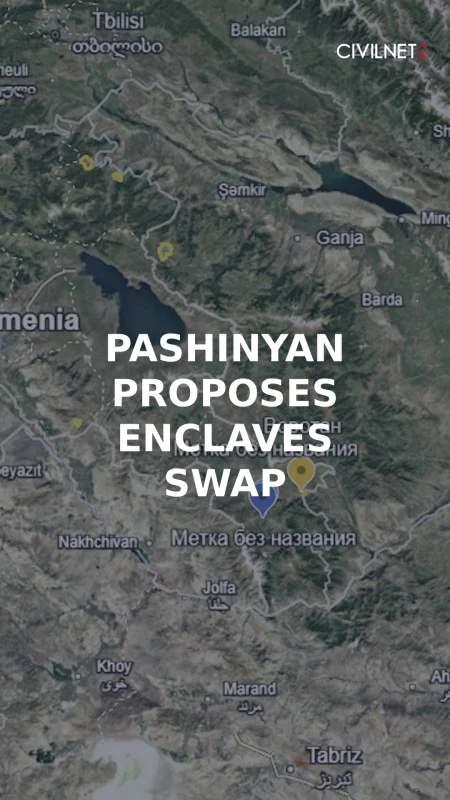
In the context of TRIPP, Pashinyan’s concerns are linked to the possible involvement of the European Union in the Armenia–Azerbaijan unblocking process. Following last August’s Washington summit between the leaders of Armenia and Azerbaijan, mediated by US President Donald Trump, where an agreement was reached to launch the TRIPP project—enabling Azerbaijan to connect with its exclave of Nakhichevan while potentially allowing Armenia to reopen its blocked communications—Brussels has been seeking a role in the process. Months ago, the EU began discussions with Azerbaijan on supporting the restoration of the railway passing through Nakhichevan, on the condition that it be connected to Armenia at the Yeraskh section.
It is against the backdrop of these negotiations that an important concern has emerged: since Armenia’s railway infrastructure has been managed since 2008 by the South Caucasus Railway—a subsidiary of Russian Railways, which is under European sanctions—under a concession agreement set to run until 2038 (with an option to extend it by another ten years), this arrangement could complicate efforts to restore the Nakhichevan–Armenia rail link at Yeraskh with EU support.
Armenia’s intention to transfer railway management from Russia to a third country is primarily driven by the above-mentioned issues, but it is also likely part of a broader policy of reducing structural dependence on Russia.
In this context, Pashinyan’s visit to Moscow, as well as the rather unusual public part of his meeting with Putin, should be viewed against these developments. Notably, ahead of the Armenian Prime Minister’s visit, Russian Transport Minister Andrey Nikitin stated that Moscow has no plans to transfer concessions to anyone, adding that Armenia has not officially discussed these issues with Russia.
It is also no coincidence that during the public part of the meeting, Putin placed particular emphasis on trade turnover between the two countries, its structure, the low price of gas sold to Armenia, and similar factors. These were clear signals that if Yerevan takes steps to reduce Russian control over Armenia’s infrastructure, Moscow will use the economic levers mentioned by Putin.
The day after the Pashinyan–Putin meeting, Russian Deputy Prime Minister Alexey Overchuk spoke even more directly in an interview with the state agency TASS. The main topic of the interview was precisely the future of Armenia’s railways. Overchuk stated that, from Russia’s perspective, there are no economic grounds for revising the concession agreement. He warned that if such a decision is made, Russia will take retaliatory measures, including restricting Armenian businesses’ access to the Russian market.
These statements by Putin and Overchuk suggest that, as expected, control over Armenia’s railways is an extremely important issue for Russia, and it does not intend to relinquish its management rights.
This moment is also notable because, for the first time in recent years, Russia is responding harshly to Armenia’s attempts to reduce its influence in various sectors and is speaking of serious practical consequences.
When Armenia began its policy of diversification in foreign policy and security in the autumn of 2022, Moscow mostly responded at the level of statements, largely accepting Yerevan’s decisions. The reason for this was that those steps did not significantly reduce Armenia’s structural dependence on Russia and were often symbolic in nature. Such steps include the withdrawal of Russian border guards from Zvartnots Airport and the Armenia–Azerbaijan border, the freezing of membership in the CSTO, and similar developments.
However, these decisions did not substantially reduce Russia’s leverage in Armenia. Moreover, despite attempts at diversification and ongoing public disagreements, economic and trade ties between the two countries continued to expand. Following Russia’s full-scale invasion of Ukraine in February 2022, bilateral trade surged dramatically, roughly tripling from pre-war levels (around $2.6 billion in 2021) to a record $11.5–12.4 billion by 2024. Although trade contracted sharply to $6.4 billion in 2025, it still represents a significant increase compared to the pre-war period.
For Russia, which is under Western sanctions, the growth of trade with countries like Armenia and the need to diversify its trade links through them have created certain mutual dependencies and a kind of safety cushion for Armenia.
The current discussions about the future of Armenia’s railway infrastructure mark the first case where Russia could lose a significant resource of control and leverage in Armenia. This is compounded by Armenia’s intention to build a new nuclear power plant in cooperation with other partners. The operation of the Metsamor Nuclear Power Plant, which is managed by Rosatom, is set to end in 2036. Notably, the topic of the new nuclear plant was also addressed in Overchuk’s aforementioned interview.
All these factors create a situation in which, for the first time in recent years, Russia is considering the use of tougher instruments toward Armenia. Even partial implementation of the threats mentioned above could create serious problems for Armenia’s economy. In this regard, there is a significant likelihood that the Armenian authorities may abandon their intention to revise the concession agreement with Russian Railways and instead seek alternative solutions to the problematic issues that have emerged in the unblocking process.

 Stories