 Tigran Grigoryan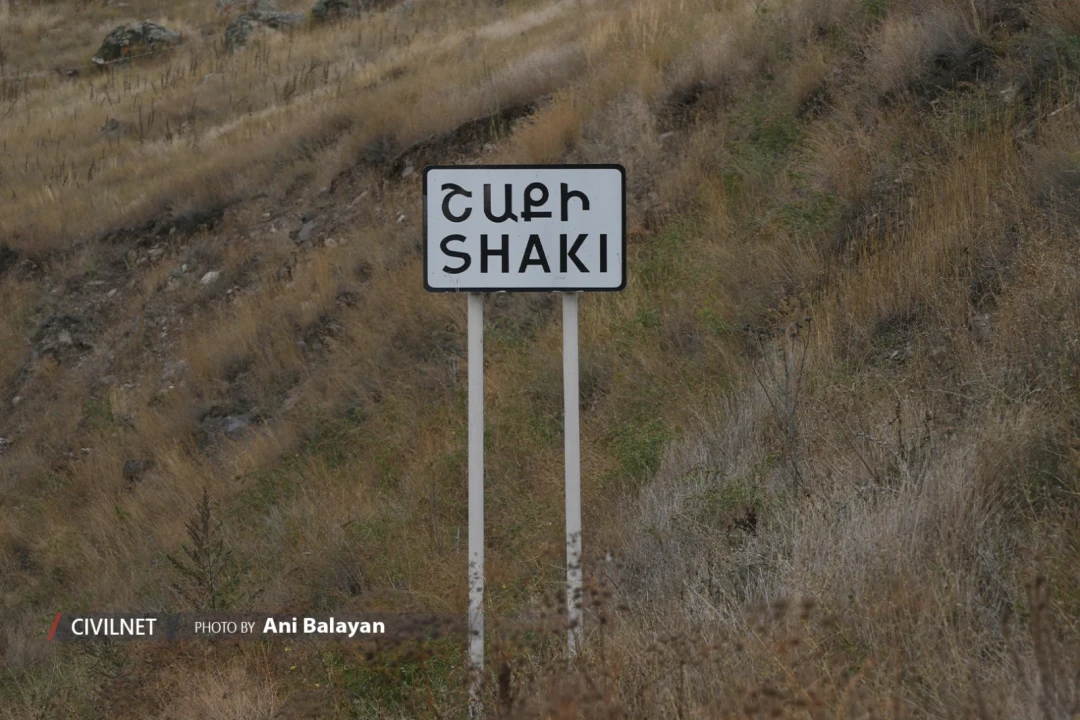
#DemocracyWatch - Over the past week, public debate in Armenia has centered on an incident in the village of Shaki in the southern Syunik region. An armed Azerbaijani soldier who had gone AWOL days earlier and crossed the Armenian border ended up, unnoticed, 15 kilometers inside Armenian territory, at a house in Shaki, where he severely wounded a local mother, Ani Avetisyan, who was trying to protect her children. The soldier was subsequently apprehended by Armenian law enforcement.
The incident not only exposed the grim reality behind the government's pompous PR campaign portraying a comprehensive reform of the security system, but also revealed the absolute incompetence of state institutions in communicating potential risks to the local population. The Azerbaijani side had reportedly notified its Armenian counterparts that an AWOL soldier might cross the border. Yet neither the residents of the area nor even local self-government officials were properly informed by Armenian state institutions about the potential risk.
The incident has raised serious questions about the vulnerability of Armenia's border areas. These concerns, along with the fate of the Azerbaijani soldier who committed a crime on Armenian soil, have become central to public discussions in Armenia. However, some of Prime Minister Nikol Pashinyan's statements have fueled even greater controversy and public anger. The most controversial came during a question-and-answer session in the National Assembly, when Pashinyan claimed that the woman who confronted the armed Azerbaijani soldier in her home, with her children present, should have waited for the police to arrive.
At first glance, the prime minister's claim might seem paradoxical. The head of a government that failed to protect its citizens in this particular situation, leaving a mother and her children to face an armed soldier from a neighboring country, has responded not by acknowledging the full extent of the failure of the security institutions and the state as a whole, but by attempting to downplay the scale of these shortcomings and shift the blame and responsibility for the incident onto the victim.
However, despite the public anger and criticism directed at Pashinyan over these remarks, this type of rhetoric is neither new nor extraordinary for the Armenian government. Victim-blaming has effectively become an important part of the ruling party's ideology and mindset. There has been a growing tendency among ruling party officials to shift blame onto those affected by major crises in an attempt to evade responsibility.
When Russia recently imposed trade restrictions on Armenian products amid growing political tensions between the two countries, Pashinyan made a statement that reflected this approach. During a government meeting, he complained about the quality of fish produced in Armenia, adding that he never buys it. There may be considerable truth to his assessment of the product's quality. However, publicly criticizing fish producers at the very moment when Russia was imposing politically motivated restrictions under the pretext of phytosanitary concerns is an example of shifting responsibility for an existing crisis onto its victims while downplaying the government's own role in addressing the problem.
The most striking example of this victim-blaming rhetoric, however, can be found in the ruling party's treatment of refugees from Nagorno-Karabakh. Over the past three years, ruling party officials have repeatedly used narratives that shift responsibility for the ethnic cleansing and forced displacement of the entire Armenian population of Nagorno-Karabakh onto the refugees themselves, allowing the government to avoid confronting its own share of responsibility.
In February 2025, then-Speaker of the National Assembly Alen Simonyan infamously told a refugee journalist that the refugees should have stayed and fought. During the 2026 parliamentary election campaign, the prime minister referred to the refugees as “runaways” and asked another refugee a rhetorical question: “Why didn't you die?”
As in other instances, this case of victim-blaming also serves to deflect criticism of the government’s policies and decisions that contributed to the tragic outcome of the mass displacement of Nagorno-Karabakh Armenians. It also reinforces “us versus them” narratives, legitimizing anti-refugee rhetoric within Armenian society.
The ruling party’s victim-blaming tactics reflect a broader populist style of governance that has become increasingly prevalent in Armenia in recent years. Pashinyan and his associates have mastered the politics of post-truth, sidelining evidence-based debate in favor of selective interpretations of facts that serve political interests. This approach has become a serious obstacle to holding the government accountable for its failures.
It also deepens societal grievances while diverting discussions about government shortcomings into a polarized, black-and-white political debate. Such tactics may yield short-term political gains, but they come at a high cost: eroding public trust in state institutions and undermining the government’s stated goals of strengthening societal resilience and preparedness for both external and internal threats.
Democracy Watch is a joint initiative of CivilNet and the Regional Center for Democracy and Security.



 Stories