 Karen Harutyunyan
If you place a frog in water and gradually bring it to a boil, it fails to sense the danger, does not jump out, and ultimately dies.
This is the well-known “boiling frog” metaphor. And it is about Nikol Pashinyan’s Armenia.
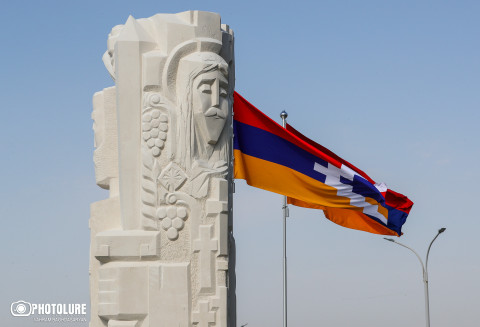
Speaking to journalists on Thursday, Pashinyan compared the destruction of the cathedral in Stepanakert to a hypothetical scenario in which, following border delimitation, Armenia regains the Artsvashen enclave and finds mosques recently built there.
There is hardly any need to explain the absurdity of this statement: that Artsvashen and Artsakh were Armenian-populated; that the right to practice one’s faith is a fundamental right under international law; that the international community recognized the existence of Nagorno-Karabakh as a political entity, as reflected in documents of the UN, the OSCE, and others; that the people of that territory had the right to organize their own life regardless of status. Ultimately, with such statements, Nikol Pashinyan effectively declares his own government an occupying force—one that could be held accountable.
What would have seemed unthinkable just a few years ago has now become routine. There is no pushback; “the frog remains in the boiling water.”
Pashinyan has heated this metaphorical water gradually, not all at once.
First came “Artsakh is Armenia, period,” negotiating from “his own position.”
Then came lowering the bar on the status of Karabakh to bring “:broad international consolidation.”
And it went on.
A wholesale shifting of blame for personal failures onto everyone else, instead of a sober analysis of disaster and lessons learned.
The loss of Artsakh—reframed as “the day of Armenia’s real independence,” marked by unprecedented fireworks in central Yerevan.
Accusations against the starving population of Artsakh for “not fighting.” A campaign of hatred against Artsakh Armenians.
The detention of parents who lost their sons, at the Yerablur Military Cemetery.
A new tradition of state officials not visiting Yerablur on memorial days.
An artificial reshaping of Armenian history into a “history of Armenia.”
Attacks on the Armenian Church, the imprisonment of clergy, in defiance of the law and morality.
The removal of Ararat from the country’s entry stamp, even from the traditional backdrop of Khor Virap, as was shown in the newly unveiled passport design.
With loud invocations of ‘sovereignty,’ commitment to constitutional change, dictated by Ilham Aliyev.
The sacrifice of Artsakh to avoid conceding a road, only to provide that road (or corridor) without Artsakh.
Shifting responsibility for the Genocide onto the victim.
The normalization of Armenians being held in Baku, and even accusations directed at the detainees themselves.
The instrumentalization of the law enforcement system and the judiciary—and so on, and so forth.
What is most frightening is not that Pashinyan’s allies and supporters consider this abnormality to be normal.
What is most frightening is that many conscious, informed people—fully aware of reality—choose silence.
Silence out of convenience, fear, or personal calculation.
And it is precisely this silence that keeps the “frog” in the boiling water.


 Stories