 Nelli Lazaryan
 CivilNetCheck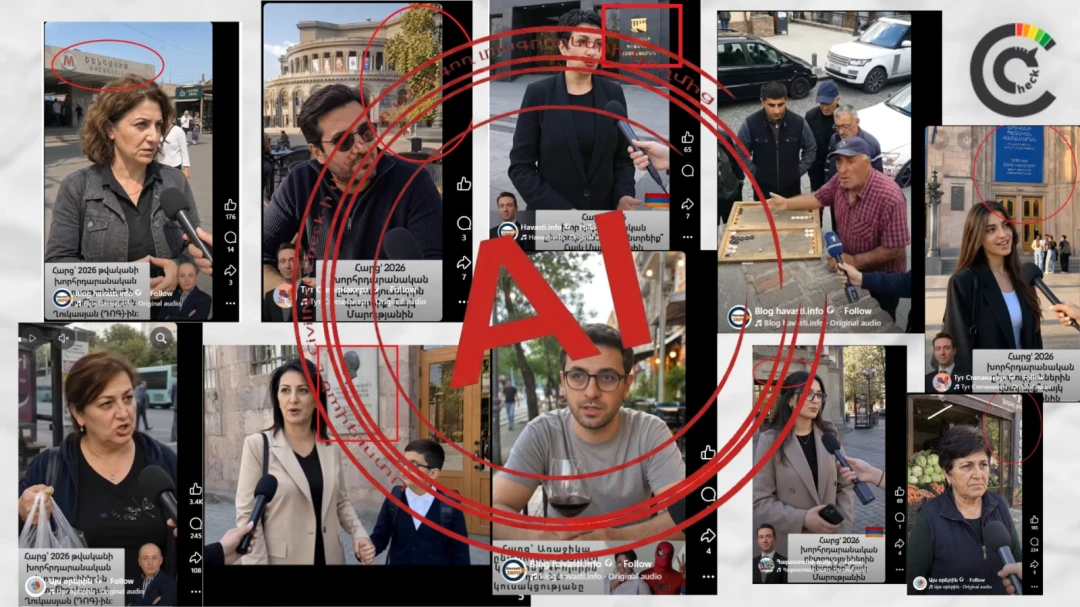
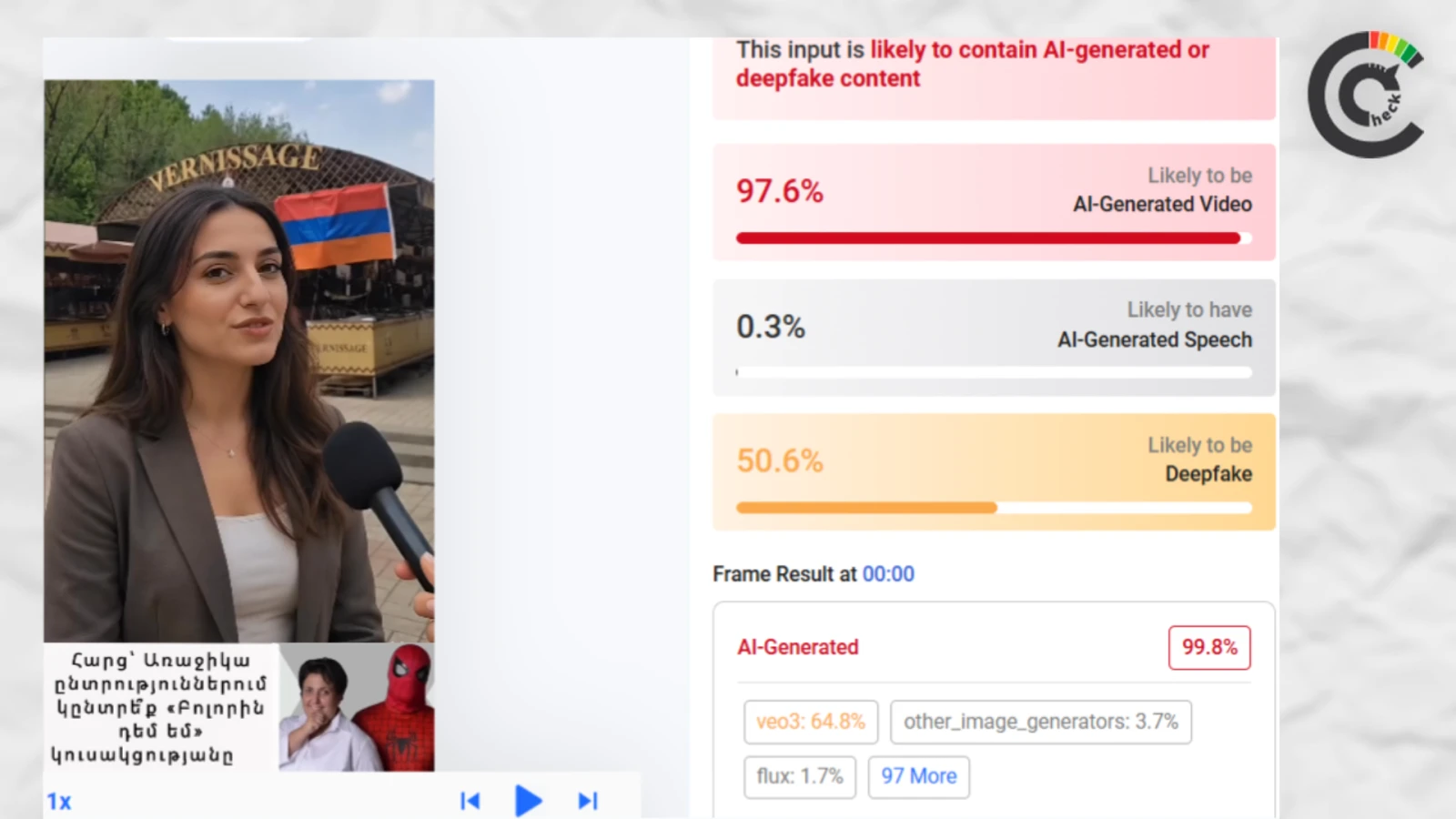
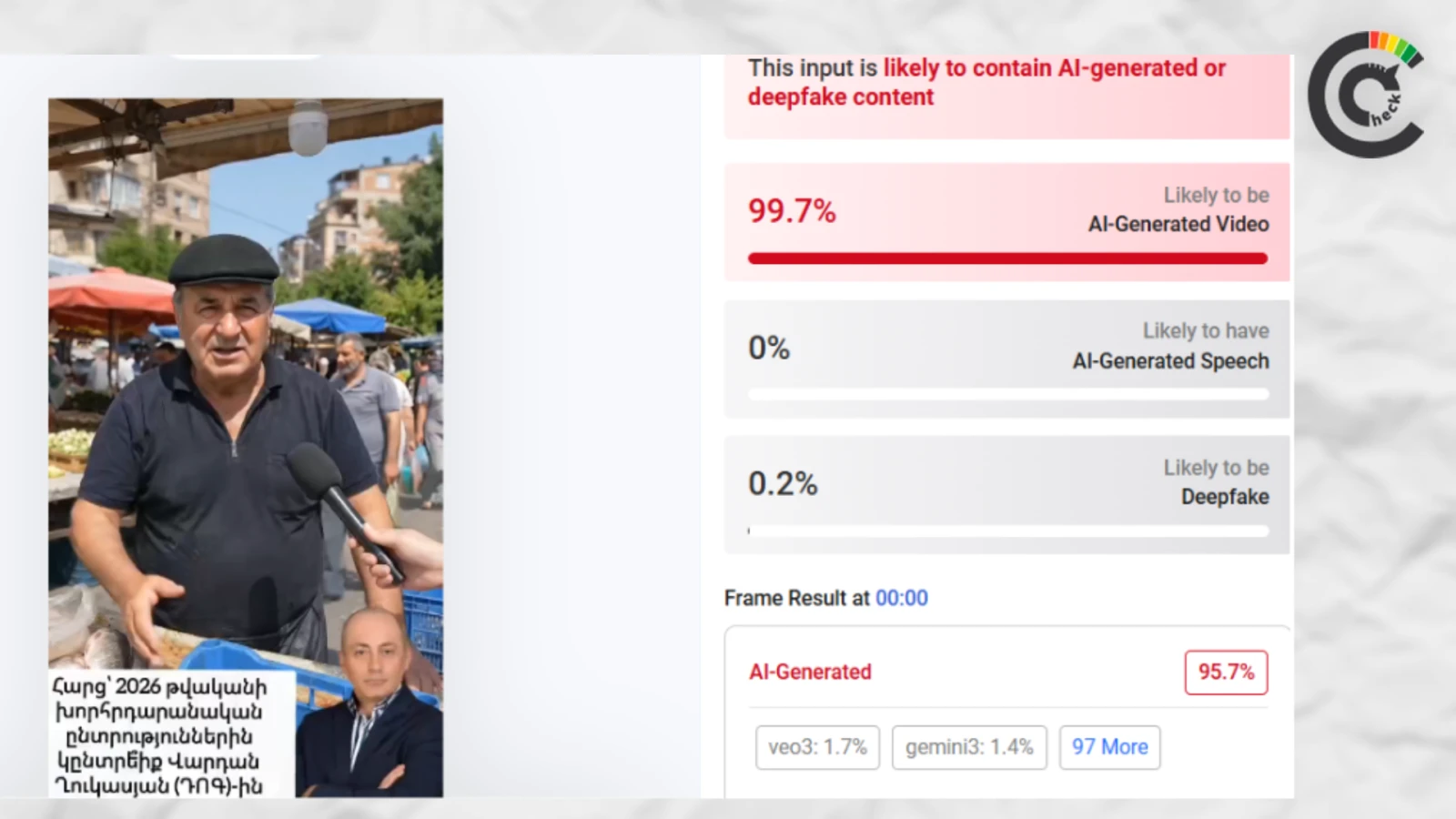
A video has been widely circulating on Facebook in which, during a “street interview,” a woman is asked whether she would vote in the parliamentary elections for Vardan Ghukasyan, the DOK party’s prime ministerial candidate.
“Why would I vote for him? His entire life he’s always been an ‘offended little guy’ about everything; he understands neither kids nor adults. I can’t imagine him as prime minister,” the woman replies.
This post has garnered about 3,500 likes, around 250 reactions, and hundreds of shares. In the comments, most users argue and trade insults, while only a handful express doubts that the person in the video might not be real.
“Hayk Marutyan is very good, his humor is on point, but running a state is a different job. I think everyone should keep to their own work,” says another alleged voter. In the comments under this video, users write that “Hayk Marutyan is siphoning votes for Nikol,” “He’s crazy, a clown—let him clown around,” and so on.
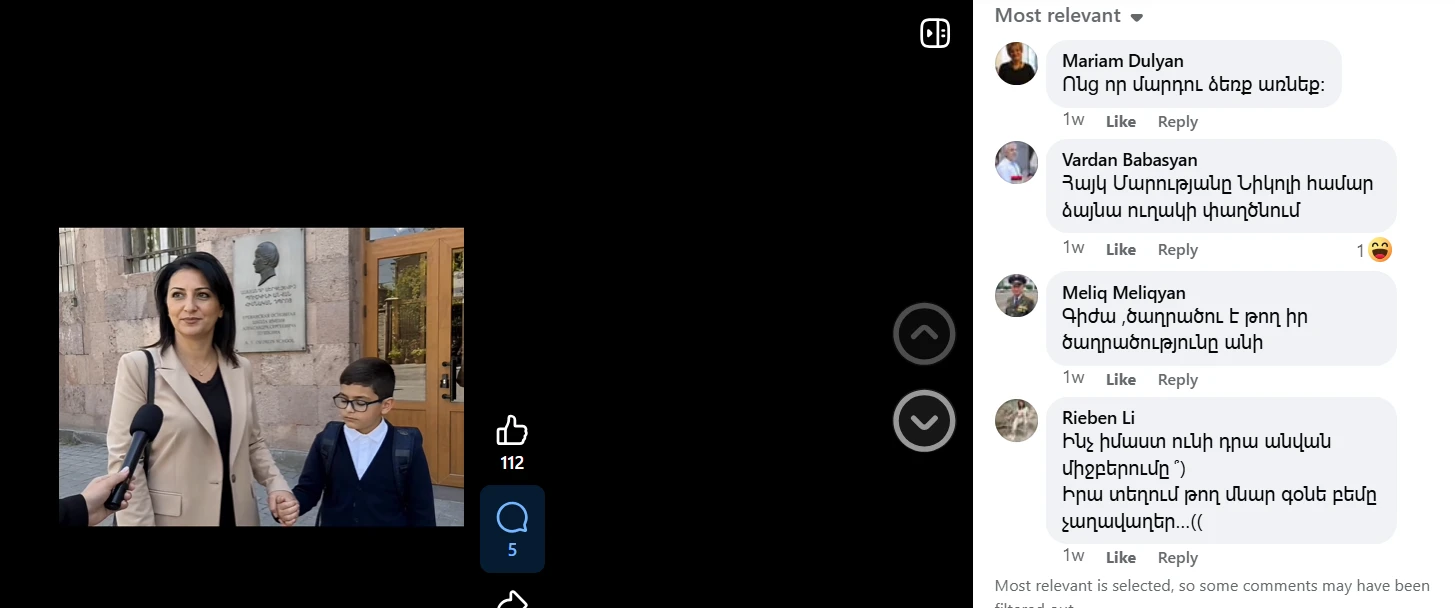
However, neither of the two speakers are real: they were created using artificial intelligence.
#CivilNetCheck has found that in recent months a number of Facebook pages have been regularly distributing similar AI-generated “street interviews” in which often negative, discrediting, or manipulative “opinions” about politicians are presented.
Who is spreading the AI interviews?
CivilNet’s fact-checking team has identified 12 Facebook pages that, since April, have periodically posted and shared each other’s similar short clips resembling political “street interviews.”
The pages “These Days”, Blog havasti.info, Havasti.info, ArmNews, First Info, Armenia’s Strength, Interesting Things, Full Armenia, Тут Степанакерт, Info News, Armenians Unite, and Daily News have been circulating videos in which AI-created citizens express negative opinions about various candidates. including “New Power” party prime ministerial candidate Hayk Marutyan, “Democracy, Law and Discipline” party candidate Vardan Ghukasyan (DOG), the “I’m Against Everyone” party, and the top candidate of the Armenian Sovereign Party Gurgen Simonyan.
In addition to these opposition forces, the pages also express negative views about the ruling “Civil Contract” party and Prime Minister Nikol Pashinyan.
“I’m a guy who keeps a dog; I’ve got a German shepherd, and that shepherd is so smart that even it wouldn’t vote for Nikol,” states an AI-generated citizen,” drawing a flood of insults in more than a hundred comments.
Beyond these fake street interviews, the pages also actively distribute other AI-created videos. In one example a character imitating Pashinyan announces that “they’ve finished the road,” and that “my boss’s 300,000 compatriots will come soon,” hinting at Azerbaijan’s President Ilham Aliyev and the claim voiced by the Strong Armenia party figure Samvel Karapetyan that 300,000 Azerbaijanis will be allowed to settle in Armenia.
Notably, while the AI citizens express negative or discrediting opinions about most of the candidates, similar videos about Karapetyan are almost exclusively positive.
In one example, an AI-created citizen is made to say: “I haven’t seen a smarter and more patriotic leader than Mr. Karapetyan.”
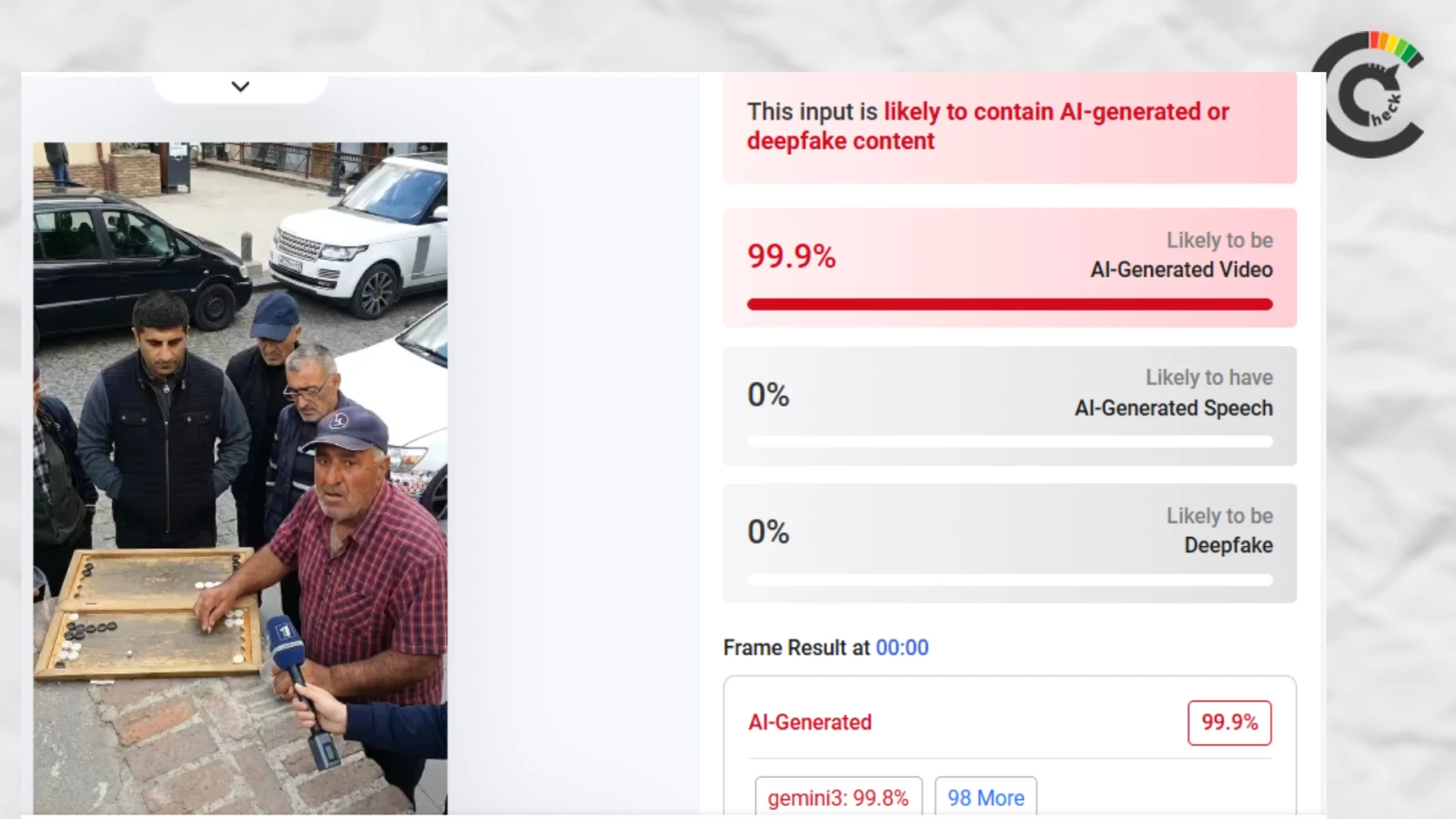
In another clip, an elderly man playing backgammon is approached by a microphone from Russia’s Channel One and says: “Here we’re all going to go vote for Samo Karapetyan.”
How to tell the videos are fake
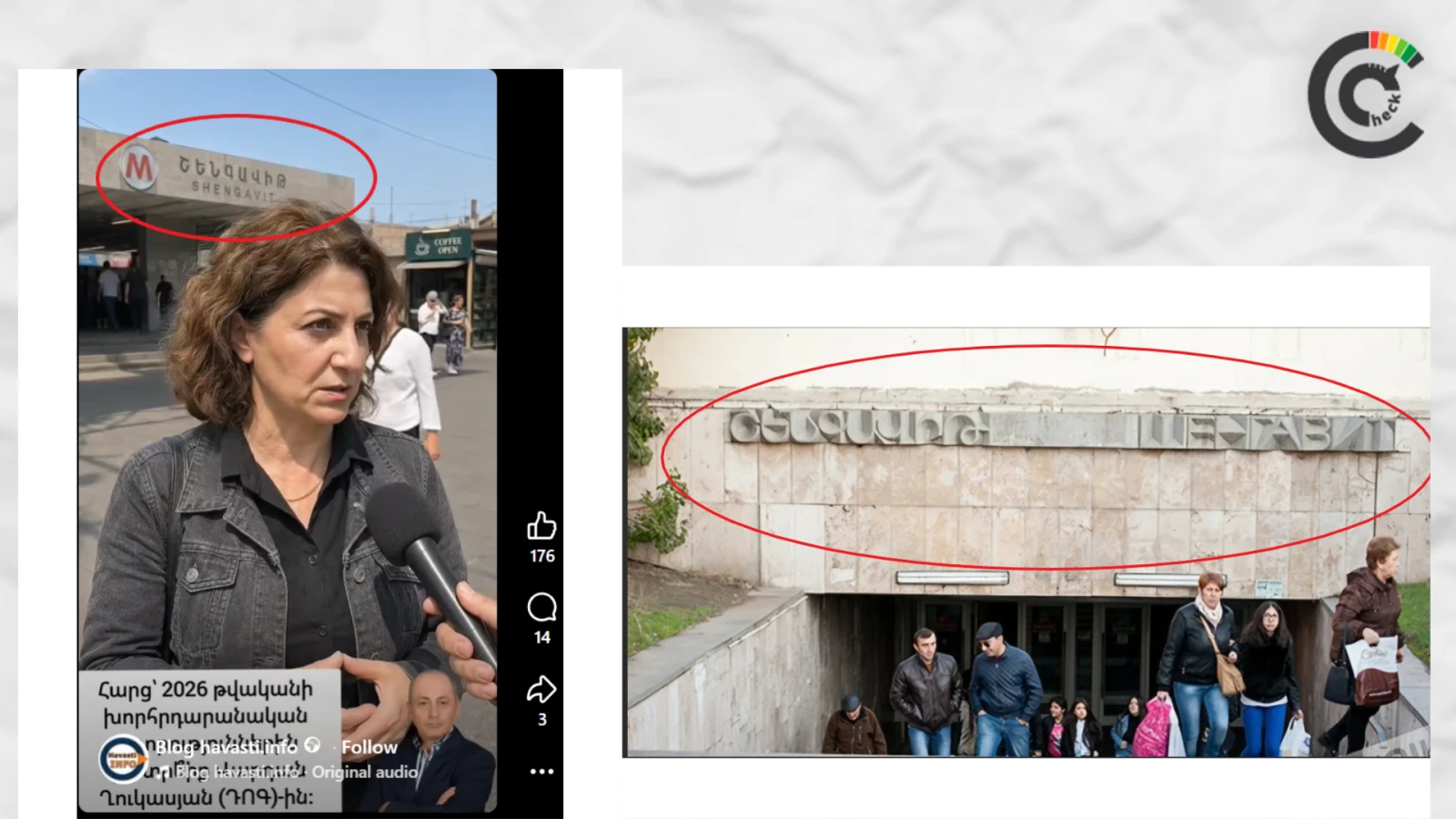
A review of several dozen videos shows that a significant portion of the citizens interviewed are not real people. The videos also display technical flaws and visual inconsistencies typical of AI-generated content.
Unnatural speech and movements: The characters’ facial movements, blinking, and lip-syncing with the audio are unnatural. The diction is overly literary, and the texts contain logical and lexical errors, something typical of AI programs that translate text into Armenian.
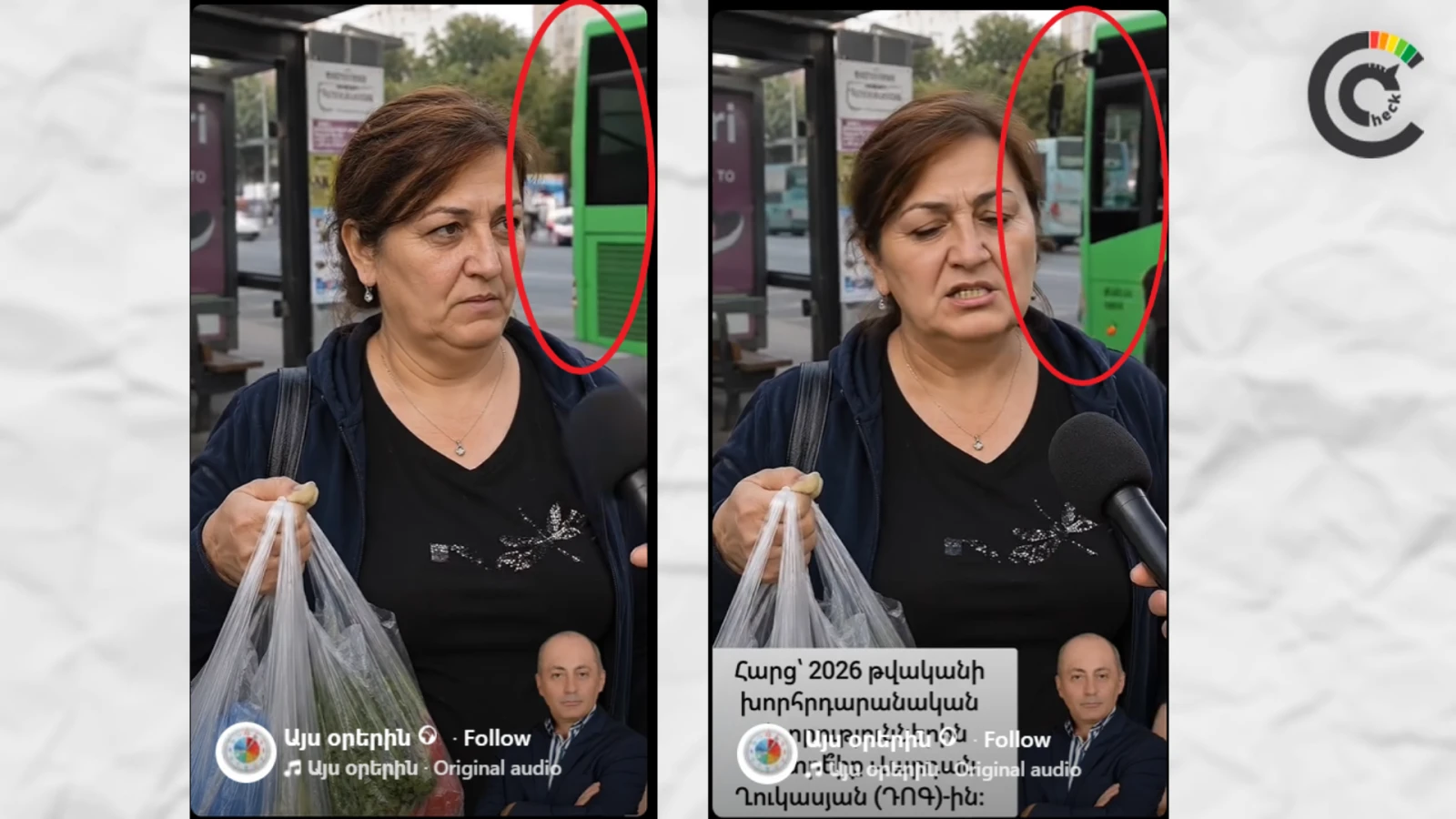
Violations of the laws of physics: For example, in the video about Vardan Ghukasyan, a bright green bus visible in the background (a type which does not exist in Yerevan) pulls up to a stop and then backs up without turning around. Moreover, the front turns into the rear.
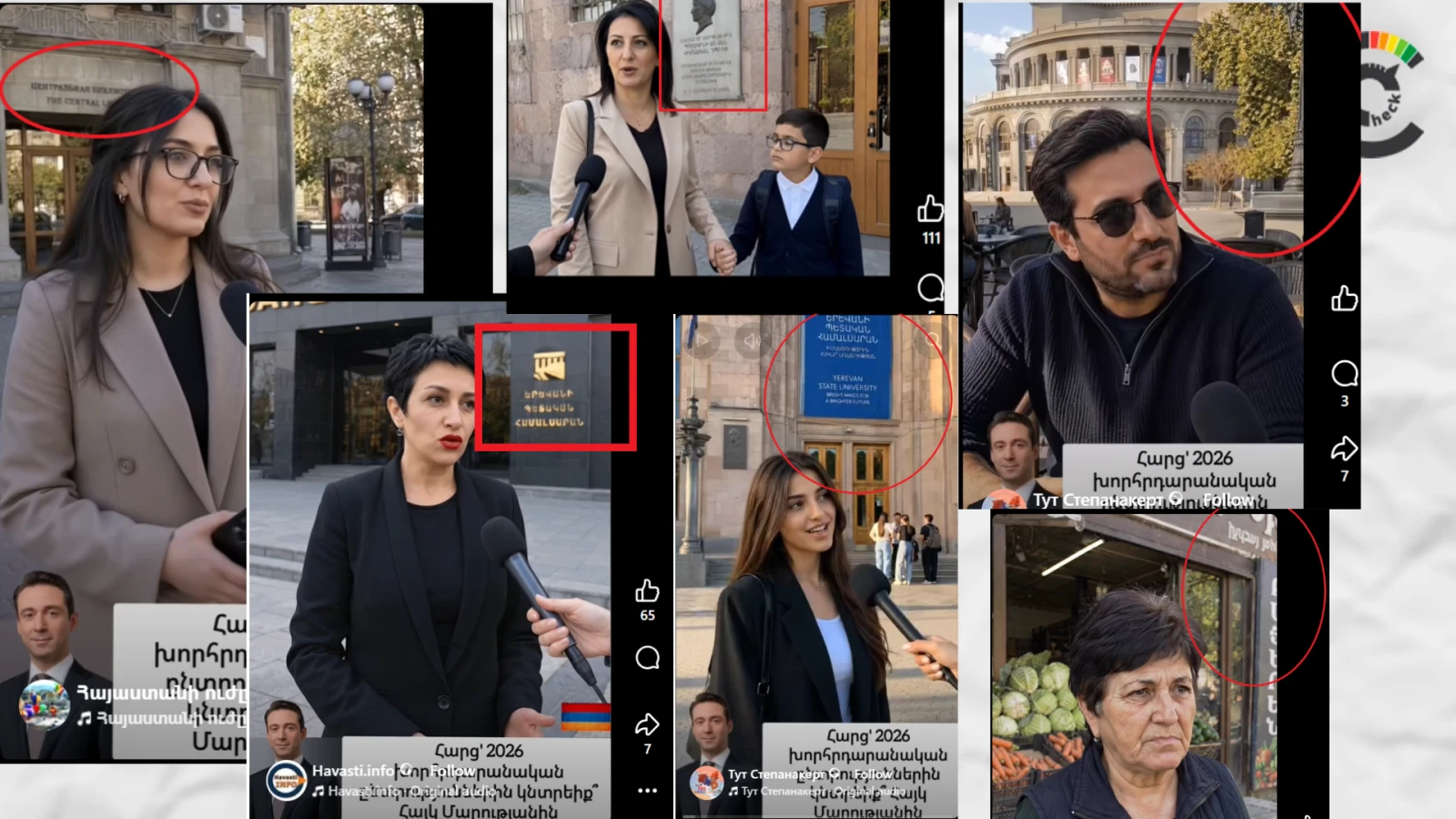
Distorted images: Signs and text visible in the background are often distorted or illegible. In some cases, the landscapes do not match the real appearance of the places where the interviews were supposedly filmed.
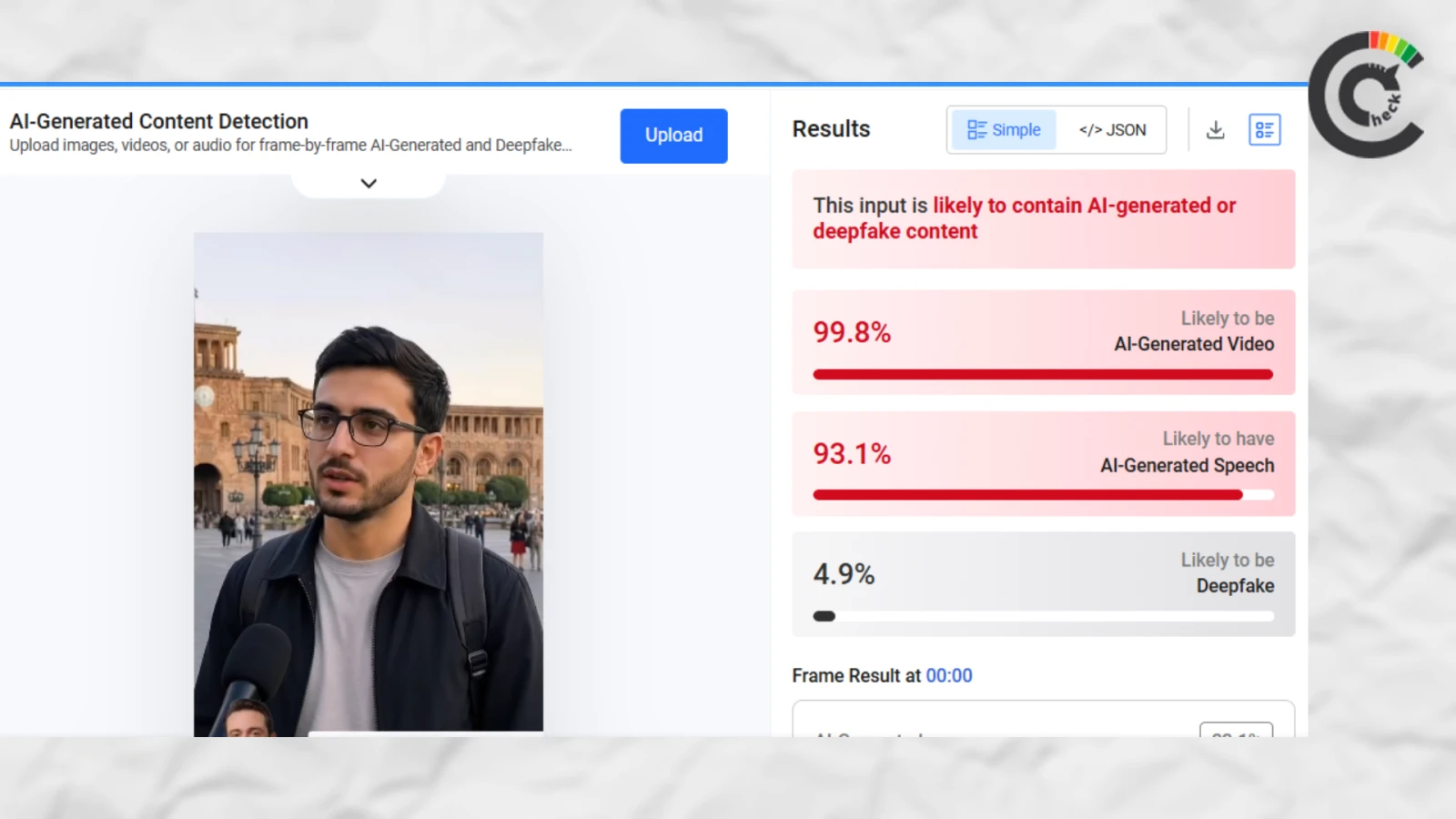
These visual suspicions are also confirmed by technical analysis.
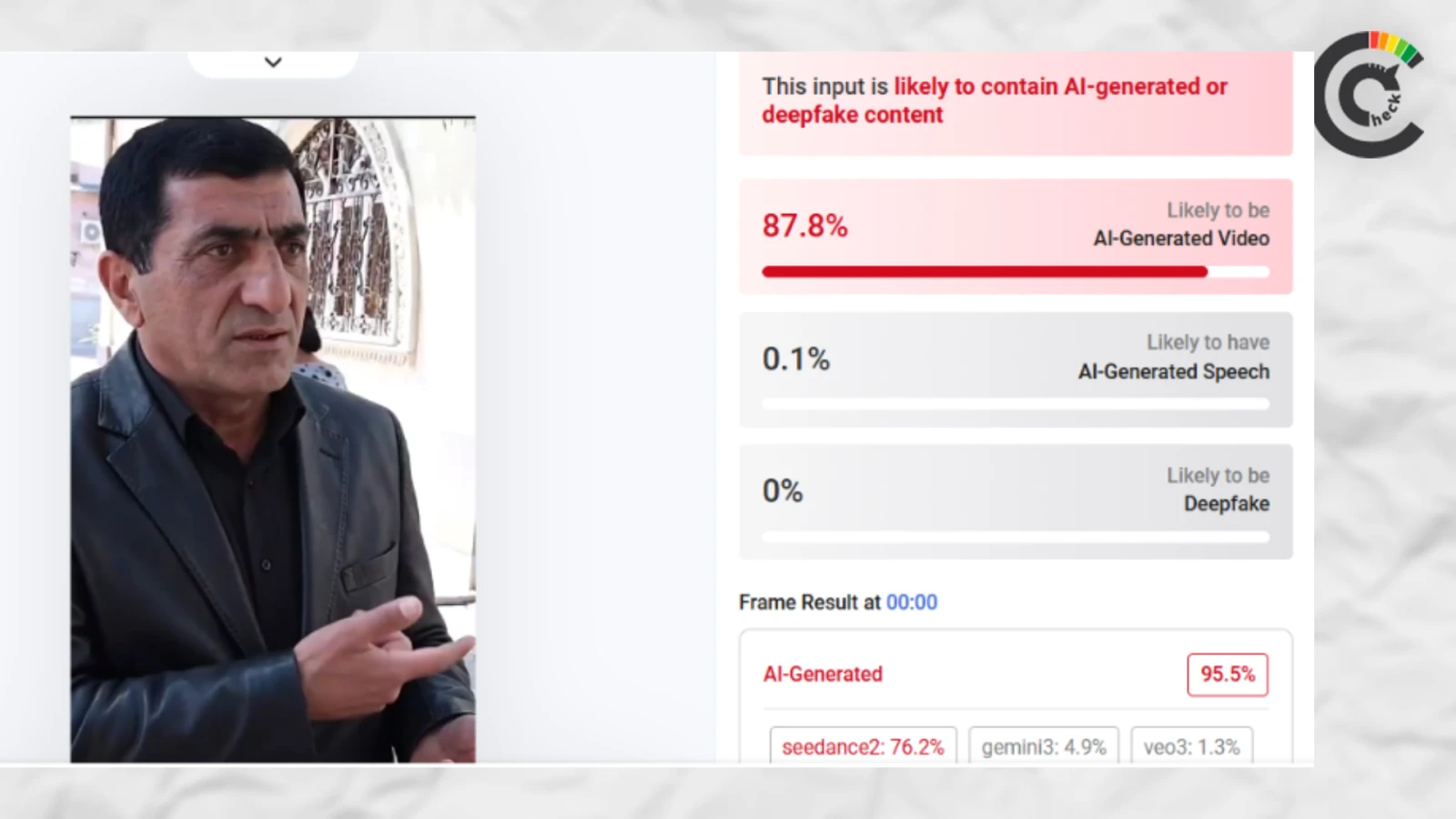
#CivilNetCheck ran the clips through specialized AI-content detection tools (Hive Moderation). The tool confirmed with a probability of 90% or higher that the images were generated by AI.
What narratives and fears they are spreading
In addition to strictly electoral topics, these pages also feature manipulative and fearmongering interviews.
Relations with Russia: Alongside interviews featuring real people, the pages also circulate ones with AI characters who claim that without Russia, Armenia will be left without gas and “at the mercy of Azerbaijani gasoline.”
Fake personas: AI “doctors” or “soldiers” are also created, calling on people to build a “Strong Armenia” together.
Old pages with new political narratives
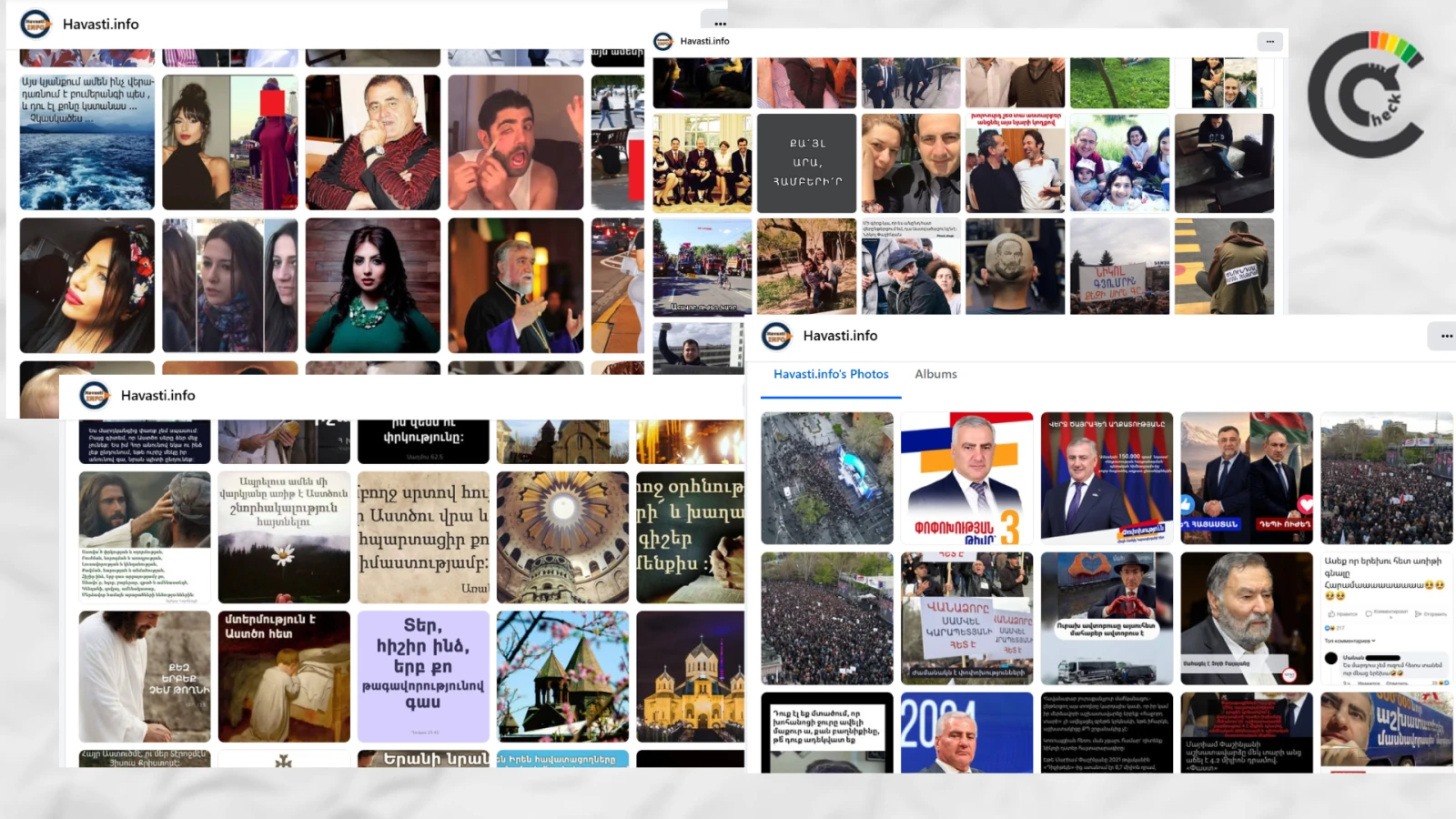
These pages are not newly created and already have tens of thousands, sometimes hundreds of thousands, of followers. Many of them spent years building an audience around entirely different topics such as entertainment content, sitcoms, show-business news, or religious posts, before abruptly changing direction to political subjects.
At this stage, according to Meta transparency data, the pages do not have active ads. Instead, they regularly distribute and share the same type of content with each other, targeting the audiences they have accumulated over the years.
For example, Havasti.info (107,000 followers) was created back in 2016. Initially, the page gained followers by posting show-business news, TV programs, and sitcoms. In 2018, it shifted to political topics, supporting the Velvet Revolution and Nikol Pashinyan.
After that, the content changed again, turning into a religious platform. During the 2020 war, it put forward the common hashtag “we will win (haxtelu enq),” then supported Nikol Pashinyan and posted “pray for the soldiers” posts with emotional images. In October 2025, it addressed the trial of Archbishop Bagrat and posted that his movement would win against Pashinyan, taking up the defense of the church. Then on December 30 the page shifted into active campaigning for Samvel Karapetyan.
Blog havasti.info (87,000 followers) was created in September 2016. It fully mirrors the dynamics of the previous page’s content transformation, ensuring the repetition of similar narratives on social media.
“These Days” (117,000 followers) was created on August 14, 2018. From the outset, it positioned itself as a platform supporting the revolution and opposing the former ruling Republican Party of Armenia (RPA). Now the page uses its many thousand-strong audience to spread entirely different political content, actively publishing materials about the “Strong Armenia” party and Samvel Karapetyan.
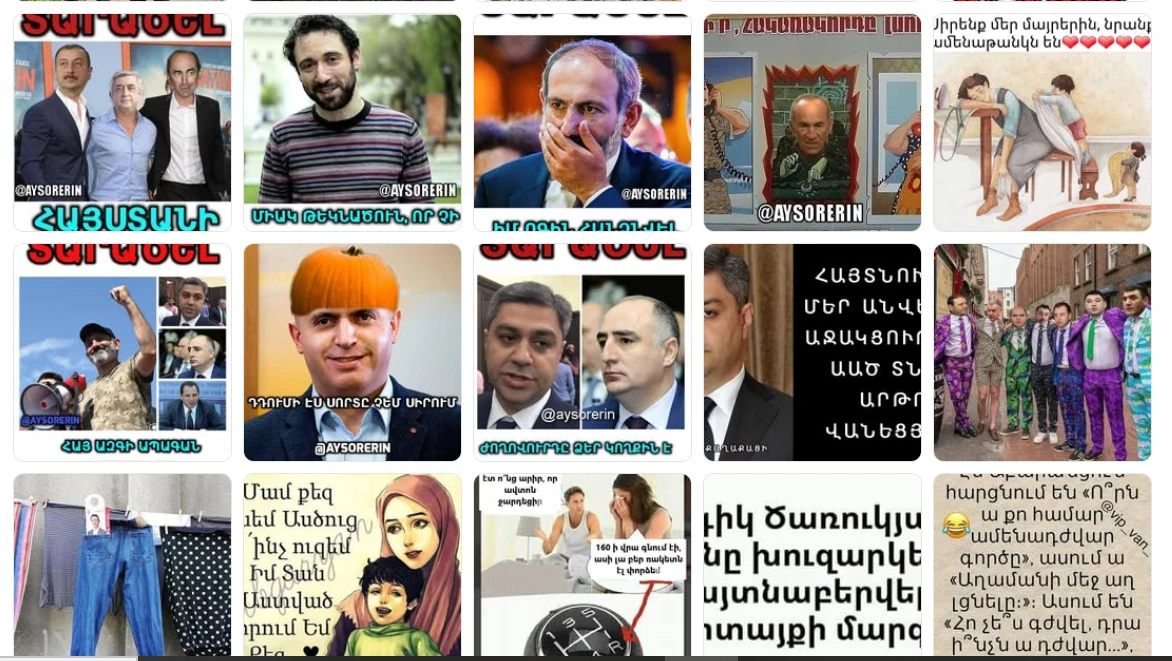
“Info News” (85,000 followers) has been operating since April 2021. The page formed its audience mainly through sensational and clickbait headlines, and now distributes AI-generated videos on political topics to that same audience.
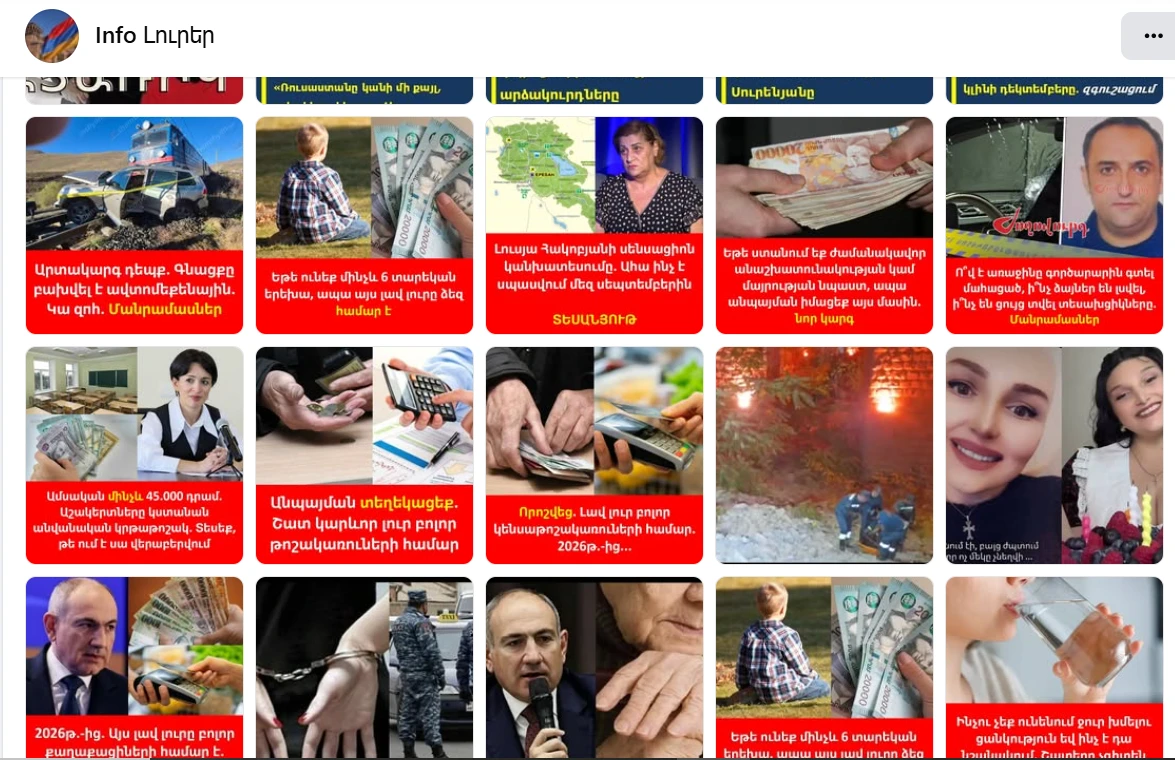
Thus, a significant portion of the street interview videos studied by #CivilNetCheck were created using artificial intelligence tools and are being spread through Facebook pages that have built audiences over many years.
The AI characters used in the videos often voice negative or discrediting “opinions” about various politicians, while in the case of certain political forces the responses presented are almost exclusively positive.



 Stories