By Vartan Oskanian, Foreign Minister of Armenia (1998-2008)
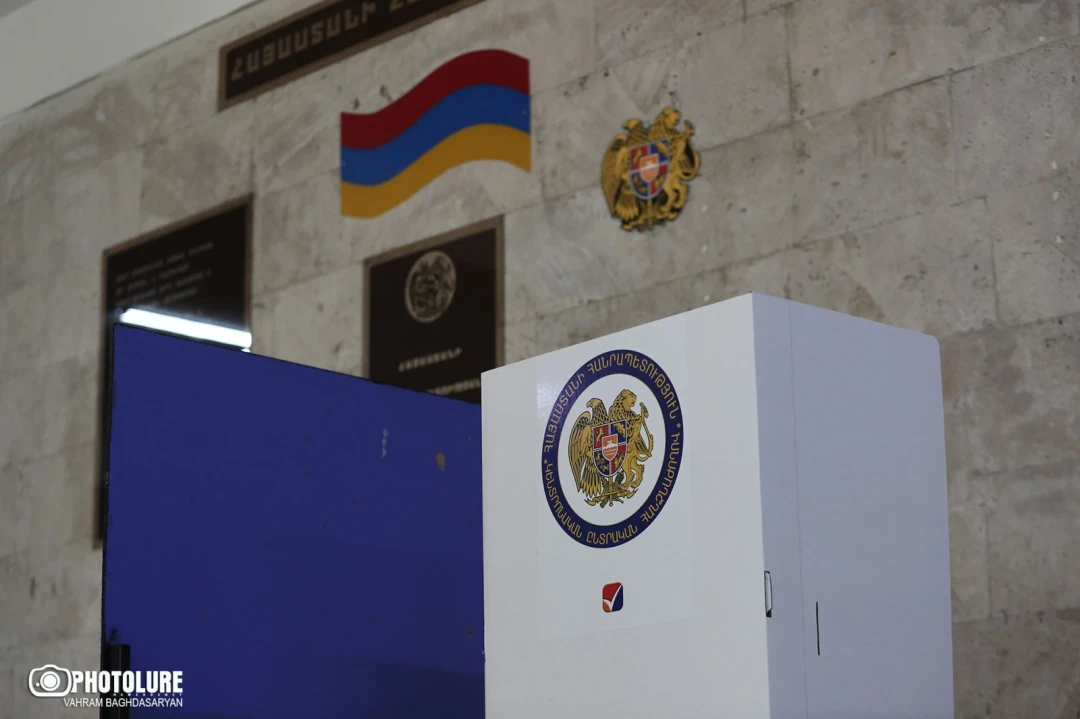
The international framing of Armenia’s recent parliamentary election has been dangerously shallow. In much of the outside coverage, the vote has been presented as a simple geopolitical contest: a pro-Western government against a supposedly pro-Russian opposition. This narrative may be convenient for foreign audiences, but it is profoundly misleading. It reduces a deep national crisis to a diplomatic slogan and, in doing so, overlooks the real meaning of what took place.
This election was not a referendum on whether Armenians want Moscow or Brussels. It was not a clean ideological contest between East and West. It was, above all, a national protest against humiliation, defeat, coercion, and the continuing erosion of Armenian statehood. A clear majority of Armenian voters rejected the path of further surrender, further concessions, and further dismantling of the country’s historical, constitutional, and civilizational foundations. The official result may claim otherwise, but the political reality is plain: Nikol Pashinyan did not win the confidence of the Armenian people.
What happened was not merely a disputed election. It was an election whose legitimacy has been fundamentally broken. The process was marked by an atmosphere of pressure, intimidation, administrative control, selective enforcement, and manipulation of the post-vote process. The ruling party’s claim to victory cannot be separated from the broader machinery of power that shaped the election before, during, and after voting day. When state institutions cease to act as neutral guardians of the public will and instead become instruments for preserving one man’s rule, the result is not democracy. It is managed power.
The central issue, therefore, is not whether Armenia should have relations with the West or with Russia. Armenia must have a sovereign foreign policy based on its own national interest. It should cooperate with Europe, the United States, Russia, Iran, India, and others where such cooperation serves Armenia’s security and prosperity. But foreign policy orientation cannot be used as a mask for domestic illegitimacy. A government does not become democratic simply because it speaks the language of the West. A leader does not become legitimate simply because he presents himself as anti-Russian. And no geopolitical label can excuse electoral fraud, pressure on opponents, or the destruction of institutional balance.
This is precisely the danger in the current international narrative. By presenting the election as a victory of a “pro-Western” government over a “Russia-leaning” opposition, outside observers risk confusing geopolitical alignment with democratic legitimacy. That is a grave mistake. Democracy is not measured by whether a government is useful to Western strategy. It is measured by whether elections are free, institutions are independent, opposition forces can compete fairly, and citizens are able to express their will without fear or manipulation.
For many Armenians, the vote was about something far deeper than diplomacy. It was about the restoration of dignity after the catastrophe of Nagorno-Karabakh. It was about the memory of a people uprooted from their ancestral homeland while the Armenian state failed to defend them politically, diplomatically, or morally. It was about the refusal to accept that national defeat must now be repackaged as “peace,” and that endless concessions must be presented as realism.
The Armenian people understand very well what is now being prepared. They hear the demands from Azerbaijan. They see the pressure for constitutional changes. They understand the danger behind the language of “normalization” when it is tied to the erasure of national claims, the weakening of historical memory, and the acceptance of further territorial and political concessions. They know that the so-called Azerbaijani “enclaves” issue, the pressure to change Armenia’s Constitution, and the constant demand that Armenia abandon the political legacy of Artsakh are not isolated technical matters. They are part of a broader attempt to reshape Armenia into a weaker, more obedient state.
Armenia does not need foreign indulgence for domestic illegality. It does not need a decorative parliament or a manufactured mandate. It does not need a government that uses the vocabulary of peace while preparing society for further surrender. And it does not need its national debate reduced to a cartoon choice between Russia and the West.
The real choice before Armenia is different. It is a choice between dignity and submission. Between constitutional order and executive domination. Between genuine peace and imposed capitulation. Between a sovereign national future and the gradual liquidation of the Armenian question from Armenian political life itself.
The Armenian people have already spoken more clearly than the official results suggest. They did not vote for another round of humiliation. They did not vote to erase Artsakh from national memory. They did not vote to accept every Azerbaijani demand as inevitable. They did not vote to trade sovereignty for applause abroad.
They voted for Armenia, for its dignity, its identity, its constitutional order, and its right to exist as more than a bargaining chip between larger powers.




 Stories