 Alexander Pracht
 Ani Paitjan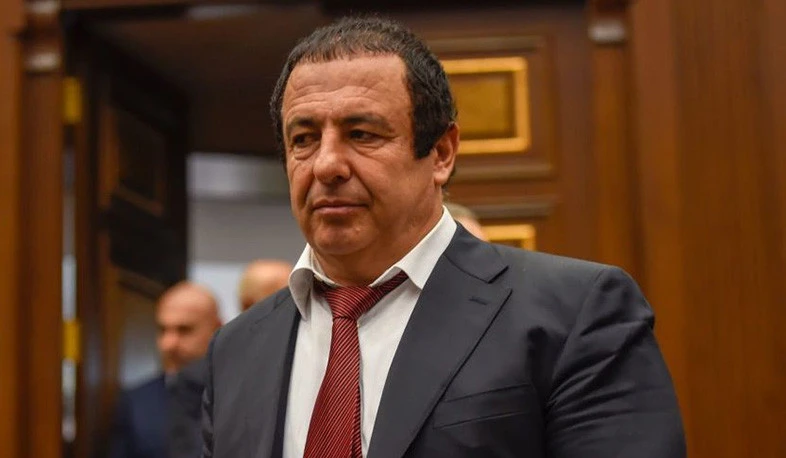
A Yerevan court on Tuesday ordered billionaire and Prosperous Armenia party leader Gagik Tsarukyan into pre-trial detention for two months, according to Armenia’s Investigative Committee.
The billionaire was charged with large-scale fraud and money laundering. His lawyers have dismissed the charges as “absurd and fabricated.” The two-month detention can later be extended or substituted with house arrest or a travel ban.
Tsarukyan was arrested on Monday, the same day that law enforcement carried out searches at his mansion outside Yerevan and at most of his businesses. After the search, videos of the billionaire’s private menagerie, where he kept wild animals such as tigers and lions, went viral online.
The animals were transferred to the Yerevan Zoo, however, one of the lions did not survive the transfer, and the Investigative Committee said a probe would be launched into the incident. A separate case will investigate illegal hunting as nearly 200 taxidermied wild animals were found at Tsarukyan’s residence.
Tsarukyan’s Prosperous Armenia party was a significant force in the country’s parliament from the mid-2000s until the early 2020s. In parliamentary elections held last month, it fell just a few hundred votes short of the 4% threshold required to enter parliament, and just two days after the vote Armenia’s Anti-Corruption Committee announced economic crime charges against Tsarukyan. This came just hours after he was barred from leaving the country.
A week later, a court ordered the confiscation from the National Olympic Committee of Armenia, which Tsarukyan has led for more than 20 years, of a plot of land with sports infrastructure at the ski resort of Tsaghkadzor. The property is estimated to be worth around $100 million.
Armenian authorities are also seeking to nationalize a key asset of Tsarukyan’s business empire, the AraratCement plant – plans that have already been announced by Prime Minister Nikol Pashinyan and the Prosecutor General’s Office. They cite alleged violations during the plant’s privatization in the early 2000s as grounds for the expropriation.


 Stories