 Georgi Mirzabekyan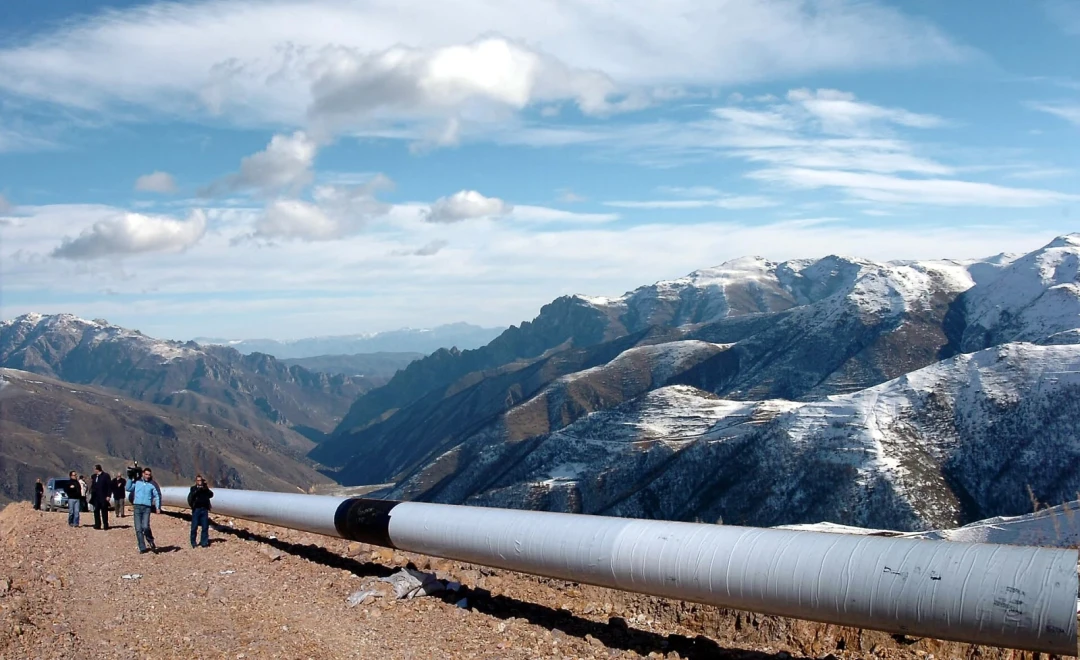
Armenia and Iran have agreed to double the volume of natural gas and electricity exchanged under their long-running energy cooperation framework, signaling renewed efforts by both neighbors to deepen energy ties.
The announcement was made by Armenia's Minister of Territorial Administration and Infrastructure Davit Khudatyan following a visit to Tehran this weekend. While the political agreement marks an important step, expanding supplies will require significant infrastructure investments and faces technical, commercial and geopolitical constraints.
How the gas-for-electricity deal works
Energy cooperation between Armenia and Iran is centered on a gas-for-electricity swap agreement that has been in place since 2009.
Under the arrangement, Armenia imports Iranian natural gas and, in return, exports three kilowatt-hours of electricity for every cubic meter of gas received. The electricity is generated at Armenian power plants and transmitted back to Iran.
Unlike conventional gas imports, the arrangement functions as a barter mechanism rather than a cash transaction, helping both countries meet complementary energy needs.
The Iran-Armenia pipeline
Iranian gas reaches Armenia through the Iran-Armenia pipeline, which became operational in 2009. The pipeline runs from Tabriz in northwestern Iran to Armenia's Ararat Province.
Its annual capacity is approximately two billion cubic meters (bcm).
The Armenian section is owned by Gazprom Armenia, a subsidiary of Russia's Gazprom, which also holds the monopoly over Armenia's natural gas imports and domestic distribution.
Armenia imports around 2.7-2.8 bcm of natural gas annually. About 85 percent comes from Russia, while roughly 15 percent is supplied through the Iran-Armenia pipeline.
Why more electricity transmission is essential
Increasing the volume of gas exchanged under the current arrangement depends on completing the third high-voltage electricity transmission line between Armenia and Iran.
The project was first announced in 2010 but has faced years of delays.
Without additional electricity transmission capacity, Armenia cannot significantly expand the amount of electricity it sends to Iran in exchange for more gas.
Why the pipeline became a geopolitical issue
Plans for an Iran-Armenia gas pipeline date back to the 1990s. The intergovernmental agreement was signed in 2004, while the pipeline's first section was officially inaugurated in 2007.
Originally, Armenia and Iran envisioned the project as more than a bilateral energy link. It was also seen as a potential transit route that could eventually carry Iranian gas to European markets.
That prospect faced strong resistance from Russia, which at the time dominated Europe's gas supplies. A broad consensus among regional energy experts holds that, under Russian pressure, the diameter of the Armenian section of the pipeline was reduced from the originally planned 1,200 millimeters to 700 millimeters. The pipeline was later transferred to Gazprom's ownership.
The reduced diameter limited the pipeline's long-term expansion potential and effectively ruled out its use as a major export corridor to Europe.
Could Armenia import much more Iranian gas?
In theory, experts say gas imports from Iran could increase by roughly four times if the existing pipeline were utilized to its full technical capacity.
In practice, however, expanding imports would require additional compressor stations along the pipeline to increase pressure. Significantly larger volumes would ultimately require construction of a new pipeline, a far more expensive undertaking.
Iran has its own gas supply challenges
Even if Armenia wants to import more gas, Iran faces important domestic constraints.
Most of Iran's population lives in the country's colder northern regions, while nearly all of its gas production comes from the South Pars gas field in the south.
During winter, Iran regularly struggles to transport sufficient gas to northern provinces because of infrastructure bottlenecks. To address seasonal shortages, Tehran imports gas from Turkmenistan through swap arrangements.
These internal limitations mean Iran's ability to significantly increase exports is not unlimited, particularly during peak winter demand.
How gas prices compare
Armenia currently purchases Russian natural gas at a border price of about $165 per 1,000 cubic meters. Depending on the gas's calorific value, the effective price averages around $177.
Iranian gas sold on international markets is generally more expensive. For example, Iran has supplied gas to Turkey at prices around $400 per 1,000 cubic meters under long-term contracts.
However, gas pricing is heavily influenced by political relationships, contract terms and broader strategic considerations. Iran could therefore offer Armenia different pricing if both governments agreed.
Another factor is energy content. Russian gas imported by Armenia has an average calorific value around 8 percent higher than Iranian gas, meaning buyers receive more usable energy from the same physical volume.
Why the agreement matters now
The announcement comes as Armenia seeks to diversify its economic and energy partnerships amid growing tensions with Russia.
The renewed discussions with Tehran coincide with Russian trade restrictions on Armenian exports and suggestions from Russian officials that gas prices could eventually increase.
Although Russia is expected to remain Armenia's dominant gas supplier for the foreseeable future, expanding cooperation with Iran would give Yerevan greater flexibility and reduce its dependence on a single source.
Whether that ambition becomes reality will depend not only on political will, but also on completing long-delayed infrastructure projects and overcoming both financial and technical obstacles.



 Stories