By Nicholas Castillo
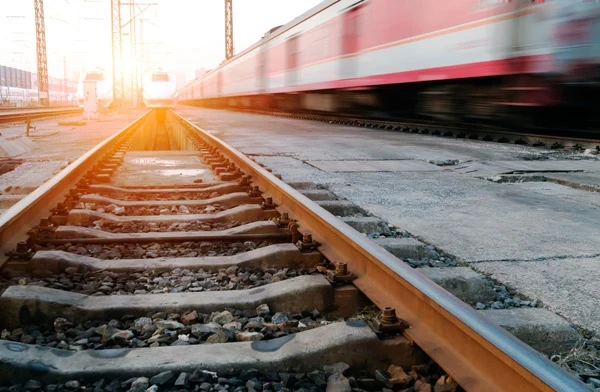
As Armenia seeks to reopen regional transport links and reduce its dependence on Moscow, the future of its railway network has become a growing point of contention. The country's railways are currently set to remain under the management of Russia's state-owned Russian Railways until 2038, raising political, legal and economic questions about who should control a network that could play a larger regional role in the years ahead. The railway dispute is unfolding against the backdrop of a much broader deterioration in Armenia-Russia economic relations.
Moscow’s hold on Armenian railways
With the United States developing a transit route through Armenia and Yerevan seeking to decrease the country’s historic dependence on Russia, discussions over the future of Armenian rail have taken on a geopolitical lens. For their part, Armenian policymakers have voiced an interest in revisiting the 2008 agreement that ceded management of Armenian rail to Russia for 30 years.
In February, Armenian Prime Minister Nikol Pashinyan described the concession as a hindrance to the regional integration process, referring to the fact that other parties are hesitant to engage with infrastructure run by a Russian state-owned company, potentially due to anti-Russian sanctions or political concerns around the Kremlin.
The initial agreement of 2008, overseen by former President Robert Kocharyan, sold control over the railways to Moscow for a total of approximately $8.5 million.
Yerevan has proposed a neutral third party, such as Kazakhstan, taking control over the railway. More aggressively, Pashinyan recently suggested charging Russia $2 billion a year in order to use the rail network.
So far, Moscow has met such prospects with resistance, stating the proposal to end the contract early was “not acceptable.” In April, Armenian and Russian officials met for talks on the issue, but failed to reach an agreement on the future of Armenia’s railways.
For Pashinyan, patience may be running out.
"We want to resolve that issue amicably, in a friendly manner. [...] But we [may end up making legal] decisions,” the prime minister said during a press conference on Thursday following a phone call with Russian President Vladimir Putin.
"Our position regarding the railway remains the same: it is our property, and the Republic of Armenia should have the opportunity to use that railway as it sees fit,” Pashinyan continued.
Pashinyan had previously announced his intention to bring the case to an international tribunal.
Russian officials have firmly opposed the transfer of the railway to another party. Moscow has stated that if such a transition takes place, it will seek damages in the form of investment refunds. Radio Free Europe’s Armenian service has reported that Yerevan could be obligated to pay more than $273 million in damages should it seize the railway.
The Kremlin has also threatened that a unilateral transfer of the railway could result in new trade blocks being placed on Armenian goods entering the Russian market.
A broader economic clash
Questions around the future of Armenian rail infrastructure are only one component of a broader economic confrontation between Yerevan and Moscow.
Since May, Russia has introduced sweeping bans on Armenian goods entering Russia in response to Armenia’s growing relations with the United States and the European Union.
One in four Armenians are believed to work in agriculture, with the vast majority of Armenian products being sold in Russia. With the Kremlin having blocked produce, flowers, fish, beverages and more, many have warned of a potential crisis for this large sector of the Armenian economy.
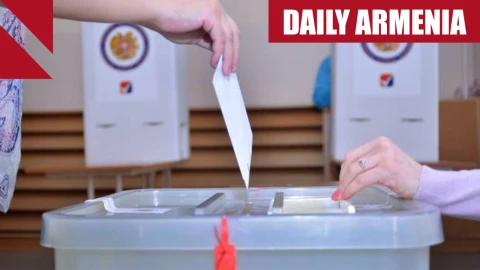
Pashinyan’s victory over pro-Russian opposition forces in June 7’s national elections seemed to only accelerate the economic campaign against Armenia. In the aftermath of the election, Russian policymakers have continued to ban Armenian products, most recently dairy exports, and have raised the prospect of ending preferential pricing for Russian gas imports.
Unlike other world leaders, Putin has not congratulated Pashinyan on his party’s electoral victory.
Yerevan has not backed down, securing European assistance in the form of millions of euros in trade support funds and lowered barriers to the European market.
Pashinyan has stated the trade conflict calls into question the Eurasian Economic Union (EEU), the Russian-backed customs union of which Armenia is a founding member, though he will be attending the body’s upcoming intergovernmental summit in Kyrgyzstan later this week.
"It is a platform where, naturally, I will raise all the issues related to our agenda,” he stated, “I will say that the EEU is paralyzed, the EEU is not functioning.”
On his most recent visit to Russia in early July, the first since the election, Pashinyan raised the trade issues between Yerevan and Moscow with Russian Prime Minister Mikhail Mishustin. The meeting, however, appears to have solved little with restrictions only broadening since.

 Stories