By Mohamad Rimawi
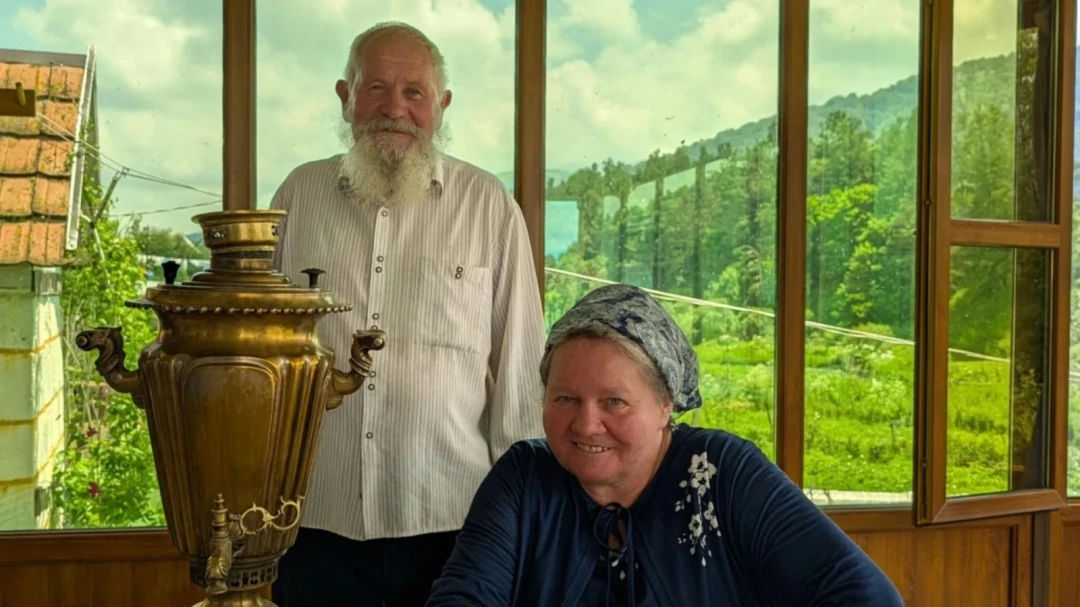
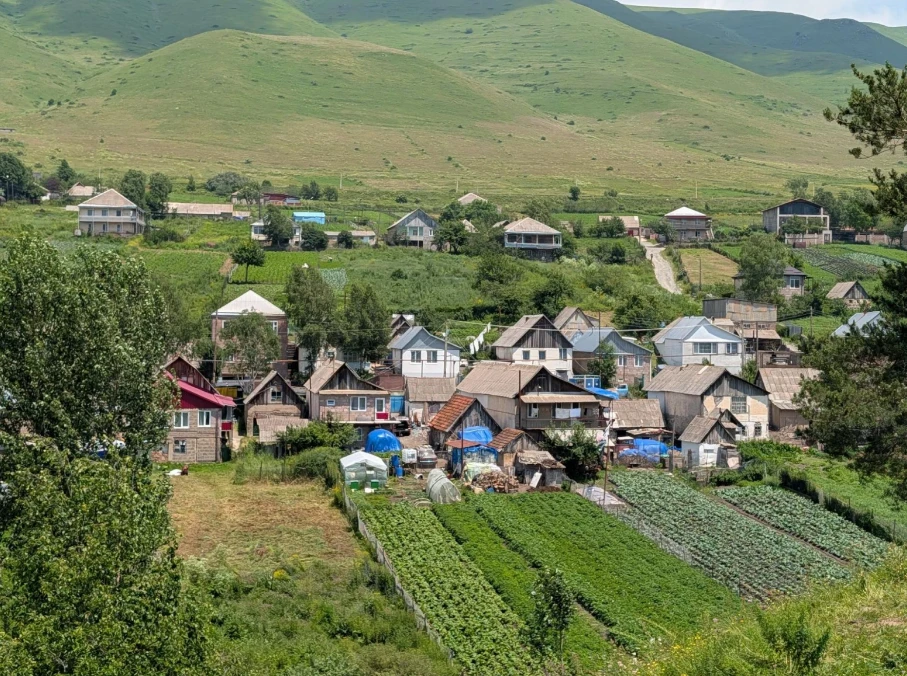
In Fioletovo, a small village in the grassy hills of northern Armenia, an elderly Molokan man recounted his people’s history like a grandfather passing it down to his grandchildren.
“For over 150 years we have been living here,” he said. “At the time of Nicholas I, we were moved to this village from Russia. They exiled us because of our religion. We don’t wear the cross, and due to that, we were exiled.”
Not long after he began, another man walked over and cut him off. “Is he a journalist?” the bystander asked. “We shouldn't tell anything to journalists.”
Reassurances that CivilNet simply wanted to learn about the Molokan community did not help. “I know, that's why I said that we shouldn't tell,” he replied.
The old man walked away mid-story.
The milk drinkers
Molokans – a name derived from the Russian word for “milk” – are a Christian sect who broke with the Russian Orthodox Church, rejecting its priesthood, cross and prohibition of dairy consumption during religious fasts. From their nineteenth-century exile until the recent influx of Russian migrants triggered by Russia’s full-scale invasion of Ukraine in 2022, the Molokans made up the largest group of ethnic Russians in Armenia, mostly concentrated in Fioletovo and the neighboring village of Lermontovo.
Often compared with the Amish in the United States, the Molokans are perhaps best known for their seclusion. They largely do not drink alcohol or marry outside their community, and they have historically stayed away from politics and modern technologies like televisions.
When CivilNet approached a group of young Molokan men and asked about their reputation for shutting outsiders out, one of them said this perception comes from unfair reporting by insensitive journalists. He has a point – a 2011 article from the Yerevan-based outlet Epress.am opened by describing the Molokans as “like aliens from another planet.”
The 26-year-old man, who declined to be named for this story, lamented that reporters routinely disrespect the community’s boundaries. “If you come here with big cameras, then yes, people will walk away,” he said. “But if you come just to have a conversation, we are very open.” As the discussion went on, a dozen or so more young Molokan men and boys drifted over and crowded around.
That moment is emblematic of a broader shift in Molokan life, particularly among younger generations. Whatever their ostensible aversion to modern electronics, smartphones are everywhere in Fioletovo. The inevitable impact of plugging into the internet, along with evolving geopolitical realities, is pulling the Molokans back into Armenian society.
A seat at the table
Alexey Sandikov, Armenia’s first Molokan lawmaker, told CivilNet that he decided to enter politics despite the disapproval from many in his community. “I always choose my own way,” he said.
Armenia's parliament reserves four seats for officially recognized national minorities – the Assyrians, Kurds, Russians and Yazidis. Though he represents ethnic Russian citizens of Armenia as a whole, most of Sandikov’s casework comes from the Molokans. “They are a very old-fashioned community, and not all of them are familiar with procedures on how to deal with local government or state ministries,” he said. “And due to a lack of fluency in the Armenian language, sometimes they face trouble communicating with government institutions. So they call me.”
Sandikov said he is concerned about the absence of legal recognition for the Molokans as a separate national minority. The Molokans, whose religion bars them from bearing arms in the military, maintain an informal understanding with the state that allows them to perform alternative civilian service in place of the military duty compulsory for Armenian men. While the Ministry of Defense has been supportive of the Molokans’ conscientious objections, Sandikov worries that future protections are not guaranteed.
“Who knows, tomorrow or any other day, a new minister can come and ask where it is written that they do not have to serve in the army,” he said. “Official recognition would make my job much easier.”
Dealing with conscription, more than anything else, is what forced the Molokans toward greater engagement with the state. Sandikov said that when he was first elected to parliament in 2019, most in the Molokan community paid little attention to his work. The mobilization for the 2020 Nagorno-Karabakh War changed that: as Sandikov pressed for the Molokans’ exemption from the draft, his phone began to ring. “Now all of the community knows me and everybody has my number,” he said.
Arpine Hakobyan, president of the Vanadzor-based civil society group NGO Center, is trying to get Molokan women more involved in politics. She held a lecture in Lermontovo in June, walking them through opportunities for political participation, including running for office.
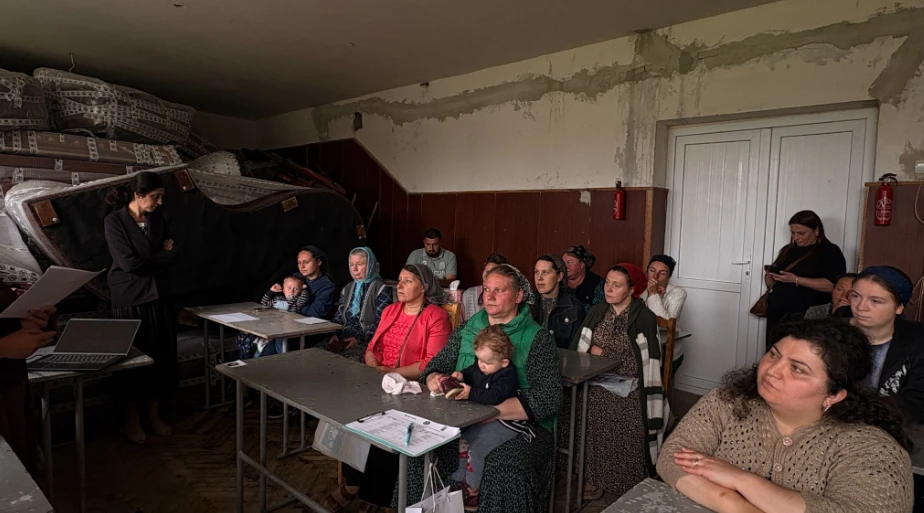
Molokan women in politics are so unheard of, Hakobyan said, that her fellow organizers were “shocked” they were able to get 20 attendees to show up to the meeting. She believes the turnout indicates a real appetite among Molokan women to have a seat at the decision-making table despite the cultural taboo. “One of my colleagues joked, ‘Don’t come to this village anymore, your photo will be there saying don’t allow her to come,’” she said.
The state of their education system was the biggest worry the women raised. More than half in the room said they wanted their children to learn the Armenian language, which would open the way to university and to work beyond the village. But Hakobyan said that runs against an older current in the community which fears that fluency in Armenian is the first step toward assimilation.
Armenian roads and Russian books
Part of the reason Molokans have traditionally kept out of politics is a sense that the state is of little help. Natalya Rudomyotkina, who runs a cafe in Fioletovo with her husband, said that the Russian government often does more for her community than Armenia’s. “You see the roads here, it’s not too good. They don’t do anything,” she said, referring to the Armenian government. “There were no books in the schools, the Russians gave them.”
Rudomyotkina pointed to a new kindergarten that is being built in Fioletovo with funding from the Moscow-based and state-linked Russian Humanitarian Mission. Sandikov acknowledged that Russia provides significant assistance to the Molokans, particularly by sending books and backing programs for teachers, though he dismissed the notion that Moscow is more supportive than Yerevan. “I would love the Russian Federation to help more than they do, but at least they are doing something,” he said.
This exercise of Russian soft power may be paying off. Fioletovo, the country’s sole village populated entirely by Molokans, favored the pro-Russia Strong Armenia political alliance in June’s parliamentary election by a wide margin. Turnout there, though, was the lowest of any voting precinct in the country, with only 17.9% of eligible citizens showing up to the polls. The result surprised Sandikov, a member of the more Western-aligned ruling Civil Contract party, who said he “wondered why they did not support the leading party after all the support they’ve received during recent years.”
For the NGO Center’s Hakobyan, though, the low participation in politics is the real problem. “I asked in Fioletovo, ‘When are you talking about your problems?’ One of the women said, ‘When I am alone,’” Hakobyan recalled. “If you are alone, nobody hears it. So you have to be in decision-making.”

 Stories