By Lia Avagyan
Armenia has not ruled out choosing Russia to build its new nuclear power plant and will select a partner based on price, quality and construction time, Prime Minister Nikol Pashinyan said.
Pashinyan made the remarks in an interview with BOON TV published on Saturday evening, as Armenia considers proposals from several countries to replace its aging Metsamor nuclear power plant.
“We have never said that we rule out building the nuclear power plant with the Russian Federation,” Pashinyan said. “We are looking for the best offer — price, quality and timeframes,” he added. “Whoever gives us the best offer, we will work with them.”
The government has set the end of 2027 as the deadline for selecting the technology for the new nuclear unit. It has not yet chosen the plant’s capacity, reactor type or supplier.
Russia’s state nuclear corporation Rosatom has proposed building a large- or medium-capacity plant with one or two units. Armenia has also considered potential cooperation with the United States, France, China and South Korea. Armenian officials said earlier this year that they were reviewing proposals from about a dozen companies.
Armenian officials have indicated a preference for a relatively small plant better suited to the size of the country’s electricity system. Small modular reactors, or SMRs, are among the options, though the technology has yet to be widely deployed commercially.
Russia has extensive experience with Armenia’s nuclear infrastructure and can offer construction, financing, staff training, maintenance and fuel supplies as part of a single package. But Armenia’s other potential options include technologies that are still under development or have not been widely deployed.
Also read: The geopolitics of Armenia's nuclear future
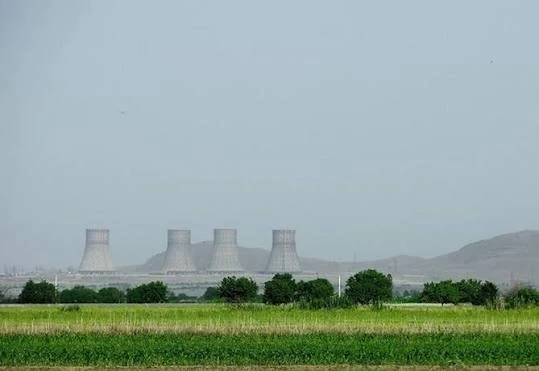
Armenia’s Metsamor nuclear power plant was built during the Soviet era. Its first reactor began operating in 1976 and the second in 1980. Both were shut down after the 1988 earthquake, but the second unit was restarted in 1995 during Armenia’s severe energy crisis. Originally designed to operate for 30 years, the reactor has undergone successive life-extension and modernization programs and is now scheduled to remain in service until 2036.
The United States and Armenia signed a Section 123 civil nuclear cooperation agreement during U.S. Vice President JD Vance’s visit to Armenia in February. The agreement created the legal framework needed for U.S. companies to transfer nuclear technology and participate in Armenia’s civilian nuclear program.
Pashinyan said the decision would not be driven by ideology or political considerations.
“We do not ideologize or politicize this issue,” he said. “If we apply any principle, it is only this: which option best serves the balanced interests of the Republic of Armenia?”
Alternatives to Russian fuel and servicing
Russia remains closely involved in Metsamor’s operations, including its modernization, servicing and nuclear fuel supplies.
Pashinyan said Armenia had explored alternatives to Russian involvement in both servicing and fuel procurement. “We have also looked for alternatives regarding both the servicing of the Metsamor nuclear power plant and the purchase of fuel, and those alternatives exist in the world,” he said.
Several countries operating Soviet-designed reactors have switched from Russian nuclear fuel to other suppliers. Former Deputy Energy Minister Hakob Vardanyan has cited Ukraine, Bulgaria and the Czech Republic as examples showing that such a transition is possible.
Pashinyan said Armenia had continued working with Russia when its proposal was the most advantageous.
“As long as the Russian offer was the best, we worked with the Russian offer,” he said.
Metsamor’s operating reactor has a capacity of about 400 megawatts and produces up to 30% of Armenia’s electricity. Armenia signed a $65 million modernization agreement with Rosatom in 2023 to keep the Soviet-designed reactor operating until 2036.
The extension gives the government more time to choose the technology and supplier for a replacement. The decision is part of Armenia’s broader effort to diversify an energy system that has long depended heavily on Russian companies, infrastructure and supplies.
Pashinyan said diversification did not mean excluding Russia from future energy projects or automatically treating Russian involvement as dependence. “The construction of a nuclear power plant does not in itself mean that such dependence exists,” he said.
He added that Armenia should avoid excessive reliance on any individual country across the energy sector. “In any case, we should not have disproportionate dependence on any country,” Pashinyan said.


 Stories