By Nicholas Castillo
Armenia has less than a decade to decide who will build the nuclear power plant that is expected to replace the Soviet-era Metsamor facility after its planned decommissioning in 2036. But the choice is about far more than technology. As Yerevan weighs a new generation of reactors and seeks to reduce its dependence on Moscow, geopolitics, cost, technical readiness and energy security are likely to pull policymakers in different directions.
Earlier this month, Alexey Likhachev, the head of Russia’s Rosatom nuclear corporation, spelled out his ambitions for Armenia.
“Our answer is to build a large - or medium - capacity nuclear power plant with one or two power units that will meet the anticipated energy shortfall for decades to come,” Likhachev said to the Vesti news agency.
The suggestions by Likhachev appear somewhat removed from the preferences voiced by Yerevan. In recent years, Prime Minister Nikol Pashinyan’s government has proposed the construction of a smaller nuclear power plant (NPP) to eventually replace the Soviet-era Metsamor NPP.
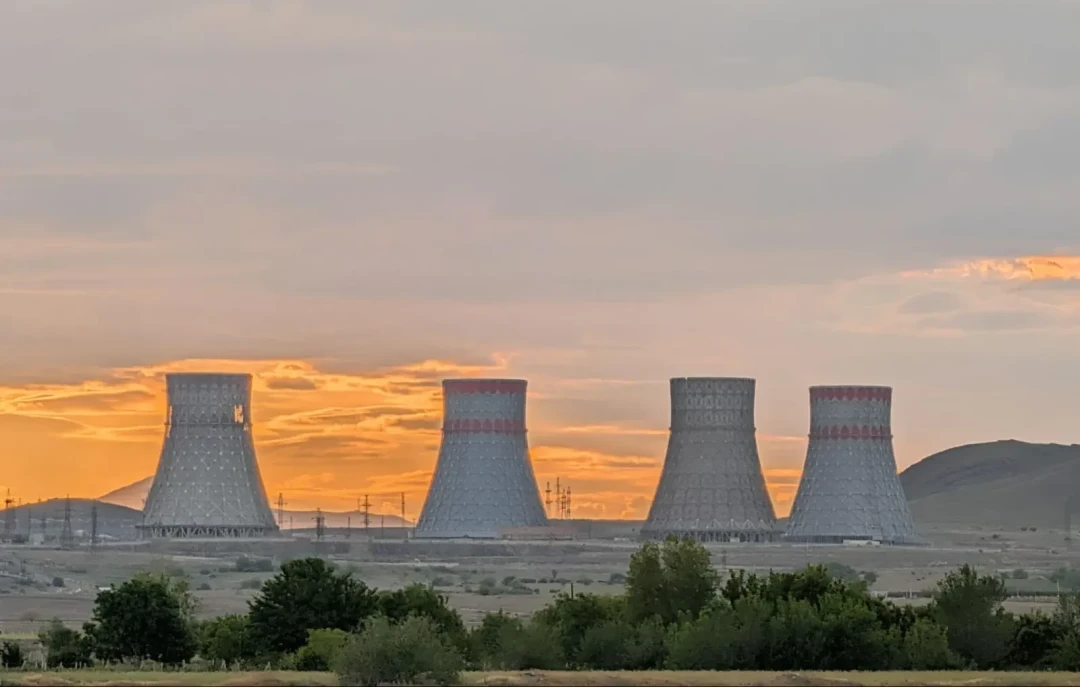
Currently, the Metsamor plant runs only one of its two comparatively small VVER-440 reactors, still accounting for as much as 30% of Armenia’s energy generation. Both of the plant's units were shut down following Armenia’s 1988 earthquake, with one being reactivated during the energy crisis of the 1990s. A large NPP with two reactors would be a fairly dramatic expansion of nuclear energy for Armenia, from roughly 400 megawatts in nuclear power generation to upwards of 1000.
Moreover, with Armenia looking to break longstanding reliance on Moscow, Russia is not without competition in Armenia’s nuclear sector.
Officially, Yerevan is also considering China, France, South Korea and the United States for its next NPP partnership. Speaking in February 2026, Minister of Territorial Administration and Infrastructure Davit Khudatyan said officials were reviewing proposals from roughly a dozen companies.
When U.S. Vice President JD Vance visited Armenia in February, he announced a 123 nuclear energy agreement had been signed between Washington and Yerevan, the first step toward potentially involving a U.S. nuclear firm in providing future reactors.
Nuclear Energy: Inherently Political
Much has been written in recent years on the weaponization of hydro-carbons for security aims, whether in the context of conflicts between Europe and Russia or the U.S. and Iran. Less discussed has been the geopolitical implications of Rosatom’s commanding role in global nuclear energy.
But contracts to construct NPPs are decades-long agreements between governments over nationally critical infrastructure, requiring maintenance and regular fuel deliveries. They are inherently political decisions. The supplier of an NPP gains notable leverage over energy pricing, can provide expert personnel, and becomes an unavoidable component of the recipient country’s energy policy.
The Kremlin seems to understand this. Russia’s approach to international nuclear energy is strategic, primarily designed to grow Rosatom’s role internationally rather than generate income. The past decade has seen the state-owned firm expand its international portfolio, building and servicing NPPs primarily in politically friendly states such as China, Hungary, India, Iran, and Turkey. Rosatom also controversially manages the Zaporhizhzhia Nuclear Power Plant in occupied Ukraine.
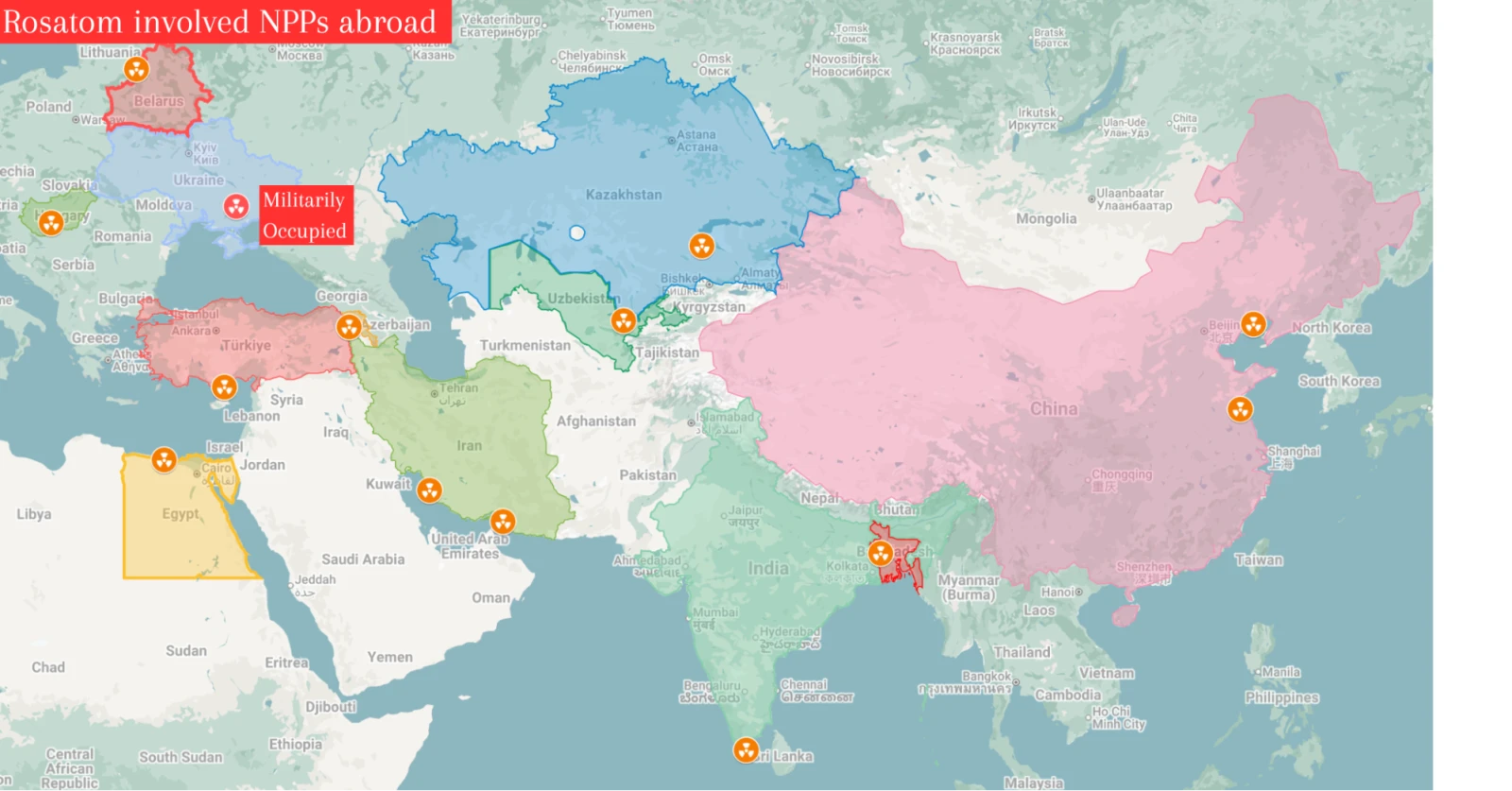
Recent years have also seen the Kremlin increasingly lobby for a central role in nuclear energy within the post-Soviet space. Tellingly, the period following Vance’s visit to Armenia saw a number of Russian officials push back on any prospect of a U.S. built NPP in the country.
Technological limits
For Yerevan’s nuclear power ambitions, there are more than simply political considerations. Armenian officials have articulated their preference that Armenia’s future NPP be one consisting of small modular reactors (SMRs), a new generation of smaller, simply manufactured, and less expensive nuclear reactors that have captured interest across the world.
By design, SMRs are intended to be safer, Nigel Li, a former Research Fellow with the Comprehensive Nuclear-Test-Ban Treaty Organization, told CivilNet.
“Common designs now use water or heavy water - but this is water-intensive,” Li said, “SMRs on the other hand use ventilation and gravity to cool the core, so there are several ‘built in’ safety mechanisms.”
Still, SMRs being used at scale for civilian purposes remains a relatively new field.
"The problem is that the technology has not yet been proven in the civilian sector,” Armenian energy economist Astghine Pasoyan told CivilNet, “We don't have published long-term operational data. We have to understand that by choosing this path, we are participating in an experiment."
In fact, the world’s first and only functional SMR NPP for civilian purposes is located in Russia. The floating Akademik Lomonosov plant was constructed by Rosatom, who now manages the plant. The Russian state-firm is currently involved in a number of SMR NPP projects at home and abroad.
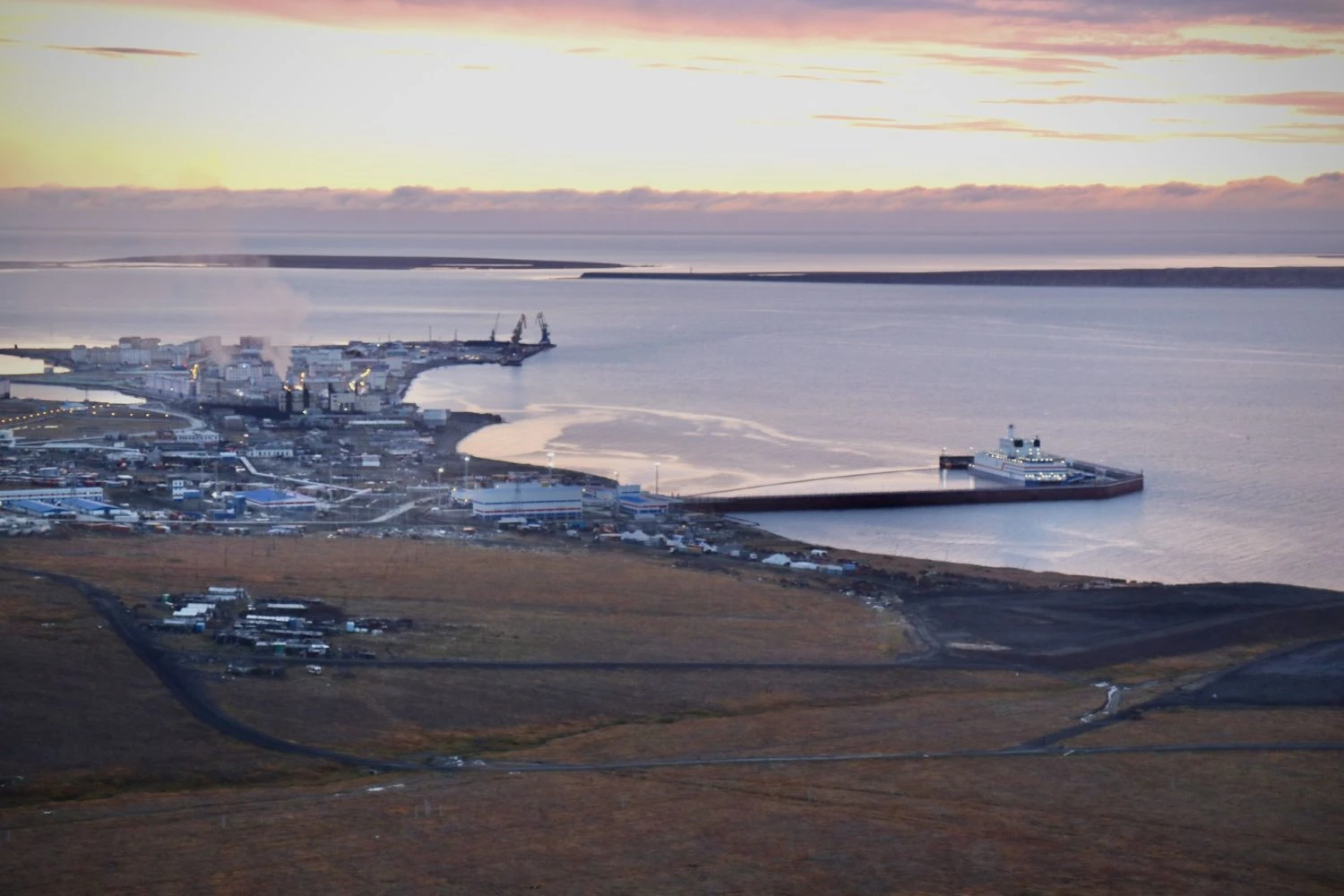
Meanwhile, though the agreement between the United States and Armenia explicitly referred to SMRs, there is no U.S. nuclear energy firm currently engaged in SMR NPP construction. America’s leading nuclear firm, Westinghouse, does have an in-house SMR design, but their model has yet to complete the U.S. certification process. Westinghouse also withdrew from a UK bidding process for SMRs in 2025, potentially a negative sign for the company’s ambitions.
“The understanding in the American nuclear industry is that Westinghouse has quietly abandoned its plans to construct SMRs,” A.J. Camacho, a nuclear energy reporter with Politico, told CivilNet.
Still, Camacho says there are good prospects for Armenia acquiring a SMR reactor from a U.S. firm, especially from a new generation of growing start-ups looking to build SMRs.
“Kairos Power, which has a solid partnership with Google, plans to make roughly 50 megawatt reactors,” Camacho said, “if you put nine of those together, then you’ve got 450 megawatts, which sounds like what Armenia needs.”
Camacho likewise pointed to the Bill Gates-backed TerraPower as a potential option for Armenia. The firm, founded by the American billionaire, is looking to construct 345 megawatt reactors and has launched its first NPP construction in Kemmerer, Wyoming.
Yerevan is currently extending the Metsamor plant’s lifespan by another 10 years with help from Rosatom, and may even do so again. American firms may have enough time in the coming years to develop viable SMR export capacities in time for Armenia to make its final decision.
Yet, if Armenia sticks to its original hopes to decommission their current reactor within ten years, the final decision on its international partner will have to be made soon. In June, Armenia’s Minister of Territorial Administration and Infrastructure David Khudatyan stated “We are not rushing to make a decision. I think the decision will be postponed to 2027, because the life-extension program gives us flexibility.”
While Rosatom has long been considered the industry leader in SMR technology, it is not the only potential option. China’s state nuclear corporation is currently building its first SMR plant domestically with plans to expand internationally. France’s state-owned EDF plans to have produced 30 SMR units by 2050, with a proposal to develop four SMR units in the UK in the coming years.
Even with France, a close partner for Armenia, there are questions as to their capacity.
“EDF had promised a turnkey operation before their reactor's design was fully developed, and it led to a 10-year delay and dramatic debt that bankrupted EDF's predecessor. Now, EDF keeps on proposing what, on paper, seem to be attractive offers for reactors to these third-party countries. But it seems that confidence in their reactor technology has bottomed out," Camacho told CivilNet.
EDF has yet to launch construction of an SMR plant. While the firm has some nuclear projects overseas in the United Kingdom and China, they have lagged behind Rosatom and others in terms of exports.
Russian-backed NPPs tend to be considerably cheaper than Western-produced ones. Likely more importantly, Rosatom’s financing plans offer decades to pay back Kremlin-backed loans in return for Moscow’s long-term involvement in the NPP’s operations.
Rosatom also maintains logistical advantages for customers, providing entire packages of NPPs services and support. Western nuclear companies tend to shift more operational responsibilities to the governments receiving NPPs.
“Rosatom still dominates the international market for nuclear energy technology. It is a "one stop shop" that is able to develop projects, train operators, and provide the necessary nuclear fuel,” Li told CivilNet.
Even with the currently volatile Armenia-Russia relationship, Camacho argued it's a mistake to totally count Moscow out.
“I think we know the US will want a role in Armenia’s nuclear energy. We know that Russia is going to want it. And we know that Rosatom will have a hell of a good deal," Camacho said.
The advantages provided by Rosatom have not gone unnoticed by its competitors.
South Korea’s Korea Hydro and Nuclear Power and China’s CNNC are newer but likewise competitive nuclear firms, establishing themselves as reliable providers often looking toward an integrated low-cost and strategically minded approach. South Korea is in the early phases of constructing its first SMR plant at home and has some export experience, constructing a NPP in the United Arab Emirates over the course of the last decade.
Overall, the nuclear energy industry, especially as it relates to SMRs, appears to be in a state of flux as legacy firms and start-ups alike vie for technological and export capacity.
“Anyone who tells you they know what the future of this industry will look like in ten years is lying to you,” Camacho said.
Still, if Yerevan maintains its goal of launching SMR construction within the next few years, it may be faced with limited or untested options. With officials seeking an energy pivot out of Russia’s sphere of influence and other options lagging behind, a further extension of Metsamor’s lifespan may be an advantageous move, giving the international SMR sector further time to develop.
Nuclear's place in Armenia’s energy future
The choice to pursue SMRs makes sense in the Armenian energy context. For a smaller electricity market seeking to avoid overreliance on any one source of energy, either for political or resource-related reasons, larger reactors could pose serious risks and come with a high price tag.
Already, as much as 30% of Armenia’s energy in a given year already comes from the Metsamor plant. Constructing a traditionally-sized larger NPP would likely undermine Yerevan’s shift to energy diversification, for instance overwhelming Armenia’s efforts to grow its domestic solar capacity. For a country already struggling with over-reliance on Russia, a larger NPP and the fuel needed to keep it running could generate a new dependency.
A potential opening for Armenia’s nuclear industry, and an incentive to expand nuclear power generation, may come if and when Armenia manages to normalize relations with Turkey and Azerbaijan.
While Armenia currently maintains an electricity surplus, neighboring Turkey runs an electricity deficit and relies on imported and expensive energy resources. With normalized relations between Ankara and Yerevan, the possibility for a regionalized energy market would open. Currently, Armenia has a significant electricity-for-gas agreement with Iran and a small set of electricity swaps with Georgia, but a new NPP could incentivize a much greater degree of regionalized energy relations between Armenia and its neighbors.
Another potential role for an expanded nuclear sector may come as a result of the government's drive to make Armenia a regional hub for artificial intelligence and data services. This June, Armenia opened its first ever AI data center powered by top-line Nvidia computing chips.
Armenia’s governing team seems to be betting on such projects as a source of economic growth that could turn Armenia into a component of a globally important industry. While for now Armenia’s electricity surplus makes the country an attractive location for data centers and other energy-intensive technology industries, a data center building spree may strain this advantage and eventually raise costs for Armenian citizens.
A new NPP could be a major component of this broader AI-oriented program, raising the possible limit of AI-oriented industries while lowering the costs borne by Armenians.
For nuclear energy in Armenia, political considerations will only be one factor alongside technological, financial and society questions that will shape the future of the industry. Time seems to be another critical variable, with SMR technology still a developing sector and Russian-Armenian relations currently in a particularly severe period of rupture.
Also read: How Armenia’s new partnership with the U.S. is likely to affect its energy sector



 Stories