Jan Limburski
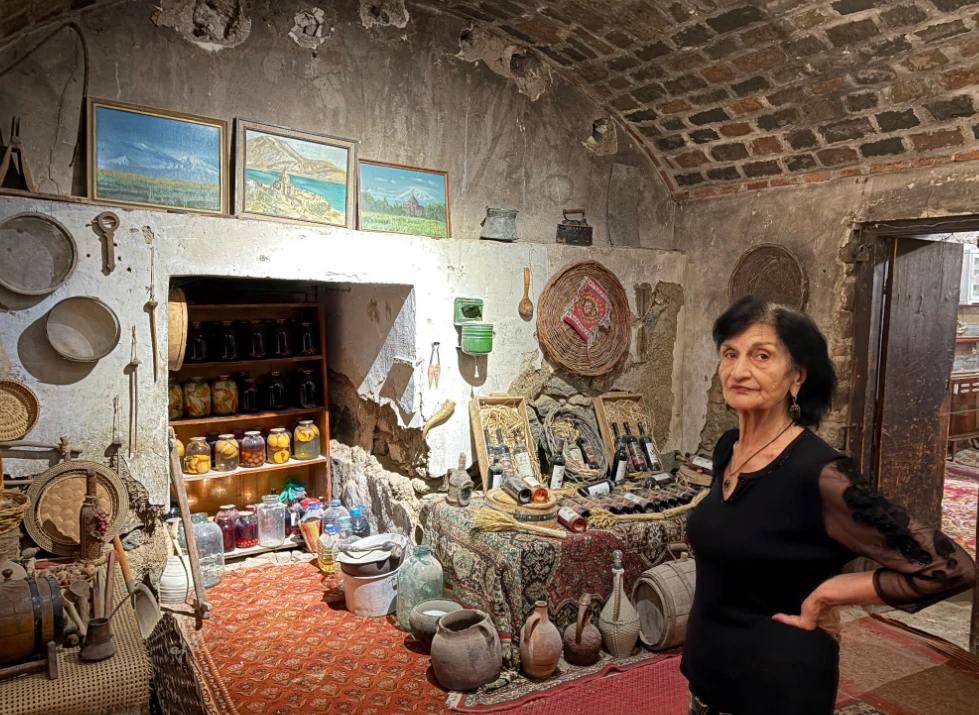
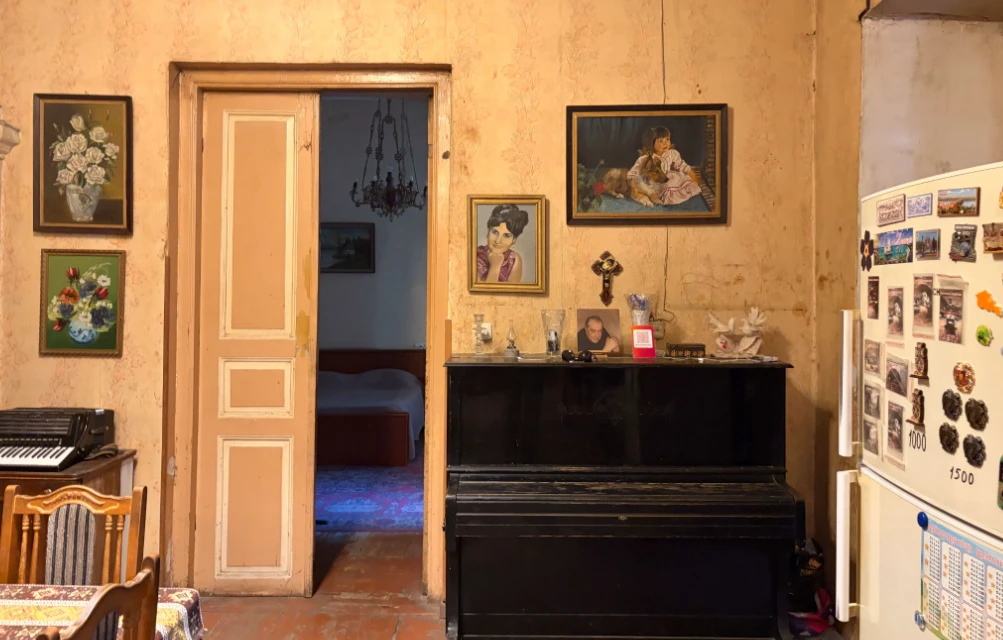
“See? This is our ancestors,” Marieta points to a photograph on a side table. She opened a house-museum - a residential building preserved and open to the public - in her ancestral home in Kond two years ago. “I thought, everyone shows their houses. Why not show mine?” Armenia’s Prime Minister recently visited her house. “He said our house is very old, it should not be touched. It should stay intact.”
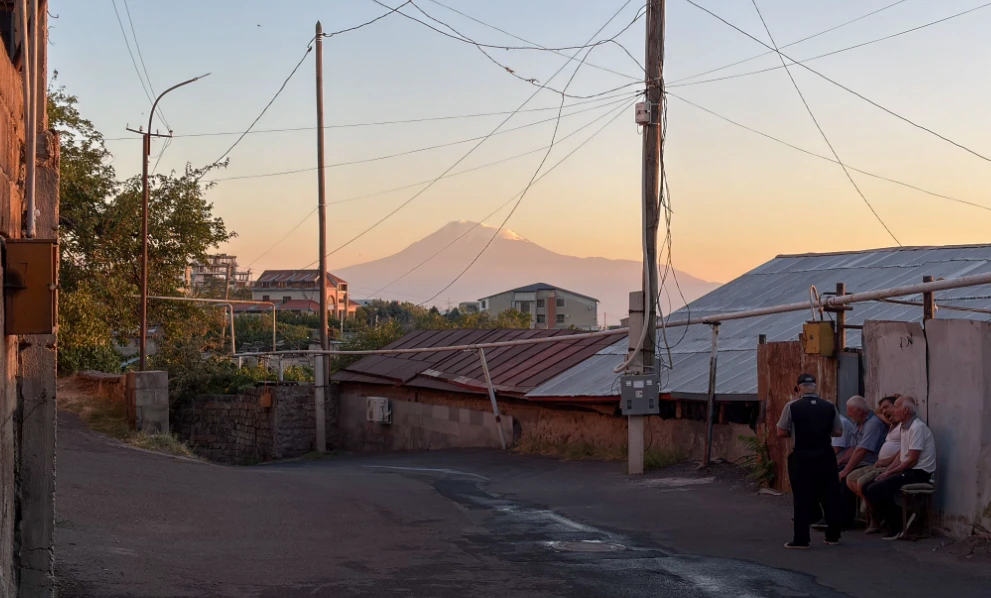
Yerevan’s oldest neighbourhoods, neglected and forgotten for years, are now being revived through growing interest in preservation of memory and local history. House-museums, cafes and cultural centres have been appearing in Kond and, recently, Hin Nork - two of Yerevan’s oldest districts just outside of the city center. “I call it ‘restoration from below,’” says Andrey Ivanov, an expert on vernacular, community-built architecture. Without state support, but with growing tourist interest, residents of these neighbourhoods are working to preserve and restore local history themselves.
Layers of DIY Construction
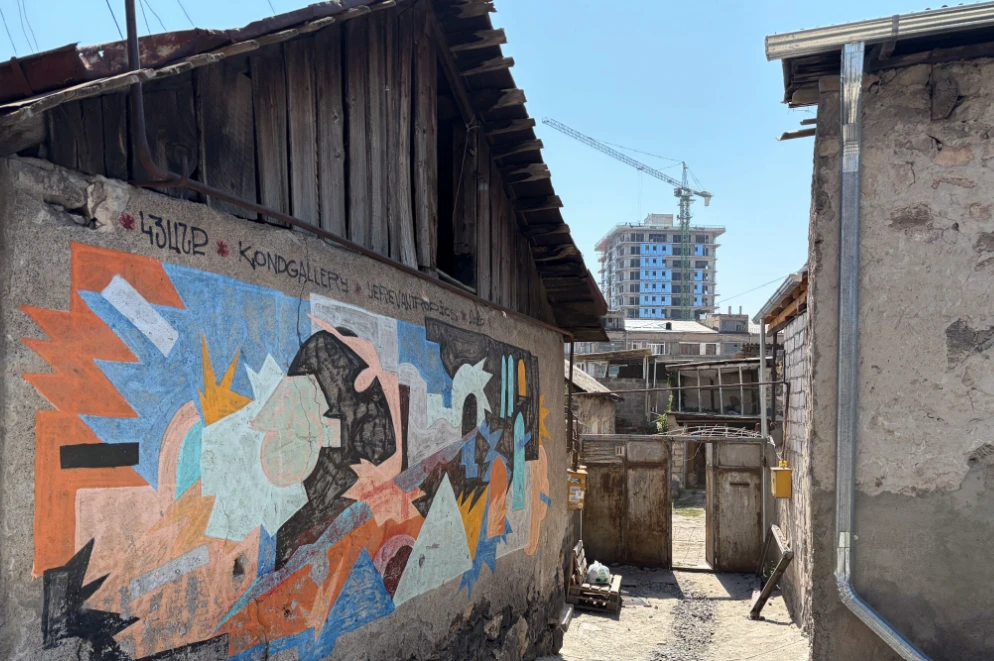
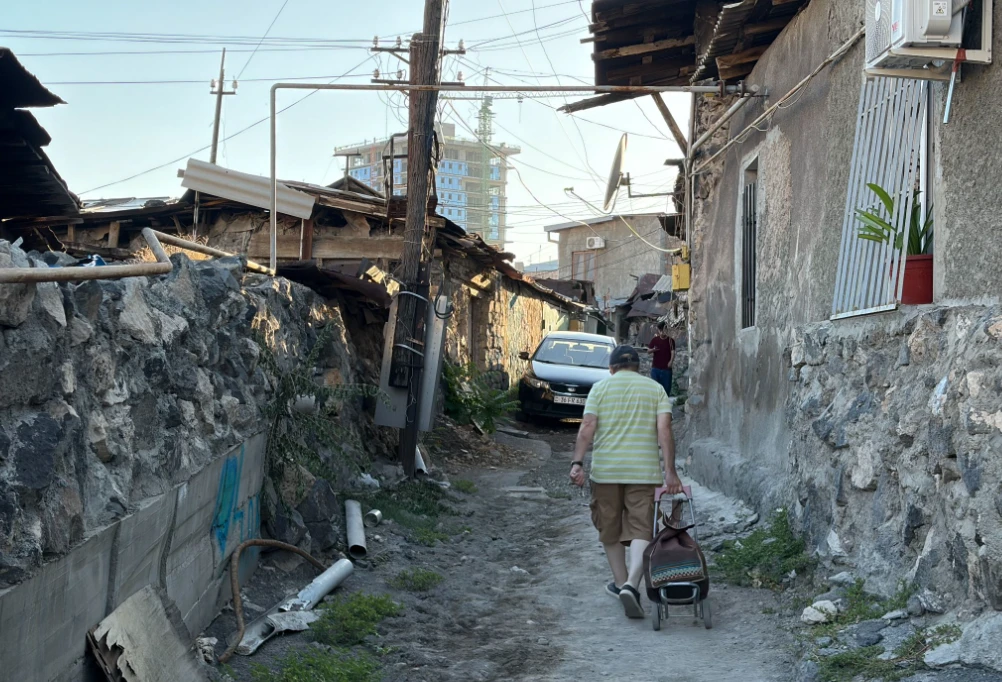
Kond is known as Yerevan’s oldest neighbourhood - the one that survived the Soviet reconstruction and the post-Soviet developments. Located on a hill south of the city’s central district, the neighbourhood feels like a time capsule hidden between the surrounding high-rise buildings and construction sites. Today, the district is defined by lack of appropriate infrastructure, poor living conditions and a chaotic, self-constructed architectural character. Many streets that lead through the neighbourhood are unpaved and the residential architecture is built incoherently
“Kond was a prosperous and a multi-ethnic, quite diverse, semi-independent urban environment in Yerevan,” says Sevada Petrossian, an architect who has been studying the neighbourhood for the past 25 years. The area has been inhabited by both Muslims and Christians since at least the late 17th century when the Tappebashi Mosque was built. The Muslim population concentrated near the mosque in the south and the Christian community around Saint John the Baptist Church in the north.
When the architect Alexander Tamanian envisioned Yerevan’s reconstruction in 1924, he intended for Kond to become an open-air museum district. His vision never materialized, and the area remained as it was - full of winding culs-de-sac and remnants of layers of urban settlement.
“They came from Turkey, from the city of Van,” says Marieta pointing to a photo of her ancestors. “They came here, paid a lot of money, and bought this house.”
In the early 20th century, Kond became a refuge for Armenians escaping the horrors of the genocide in the Ottoman Empire. “My grandfather was a refugee from Western Armenia,” says Aram, a Kondetsi whose family arrived in Yerevan from Mush (now in Turkey). He shows me around his courtyard explaining that it used to house sixteen families.
Over the decades, many projects have attempted to revitalise the area. In 1978, plans were published to clear parts of the district and replace with taller, multi-storey buildings. In the 1980s, Karen Demirchyan, the First Secretary of the Communist Party of Armenia at the time, wanted Kond to become the Montmartre of Yerevan. All these plans failed. While the district was formally included in the city’s master plan in 1924, the government’s promises of development were never fulfilled. The neighbourhood’s residents thus turned to improvised, illegal construction to improve their living standards. Because of this, today’s Kond represents decades of informal construction.
In 2021, a competition was announced by Armenia’s Urban Development Committee that again was supposed to design a revitalisation of the area. As of now, there are no tangible results of these plans.
“The history of Kond is hidden underneath layers and layers of DIY construction,” says Sevada Petrossian. The state's perpetual demolition plans meant no one invested in proper maintenance.
While often romanticised as the last remnant of the old Yerevan, Kond was overlooked when the city infrastructure was being updated. “This sewage system is 100 years old,” says Aram. He explains that the construction currently going on in the streets is the much-needed development of the water supply and sewage infrastructure.
In June, Prime Minister Nikol Pashinyan visited Kond after the announcement of another plan for the reconstruction of the district. Aram says that the prime minister promised them a “Tourist Mecca.” The appeal of the old traditional stone architecture, together with increasing tourism in the country, has appreciated the property values at Kond.
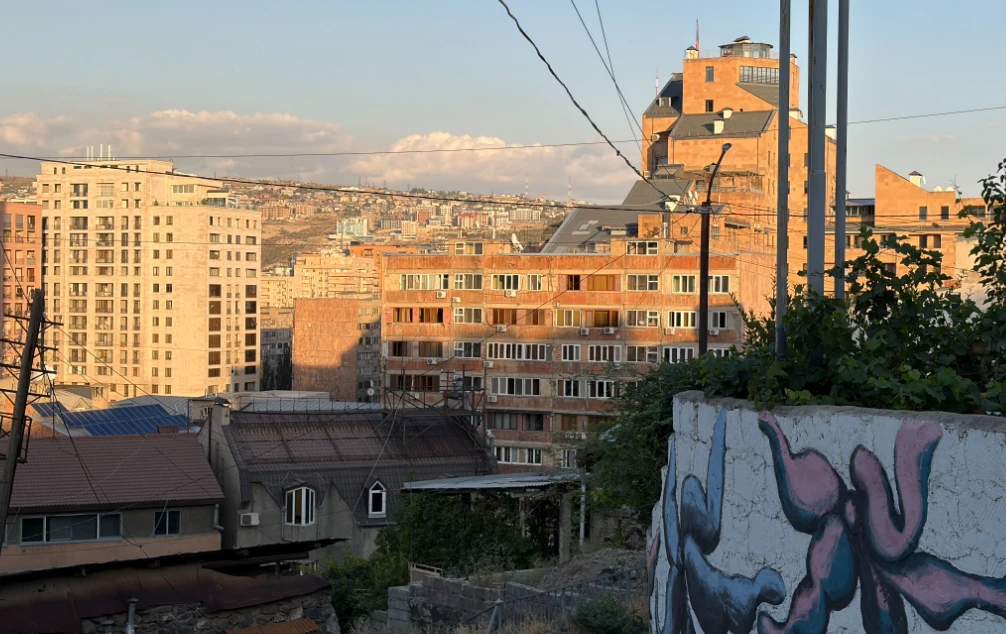
“It's a two-edged sword,” warns Sevada. While the growing interest in the district has obvious benefits for the residents, it risks gentrification and opens the door to large-scale developers who could damage the built environment.
The government’s plans for expansion of tourism in Kond are very recent; but, the grassroots initiatives and small businesses have been appearing around the area in the last few years.
“It's very old. My mother, grandmother lived here,” says Arpine, another Kond resident, while showing her house. She works in a small cafe in the district which opened its doors three months ago.
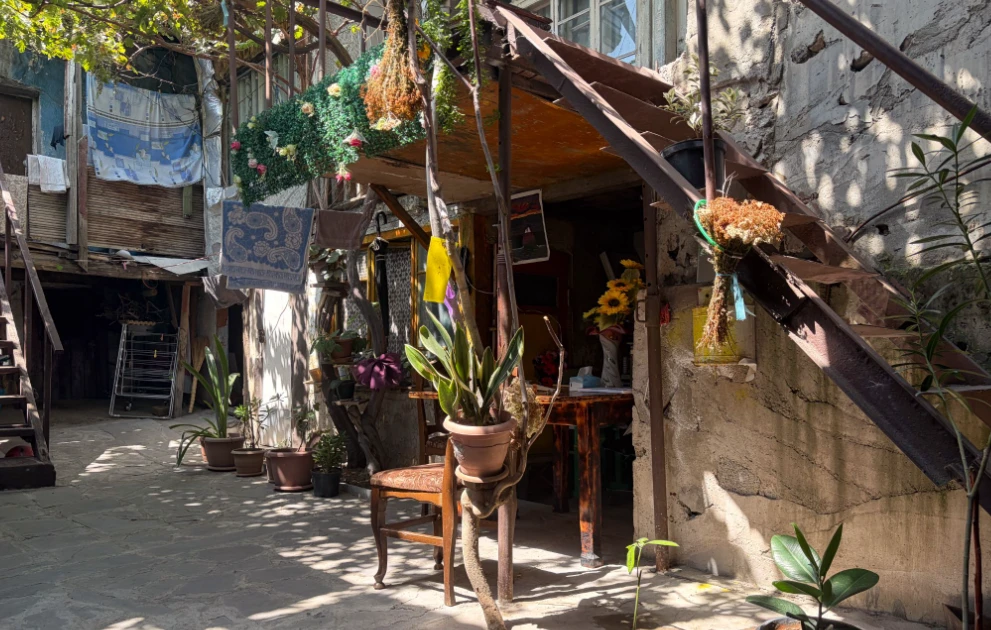
Sevada has been encouraging people to open small businesses in Kond for years. “It's the easiest thing, I mean, just put a sign on Saryan Street and open a cafe on top of the stairs. People would flock in,” he explains.
The interest in Kond resulted in a recent initiative to catalogue monuments of historical value in the area. “The whole district should be registered as a monument - the urban structure of it, the fabric of the whole thing,” says Sevada. The protection of particular buildings is not enough. The interconnected layers of vernacular construction make it difficult to distinguish separate monuments of value.
Preserving Local History
A long spiral staircase leads up from the busy Myasnikyan Avenue. The metal structure clings to the steep hillside and, after a long way up, a climber is rewarded with the views of Yerevan’s city centre.
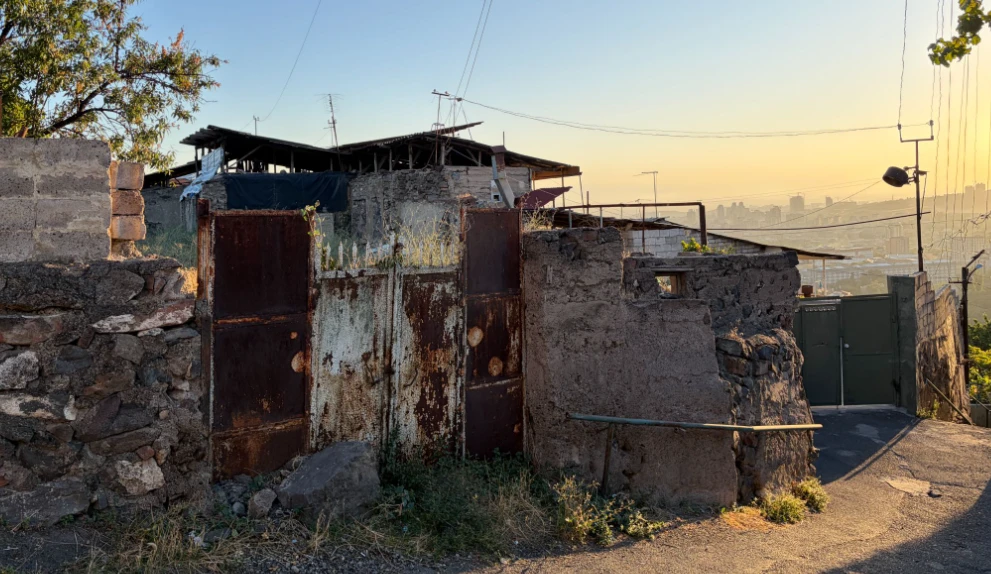
Hin Nork (or Old Nork) is another one of the city's oldest areas. It is the oldest part of the Nork-Marash district. What was originally a small, hilltop village became a part of Yerevan in 1837. Its geographical isolation, however, meant that the area was never urbanised like the rest of the city and retained its vernacular character. The garden-village character of the area attracted residents from Yerevan and many of them constructed summer houses in Nork from the second half of the 19th century. According to Sarhat Petrosyan, founder of Yerevan-based urbanlab, in 1924, Hin Nork was too far from the centre to be included in Tamanian’s master plan.
Known for pottery and winemaking, Hin Nork has historically been a quiet refuge for the city’s artists and intellectuals. Nowadays, it remains a peaceful area that holds memories of old Yerevan.
“You might have heard about Chinar Tree [Plane Tree], which is in the center of Nork. It used to be a place where the elders would gather and play backgammon," says Hayk, who grew up in Hin Nork.
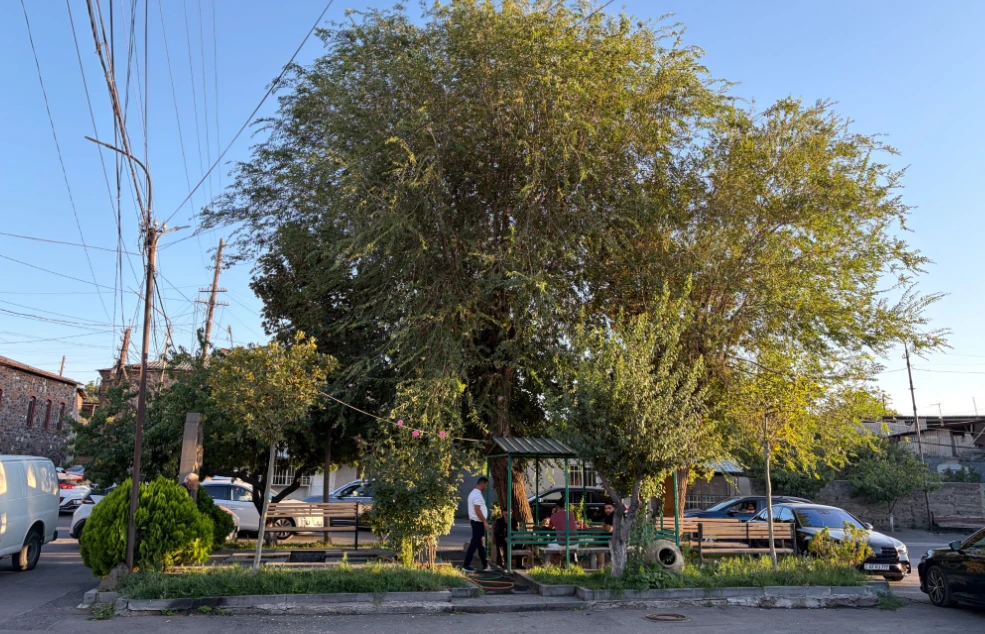
In the summer of 2026, Hayk and his grandmother, Nelly, opened a small museum in their home. "I'm seeing this as a life mission,” says Hayk about preserving his family history. He tells me the story of his great-grandfather, Hovhannes, who was originally from Western Armenia (modern day Turkey). He was separated from his family during the Armenian Genocide and arrived in Yerevan as an orphan.
“He was around seven. He fled the orphanage and started going around asking for bread. He was walking around this area and smelled bread in this house. [The residents took him in. They had lost both of their children. They thought that he looked like them and was a nice kid, so they adopted him. He decided to stay,” Hayk explains.
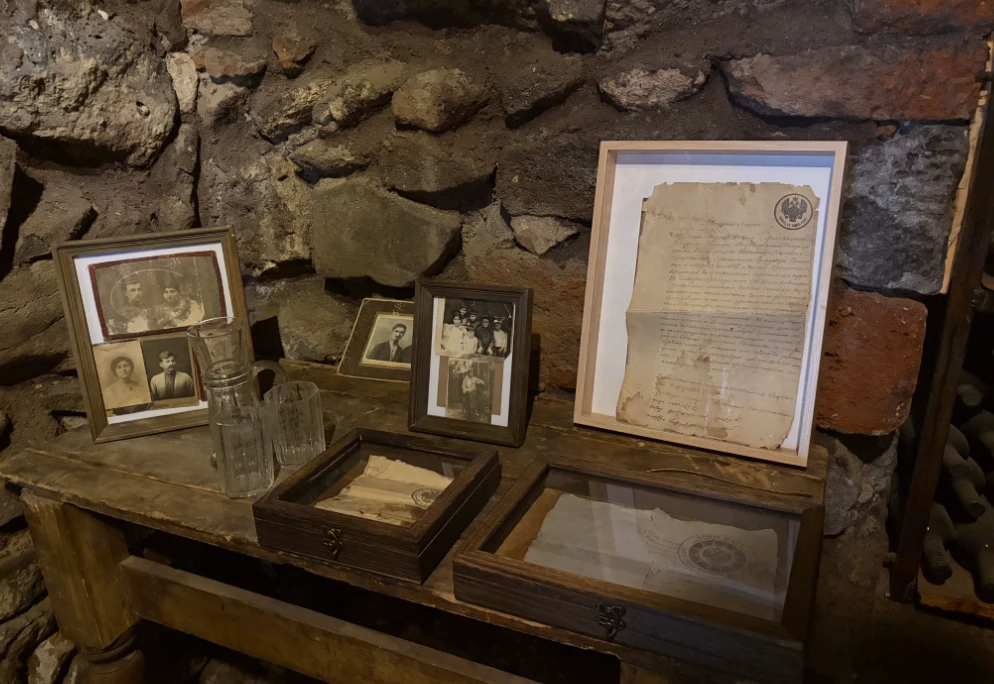
Now, the house where Hovhannes settled in protects the memory of the family and the traditional Hin Nork lifestyle. Nelly shows me a document with a Russian imperial seal which confirms the family’s ownership of the land. The house has stood there for over 150 years.
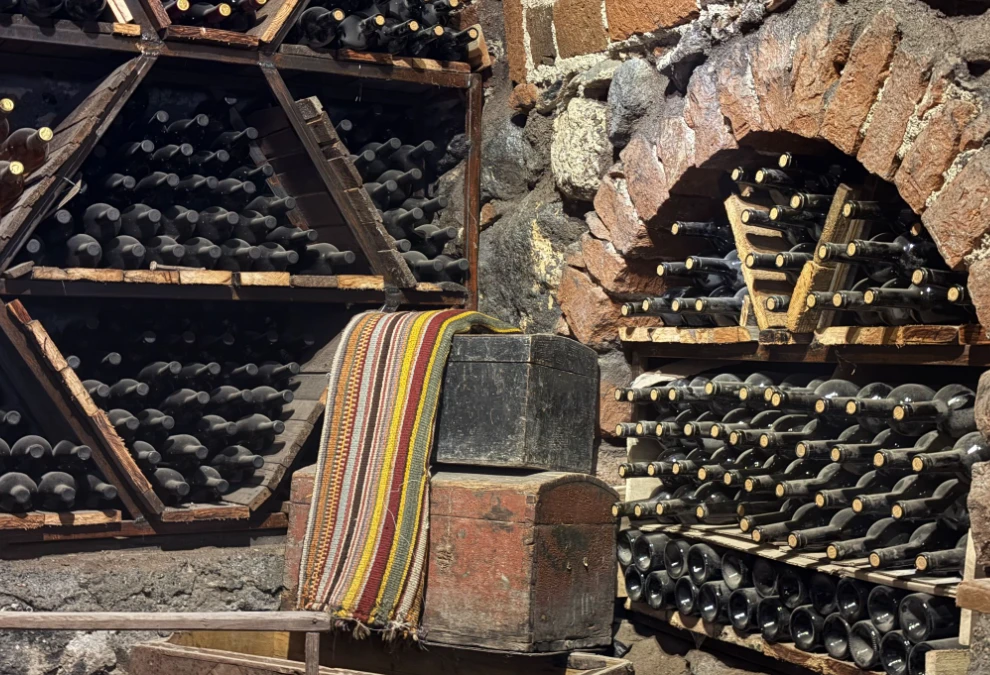
The museum basement is filled with winemaking artefacts: a big grape treading trough, traditional karas clay vessels and shelves filled with dusty wine bottles. According to Nelly, most Nork basements were used as wine cellars but few have survived. Their karas collection is among the best preserved in the area.
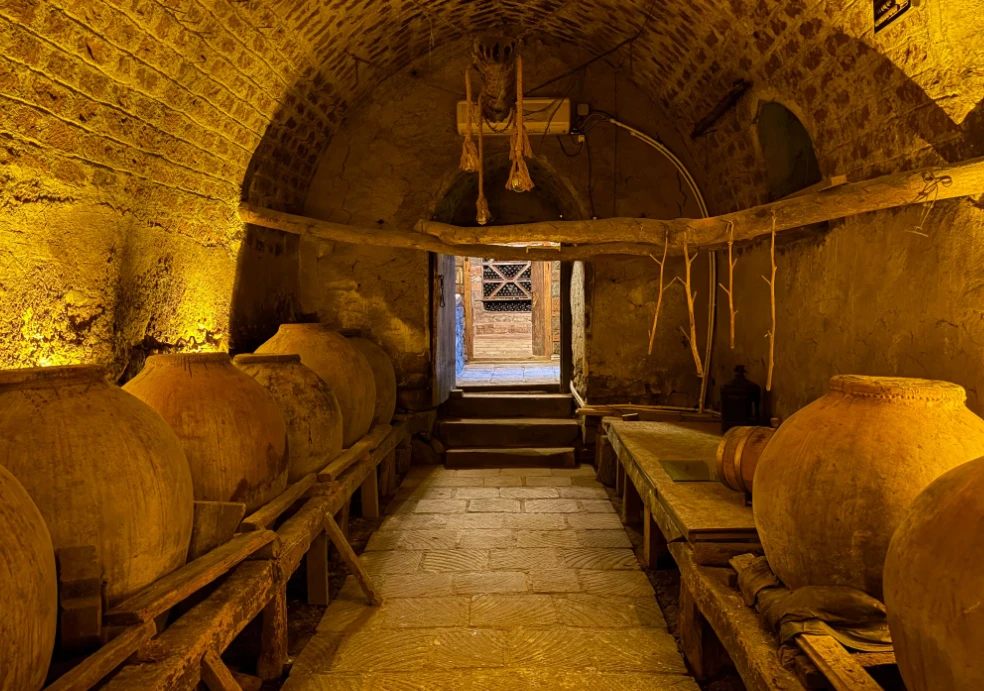
“I think the young generation is starting to realise and do things about it,” says Hayk about the preservation of local history and heritage. So far, this mission has been taken up by Nork’s residents themselves.
These processes are unfolding in both neighbourhoods along different trajectories. While Kond has been experiencing this attention for a while, Hin Nork is now following in its footsteps with grassroots, visitor-oriented initiatives. Additionally, according to Andrey Ivanov, almost the entire area of Hin Nork has been included within the boundaries of the protected cultural-historical zone, whereas Kond has only recently seen individual buildings catalogued.
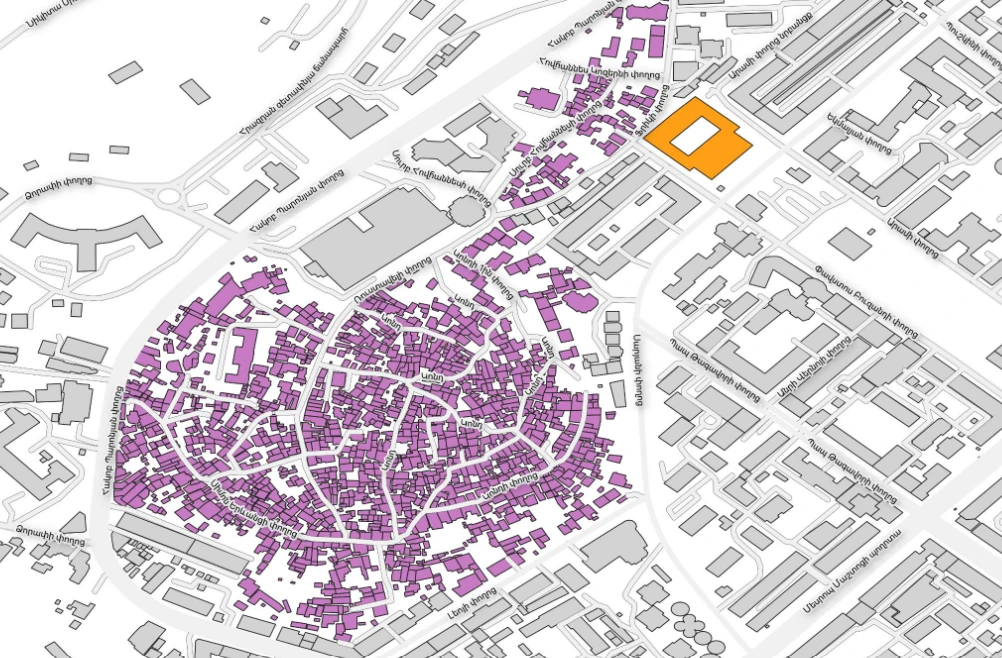
The construction of the World Trade Center (WTC) in downtown Yerevan will cause further demolitions on the borders of Kond. The project which is a cooperation between the Armenian Government, HayPost - Armenian national postal service - and Renshin, a private developer, began with preliminary demolition work at the HayPost building on 22 Martyros Saryan street. When completed, the complex will house conference halls, business centre, startup incubator and a hotel. The development will occupy several thousand square metres directly adjacent to Kond's borders.
The grassroots efforts increase the promise of preservation but also the risks of over-development, disneyfication and destruction of the fragile urban fabric. “We just need to be very careful; and I don't think we are,” says Sevada.
This article was produced in collaboration between CivilNet, Urbanista, and The Armenia Project (TAP).




 Stories