 Lia Avagyan
By Lia Avagyan
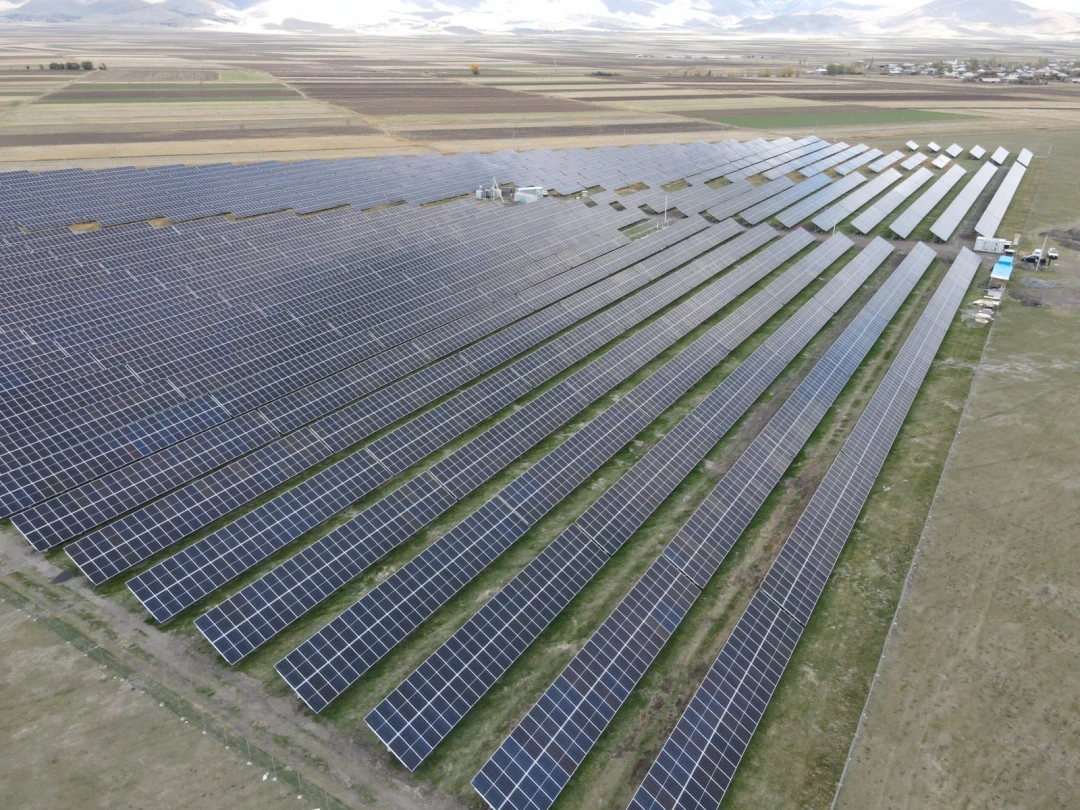
Armenia's rapid expansion of solar energy is putting growing pressure on its electricity grid, forcing authorities to restrict production at some solar plants and creating an estimated $9.3 million compensation burden in 2026 for electricity that cannot be generated.
The country has increased its installed solar capacity nearly tenfold in five years, from 111 megawatts (MW) in 2020 to 1,098 MW in 2025, according to the Ministry of Territorial Administration and Infrastructure.
But investment in energy storage and grid infrastructure has failed to keep pace, leaving Armenia unable to fully use the electricity its solar plants could produce during peak sunlight hours.
The problem stems from a fundamental requirement of electricity systems: production and consumption must remain balanced at all times. When solar generation exceeds what the grid can absorb, the system operator must order some facilities to reduce their output.
The restrictions affect large commercial solar plants. According to Armenia's energy regulator, compensation for curtailed solar power generation is expected to cost the electricity system approximately $9.3 million in 2026.
"The problem is that this is simply expensive. We are paying power plants and effectively shutting them down, meaning we are not using the electricity," said Hakob Vardanyan, a former deputy minister of territorial administration and infrastructure who oversaw Armenia's energy sector from 2018 to 2024.
The situation highlights the challenges facing Armenia as it seeks to expand domestic renewable energy production while reducing its dependence on imported fuels.
A costly storage gap
Armenia's solar expansion has been encouraged by government incentives, including subsidized loans for rooftop solar installations introduced in 2022. By the end of 2025, roughly 640 MW of installed solar capacity belonged to households and other self-generating consumers, while commercial solar plants accounted for another 458 MW. For comparison, the operating reactor at Armenia's Metsamor nuclear power plant has a generating capacity of about 410 MW.
Battery storage offers one solution. Large facilities could absorb surplus electricity during daylight hours and release it in the evening, when solar generation declines and demand often increases.
Vardanyan estimates that Armenia needs at least 3,000 megawatt-hours (MWh) of battery storage capacity, enough to supply 500 MW of electricity continuously for six hours. The country's exact storage requirements have yet to be officially determined.
Vardanyan believes storage facilities should be distributed across the country rather than concentrated at a single location. Government incentives should also encourage households and businesses to install batteries alongside existing solar panels.
The investment required would be substantial.
A 2025 study by the German Economic Team examined storage options for Armenia, including a 120 MWh project costing approximately $41 million and a 200 MWh alternative costing $78 million.
The researchers favored the smaller option when accounting for energy security risks and investment costs, although neither project demonstrated a clear standalone commercial case.
Vardanyan estimates that installing storage facilities to meet Armenia's current needs could cost $400–500 million.
The government aims to develop at least 800 MW of electricity storage capacity by 2031. However, the regulatory framework remains incomplete.
Julieta Simonyan, director of the Armenian Solar Energy Association, said businesses were already importing and installing battery systems, but legislation and technical standards were lagging behind market developments.

"Today's rules do not allow businesses operating in the battery storage market to develop at the pace they would like," Simonyan said. "The creation and development of the market directly depend on government regulations."
Regulators are preparing two operating models: storage facilities receiving regulated payments in exchange for following the system operator's instructions, and facilities competing directly in the electricity market.
Whether the investment will lead to higher electricity bills remains uncertain.
Ashot Ulikhanyan, head of the tariff policy department at Armenia's Public Services Regulatory Commission, said batteries would add costs but could also reduce existing expenses, making the overall impact on consumer tariffs hard to predict.
Energy security beyond solar power
The storage problem also has implications for Armenia's energy security.
The country relies heavily on imported natural gas, with Russia supplying more than 85% and Iran providing most of the remainder. Armenia buys Russian gas at a preferential border price of $177.50 per 1,000 cubic meters.
Gas-fired power plants remain an important part of Armenia's electricity system, particularly when renewable generation is insufficient.
Expanding battery storage could allow Armenia to use more domestically generated solar electricity and reduce some gas-fired generation, although batteries alone cannot eliminate dependence on imported fuels.
Energy specialist Gayane Kolyan said storage must be accompanied by broader reforms, including grid modernization, demand management and stronger electricity connections with neighboring countries.

"A comprehensive approach to solving this problem is very important," she said, calling for reforms, grid upgrades and new tools to manage electricity consumption.
Armenia has long pursued new high-voltage transmission links with Iran and Georgia, which could allow it to export surplus solar electricity and import additional power when needed. Both projects, however, have faced delays.
International partners are also showing interest in supporting Armenia's energy transition.
At the first Armenia-EU summit in Yerevan on May 5, Prime Minister Nikol Pashinyan welcomed the European Union's willingness to support the development of electricity storage facilities in Armenia.
The Armenian government is working with the World Bank to assess the country's storage requirements and identify suitable locations for new facilities. Meanwhile, regulations governing battery storage operations are expected to take effect on December 4, 2026, opening the way for licensing.
For Armenia, the challenge is no longer simply how to produce more solar electricity, but how to build a power system capable of using the energy it already generates.





 Stories