 Alexander Pracht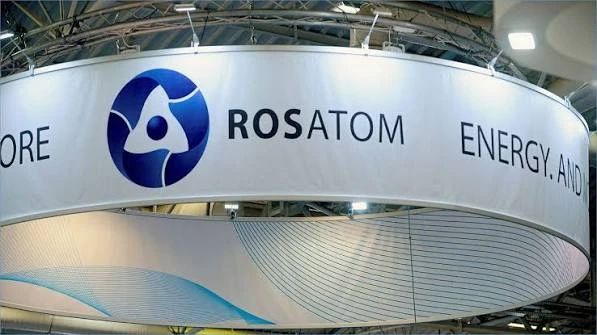
Armenian Prime Minister Nikol Pashinyan appears to be reconsidering the government’s previous preference for a small modular nuclear reactor, raising the prospect that Armenia could instead opt for a larger power plant such as the one proposed by Russia’s state nuclear corporation Rosatom.
Armenia operates the Metsamor nuclear power plant west of Yerevan, with a power capacity of about 440 MW, and has a diversified energy mix that includes thermal, nuclear and renewable energy generation facilities such as hydro and solar, with the latter growing sharply in output in recent years. Metsamor, commissioned in 1976, is due to be shut down in 2036, and the government has already announced that it is planning to replace it with a new facility.
However, the general government policy in recent years has been that the country only needs a smaller nuclear power plant, so as not to become heavily reliant on just one source of power.
“Renewable energy is opening new opportunities for our country. Solar energy is developing rapidly in Armenia. Considering these developments, we no longer need a large nuclear power plant,” Pashinyan said in February, arguing that Armenia intends to pursue a small modular reactor (SMR) – a relatively new technology compared to conventional reactors.
The statement came days after Armenia signed a civilian nuclear energy deal with the United States, allowing Washington to export nuclear technology and fuel to the country. The agreement was widely understood as signaling Armenia’s interest in a U.S.-supported replacement for Metsamor and a shift away from reliance on Moscow. The agreement specifically opened the way for U.S. companies to pursue civil nuclear projects in Armenia, including small modular reactors. As of now, Moscow assists with the maintenance of Metsamor and supplies nuclear fuel for the facility.
Also read: How Armenia’s new partnership with the U.S. is likely to affect its energy sector
On Tuesday, Pashinyan met in Yerevan with Alexey Likhachev, the director of Russia’s state nuclear corporation Rosatom. Likhachev pitched the construction of a 1 GW (1,000 MW) new nuclear facility in the country instead of an approximately 600 MW modular reactor Armenian authorities had projected previously.
Russia’s nuclear chief argued that by the time Metsamor is shut down ten years from now, Armenia’s power deficit will reach 1,000 MW if the current trend of power consumption growth continues. Pashinyan echoed Likhachev’s projections days later.
“Perhaps a 1,000 MW nuclear power plant would be the most logical solution. [...] A year ago Armenia had excess power, but now we’re in a power deficit,” the prime minister said at a press briefing on Thursday, explaining that the launch of two AI factories in the country this year was what changed the situation.
Also read: Firebird opens first phase of $4 billion AI project
“I said earlier that we didn’t need a large nuclear power plant. But now we have to understand what capacity the plant needs, because a modular one may just not be enough for us. We have to think of what the situation will be in 10 years. For now, I cannot say; the issue is being studied by experts. The sooner we make a decision, the better,” Pashinyan said.
The government announced in August that it will make the final decision on the new nuclear power plant by the end of next year. Pashinyan has repeatedly said that the decision will be based solely on economic rather than political considerations.




 Stories