By Hasmik Hovhannisyan
Residents of Arjut, a village in Armenia’s northern Lori province, are fighting plans for a new mining waste facility while living beside a landfill that collects garbage from Vanadzor and 18 settlements in the Pambak municipality.
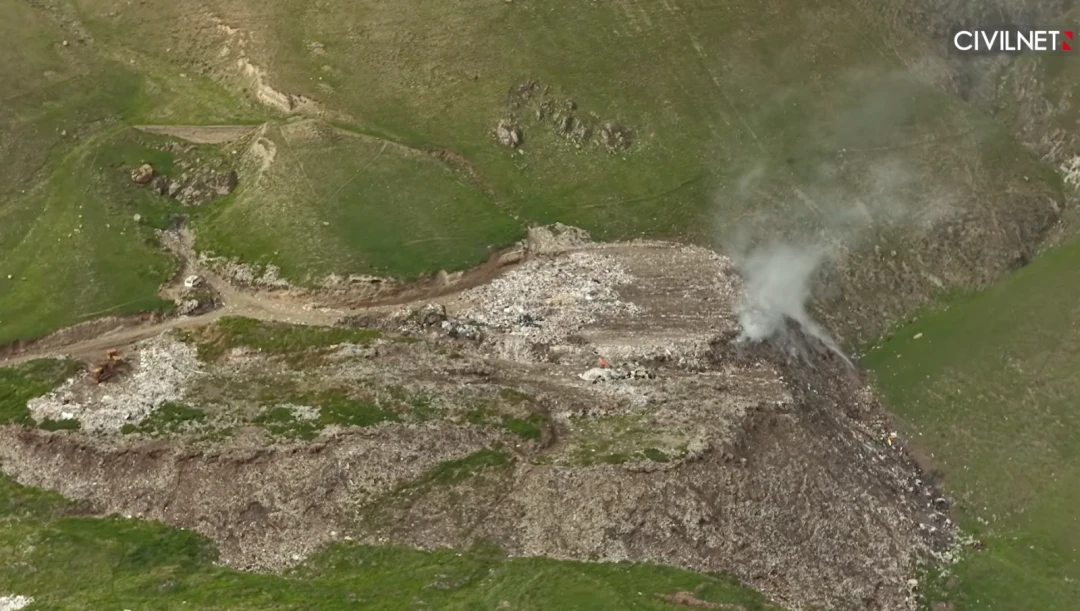
Smoke from burning waste and the smell of rotting garbage are familiar problems in the village. A proposal to build a new tailings storage facility, used to hold waste left after processing ore, has added to residents’ concerns.
The dispute has also raised questions about how local authorities reflect public opposition in decisions on mining projects.
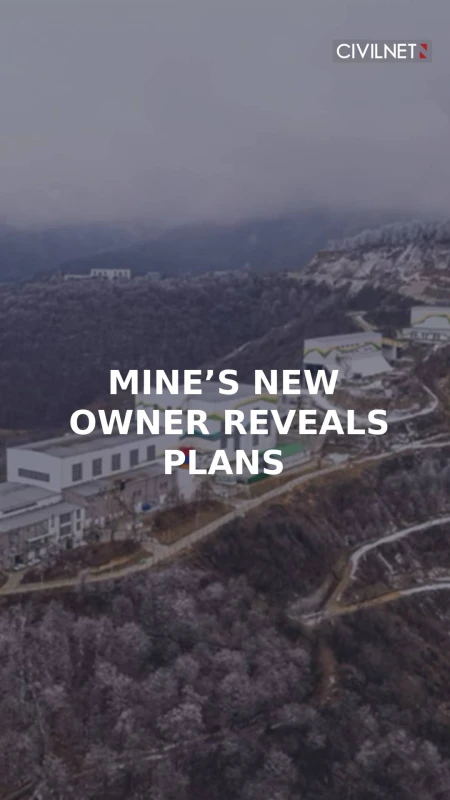
The Arjut gold mine is operated by Baktec Eco LLC and has been in production since 2020, according to Hetq. The company is seeking to upgrade its processing plant, build a new tailings facility and expand the existing one.
At a public hearing in March 2026, residents supported upgrading the plant but opposed the new tailings facility. The Pambak municipal council nevertheless described the hearing’s outcome as positive and backed the proposal, treating support for the plant upgrade as approval of the entire project.
Residents and the council both opposed a separate proposal for further geological exploration in Arjut.
Environmental advocate Oleg Dulgaryan, of the Center for Community Consolidation and Support, said public consultations do not always accurately reflect residents’ views.
He recalled a hearing two years earlier involving another company seeking to conduct geological exploration. The Environment Ministry rejected that application, noting that the record submitted by local authorities had failed to reflect residents’ opposition, he said.
“In that case, the central government was the check that stopped the process from moving forward,” Dulgaryan told CivilNet.
He said requiring local authorities to consider public hearing results does not necessarily mean residents’ objections determine the outcome.
Baktec Eco’s director, Vahan Zakharyan, told Hetq in July that the plant upgrade was still being designed and that no final decision had been made on the location of a new tailings facility. He said the existing facility remained usable.
In response to CivilNet’s questions, the Lori governor’s office said the Environment and Health ministries monitor compliance with permissible emissions limits.
A landfill problem dating back decades
The landfill has troubled Arjut since the 1980s, according to the governor’s office. The site is unfenced, and a single excavator handles waste arriving from Vanadzor and the surrounding settlements. Work generally takes place after complaints are raised.
Plastic and discarded household appliances burn at the site, while pigs and cows feed on waste scattered by the wind.
During a recent CivilNet visit, most residents declined to speak on camera but still identified the landfill as the village’s biggest problem.
Earlier CivilNet reporting documented complaints that laundry hung outdoors absorbed the smell of garbage and had to be washed again.
Residents have repeatedly protested, including by blocking the road to garbage trucks. After their most recent blockade, the regional governor promised to address the problem.
Arjut’s village head, Davit Hovhannisyan, said covering waste with soil had improved conditions.
“They now cover the garbage with a layer of soil. It is not bothering residents at the moment,” he said.
Asked who was responsible for the landfill, Hovhannisyan said he could not identify the responsible authority. He also said the national government would decide whether to relocate the site.
“I cannot answer that question. I am not the decision-maker. The government decides,” he said.
Hovhannisyan suggested a waste recycling plant might eventually open, but offered no concrete plan or timetable.
Environmental campaigners dispute his assessment that conditions are now satisfactory.
Dulgaryan said testing had detected dioxins in eggs at levels up to six times the permissible limit, as well as high concentrations of copper and lead in dust.
A recent report by Czech environmental organization Arnika also highlighted pollution associated with Arjut’s landfill and open waste burning, including heavy metals, persistent organic pollutants and contamination in free-range chicken eggs.
Concerns about public participation extend beyond Arjut. On August 27, the Pambak municipal council approved geological exploration in the Hankadzor mineral field, on land belonging to the settlements of Yeghegnut, Debet and Vahagni. Dulgaryan said the council had not secured public support.
He questioned these decisions as Armenia prepares to host COP17, the U.N. biodiversity conference, in Yerevan from October 19 to 30.


 Stories