By Siranush Adamyan
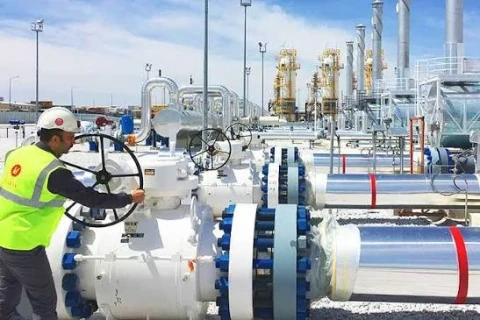
Armenian and Turkish officials discussed restoring and bringing the Gyumri-Kars electricity transmission line into operation on October 5, as part of efforts to normalize relations between the two countries.
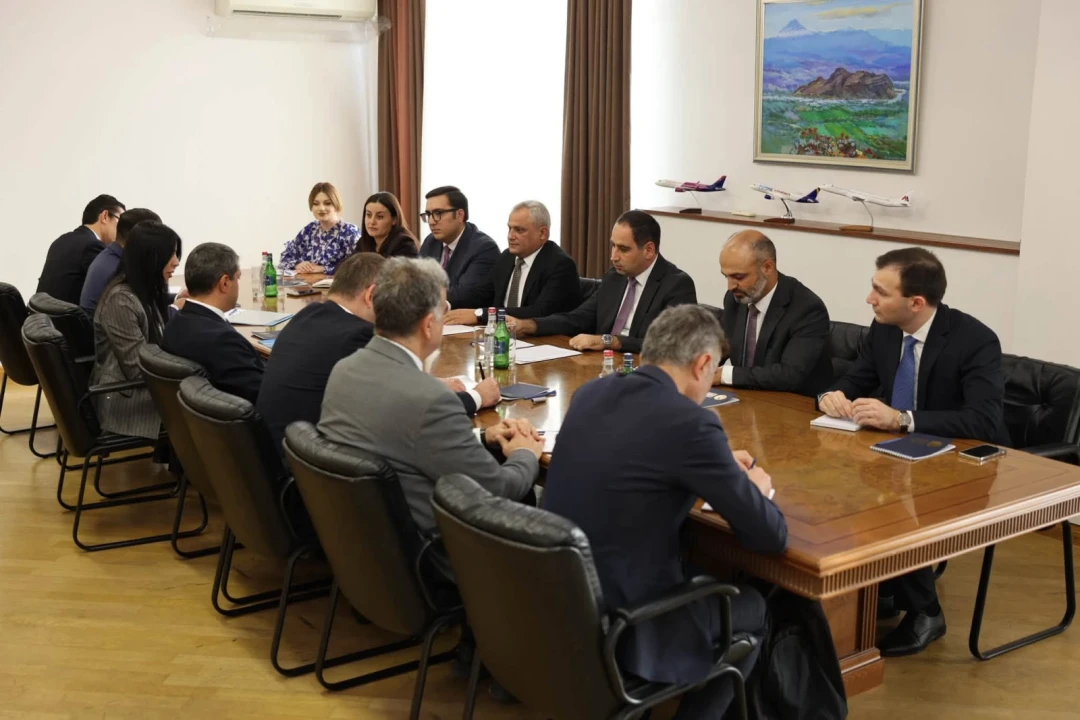
Armenia’s Minister of Territorial Administration and Infrastructure Davit Khudatyan met in Yerevan with a delegation led by Mustafa Pustu, chairman and director general of Turkey’s Electricity Transmission Corporation, TEİAŞ.
The discussions covered work to restore the cross-border connection. Khudatyan said the two sides emphasized the importance of linking their electricity systems for bilateral and regional cooperation.
The Turkish delegation also met with executives from Armenia’s Electric Power System Operator and High Voltage Electric Networks. The announcement gave no timetable for bringing the line into operation.
The talks revisit an initiative pursued during the previous Armenian-Turkish diplomatic thaw in 2008–2009. Armenia’s state-owned transmission company signed an agreement with Belgium’s UNIT Group, which operated in electricity distribution and generation in Turkey, to supply Armenian electricity to the Turkish market. Deliveries were expected to begin in 2009, initially totaling about 1.5 billion kilowatt-hours a year.
Those supplies never began. Then-Energy Minister Armen Movsisyan attributed the delay to political obstacles in Turkey. The project stalled alongside the broader normalization effort: the protocols signed in Zurich in October 2009 to establish diplomatic relations and open the border never entered into force.
Armenia and Turkey launched their current normalization process in late 2021, but diplomatic relations remain unestablished and the land border remains closed to regular crossings. Turkey shut the border in 1993 during the Nagorno-Karabakh war, in support of its ally Azerbaijan.
High-level contacts have continued. Prime Minister Nikol Pashinyan and Turkish President Recep Tayyip Erdoğan met in New York on September 23, discussing normalization, stronger economic ties and the reopening of regional transport links.


 Stories