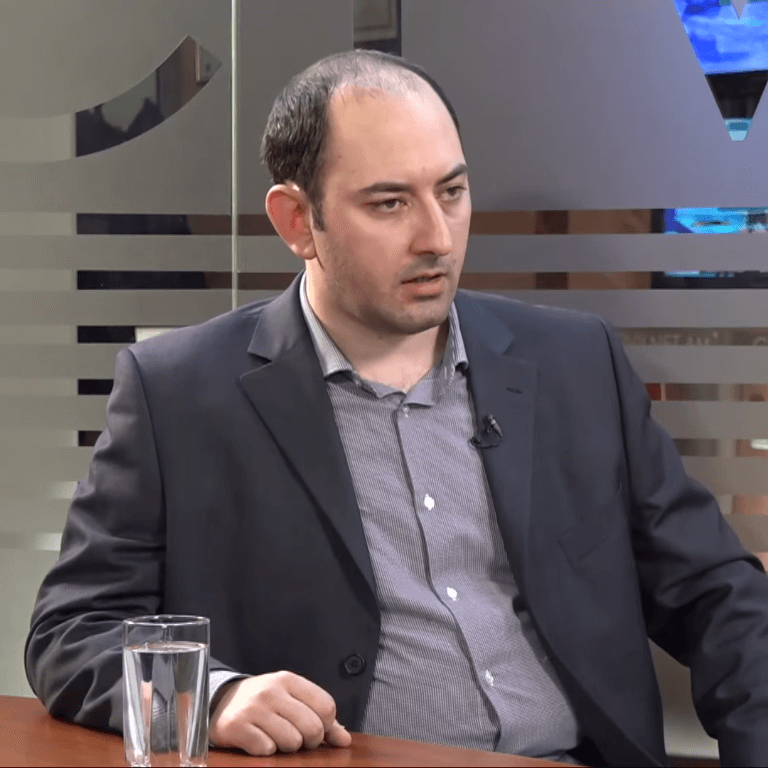
 Tigran Grigoryan
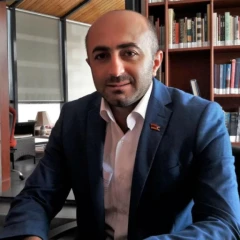 Hayk Khanumyan
#DemocracyWatch - The practice of initiating criminal proceedings against critics of the ruling party based on their public statements has been one of the important manifestations of democratic backsliding in Armenia in recent years. When the provision criminalizing “grave insult” was decriminalized in 2022 under public pressure, the practice of criminal prosecution for public speech nevertheless did not disappear. Instead, it continued through the use of other provisions of the Criminal Code. Two high-profile cases in recent weeks have once again brought this issue to public attention.
On October 7, the founder of the Adequate party, Artur Danielyan, was remanded in custody for two months. He was initially charged over a Facebook post with hooliganism involving the use of information technology. The charge was later supplemented with another provision that provides for punishment for defaming the National Security Service through a Facebook post. Notably, the Investigative Committee has not disclosed which post Danielyan is being prosecuted over.
The criminal proceedings against Danielyan were preceded by the prosecution of playwright Vahram Sahakyan. On September 29, Sahakyan was arrested and was also charged over a Facebook post, under a different provision that criminalizes incitement to hatred, hostility, and intolerance. The court imposed administrative supervision on Sahakyan, prohibiting him from making public posts.
The proceedings against Artur Danielyan and Vahram Sahakyan have been strongly criticized by Armenia’s civil society and human rights community. For example, Arthur Papyan, Chairman of the Yerevan Press Club, wrote on Facebook: “The detention of Artur Danielyan, and the arrest of Vahram Sahakyan two weeks before that, are not random or isolated incidents. This is a systematic effort to intimidate society and silence dissent.”
Papyan argues that when critical speech is criminalized, freedom of expression becomes a fiction, while the state loses its democratic character.
In its landmark Handyside v. The United Kingdom (1976) judgment, the European Court of Human Rights established a cornerstone principle for the protection of freedom of expression. According to the Court, the freedom of expression guaranteed by Article 10 of the European Convention on Human Rights applies not only to “information” or “ideas” that are favorably received or regarded as inoffensive or neutral, but also to those that offend, shock, or disturb the state or any section of the population. These are the demands of pluralism, tolerance, and broad-mindedness, without which there can be no “democratic society.”
Vahram Sahakyan and Artur Danielyan are prominent figures in Armenia’s polarized public sphere who frequently make harsh, controversial, and offensive posts and statements on social media and other platforms. However, in a democratic system, criminal prosecution should not be considered acceptable even for the most severe insult or criticism. There appeared to be a consensus on this issue both within Armenian civil society and among various international actors when active discussions were taking place in 2021–2022 about the need to decriminalize “grave insult.”
The problem is further compounded by the fact that criminal cases under such provisions are largely initiated against those who target representatives of the authorities. As early as 2025, Freedom House noted that nearly 95 percent of court cases concerning incitement to violence involved alleged threats against Prime Minister Pashinyan and his supporters, whereas similar statements made by members of the ruling party were apparently not subjected to the same level of scrutiny.
The selective nature of this process becomes particularly evident in cases of hate speech targeting vulnerable groups. The Regional Center for Democracy and Security (RCDS) has been continuously monitoring and documenting hate speech against refugees from Nagorno-Karabakh. In recent months, RCDS has repeatedly appealed to law enforcement authorities to initiate criminal proceedings over some of the most serious instances of hate speech against refugees. In one such case, a public figure posted on Facebook that people from Karabakh were enemies of Armenia. Not a single proceeding has been initiated in any of these cases.
The criminal cases against Sahakyan and Danielyan, as well as numerous other instances of the instrumentalization of the law enforcement system and selective justice over the past year, may create moral dilemmas for different representatives of civil society. Given the controversial public profiles of many of the individuals targeted in these cases, as well as previous instances in which they themselves targeted civil society representatives, many actors may be inclined to turn a blind eye to these obvious cases of state abuse of the law and its selective application.
This approach, however, is extremely dangerous and contributes to the legitimization and normalization of anti-democratic and unlawful practices. Criticizing deeply troubling trends and anti-democratic steps does not in any way mean supporting the public or other activities of the individuals facing prosecution. Recognizing this important distinction is essential for building broader public solidarity against the use of unlawful tools and for resisting democratic backsliding.
Democracy Watch is a joint initiative of CivilNet and the Regional Center for Democracy and Security.

 Stories