By Lia Avagyan
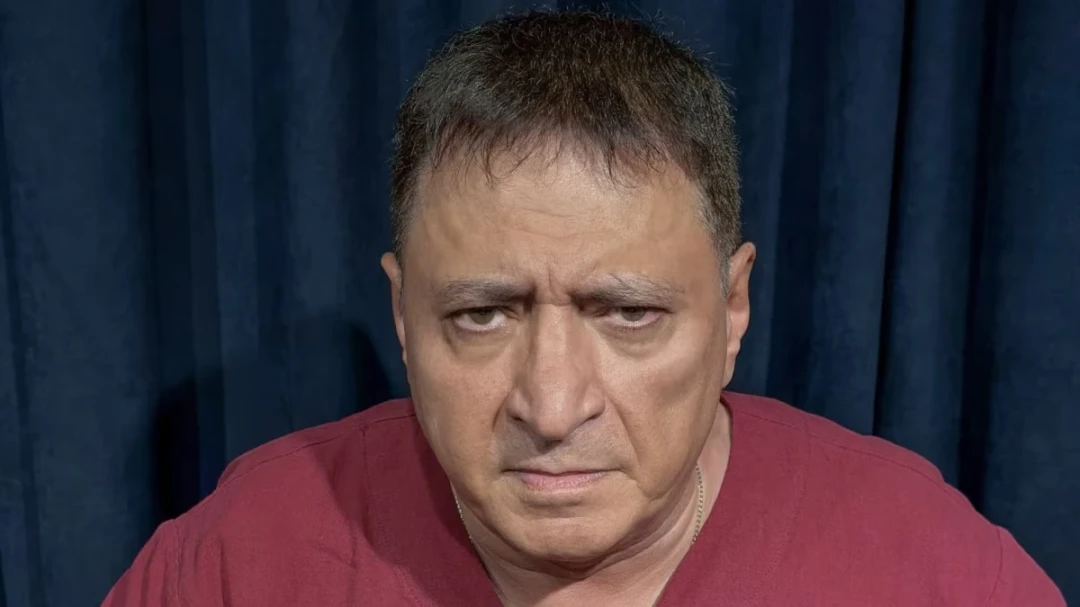
Armenian authorities detained writer and playwright Vahram Sahakyan, an outspoken critic of Prime Minister Nikol Pashinyan, on September 29 over a Facebook post, prompting accusations that speech-related laws are being used selectively to silence government opponents.
A court later placed Sahakyan under administrative supervision. His lawyer, Ruben Melikyan, said the court also banned him from posting on social media, except on subjects related to his professional work.
The Investigative Committee said Sahakyan was charged with inciting or promoting hatred, intolerance or hostility over a post published on January 8, 2025, but did not identify the specific post or disclose its wording. The committee said an expert assessment received on September 1, 2026, concluded that the post contained hatred. The investigation is continuing.
Tigran Grigoryan, director of the Regional Center for Democracy and Security, said he did not know which specific statement had prompted the case but argued that speech-related prosecutions reflected a broader pattern.
“It is clear that, in criminal cases related to speech, we are dealing with one-sided and selective justice,” he wrote on Facebook.
Grigoryan contrasted Sahakyan’s prosecution with the rejection of his organization’s complaint about hostile speech against refugees from Nagorno-Karabakh. He said investigators took more than two months to provide a written explanation for declining to pursue a public figure’s post declaring that “Karabakh Armenians are enemies of the Republic of Armenia.”
According to Grigoryan, the Investigative Committee argued in a five- to six-page document that the statement did not constitute a criminal offense.
“This is not a matter of error or incompetence,” he wrote. “It is a directed and systematic policy.”
Commentator Gor Madoyan said offensive language should be answered with speech, or addressed through civil proceedings where warranted, rather than arrest.
“If there is freedom of speech and writing, there is also freedom not to read,” he wrote.
Madoyan argued that profanity was part of public expression and should not, in itself, be criminalized. He accused law enforcement of overlooking hostile statements by pro-government figures while prosecuting opposition voices to intimidate and silence them.
“Instead of addressing the subject of criticism, they neutralize the critic,” he wrote.
Commentator Lusine Hovhannisyan also questioned the response of individuals and organizations that defend freedom of expression.
“Ladies, gentlemen, someone is being arrested for speech. Are you busy?” she wrote sarcastically.
Concerns over selective enforcement have also appeared in international assessments. Freedom House’s 2025 Armenia report, citing a January 2024 media report, said nearly 95 percent of court cases concerning incitement to violence under a 2020 criminal code amendment involved alleged threats against Pashinyan and his supporters. Potentially prohibited statements by ruling party members apparently did not receive the same scrutiny.
Earlier speech-related cases include the prosecution of Edgar Ghazaryan, a former Armenian ambassador to Poland and government critic, over statements about Constitutional Court judges. A court restricted his public comments about judges and several categories of law-enforcement officials while proceedings continued. civilnet.am
CivilNet’s Democracy Watch has also examined highly publicized arrests and disproportionate force, arguing that such practices, alongside political pressure on investigators and courts, raise concerns about institutional independence and the use of law enforcement to send political messages.


 Stories