By Siranush Adamyan
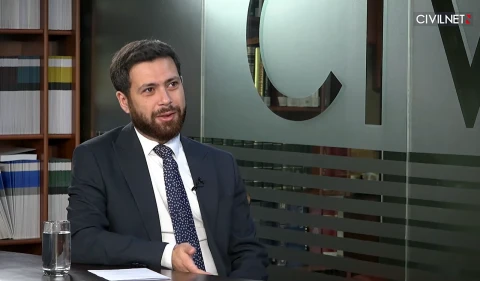
Armenia has established regular, growing exports to several European markets, particularly in Eastern Europe, where transport costs are lower than in markets farther west, Deputy Minister of Foreign Affairs and International Trade Vahan Kostanyan told CivilNet in an interview on Friday.
“We see that we already have regular exports to several countries, with steady volumes that are increasing,” he said. “We are talking particularly about Eastern European countries, also taking into account that logistics costs there are lower than in countries farther west in Europe.”
Some agricultural products were also reaching Western Europe, he added. But expanding exports required businesses to identify suitable markets, obtain the necessary certifications and address high production and transport costs.
His comments came ahead of temporary EU tariff preferences taking effect on October 10. EU Ambassador to Armenia Vassilis Maragos told CivilNet the measures would suspend customs duties on around 80 percent of Armenian exports to the bloc.
The preferences, which apply until October 11, 2028, aim to help Armenia diversify its export markets following Russian restrictions affecting imports and transit of products including alcoholic beverages, mineral water, fruits and vegetables.
They cover a range of agricultural and industrial goods, subject to customs codes and Armenian origin requirements. Eight agricultural products receive tariff relief within annual quotas; the measures do not provide fully duty-free access to all Armenian goods.
Finding markets and meeting standards
Kostanyan said exports to EU countries were growing, but it would be inaccurate to describe current agricultural shipments as sufficient.
Increasing awareness of Armenian products and identifying countries where they could compete were priorities. Experience had shown that theoretical assessments of promising markets did not always match the destinations where Armenian products were actually being sold, he said.
Certification was another obstacle. A small group of more established businesses already had the necessary certificates, while others had obtained them or were still working to do so.
“We can say that 2026 was, to some extent, also a pilot year for exports to the European Union, and we will be better prepared to increase export volumes in 2027,” Kostanyan said.
For greenhouse products such as tomatoes and peppers, exporters did not need to wait for a new growing season to pursue additional opportunities. Work was continuing with the Economy Ministry and businesses to expand access to European markets, he said.
Government support programs were already available and being used by exporters supplying European and other markets, he added.
Kostanyan also pointed to measures protecting European agricultural producers. Armenian produce often had high production costs even before transport expenses were added, making it important to find opportunities in premium market segments.
“We believe we should negotiate with high-end restaurant chains and hotel chains so that our products reach them directly,” he said.
Selling through wholesale markets did not always make Armenian agricultural products competitive, he added. Direct relationships with buyers could allow exporters to bypass that stage.
Cooperation with major hospitality businesses had also been among the main topics discussed during a recent visit to Armenia by the head of the UN tourism agency, Kostanyan said.
Helping smaller producers export
Armenia was working with EU partners on support for small and medium-sized enterprises, Kostanyan said. Businesses also needed better information about export requirements and opportunities.
Exporting required sufficient volumes, consistent quality and regular deliveries, he said, calling for greater cooperation among domestic businesses.
“I think some consolidation within the domestic business sector needs to take place. At a minimum, small producers should work with larger ones to export through them,” he said.
Maragos separately stressed that tariff relief alone would not establish Armenian products in European markets.
“A zero tariff is an important step, but on its own it will not place a product on a European shelf,” he told CivilNet.
Success, Maragos said, would depend on consistently meeting EU standards, supplying reliable volumes and building lasting relationships with European partners.




 Stories