 Alexander Pracht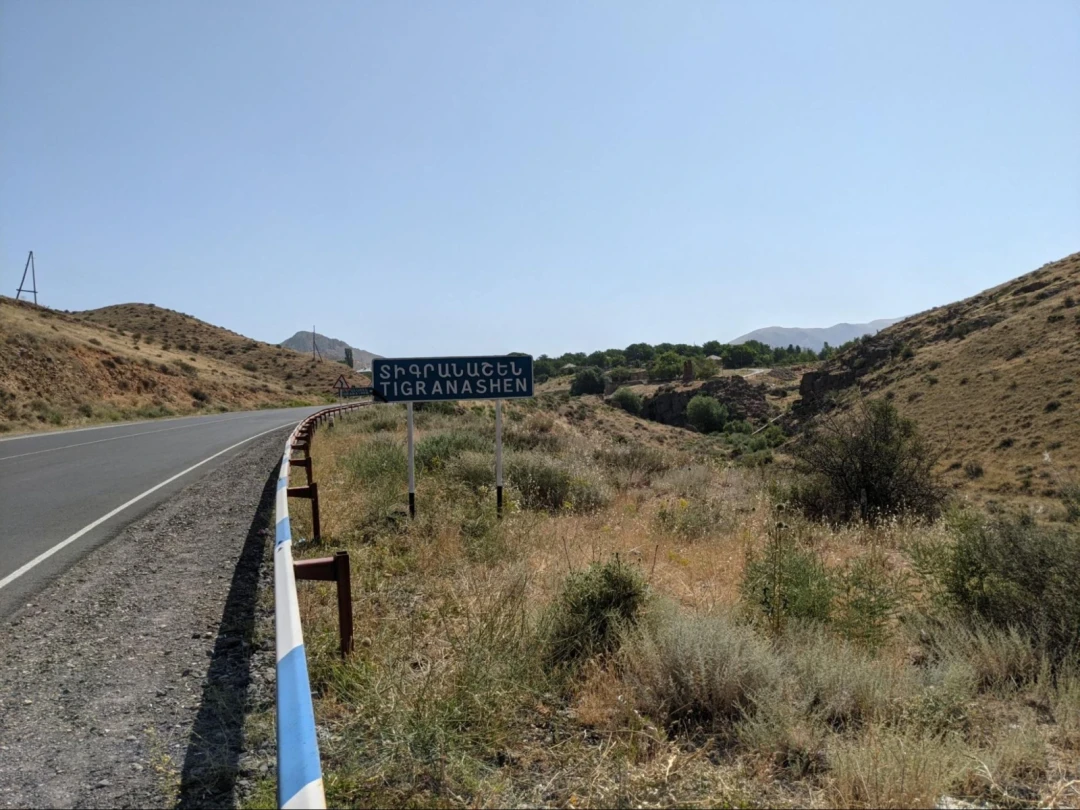
Armenia and Azerbaijan should agree to establish a clear, conventional border without enclaves or exclaves, Prime Minister Nikol Pashinyan said in a statement on Wednesday.
“There should be no enclaves and exclaves on either side of the border, meaning that the two countries, Armenia and Azerbaijan, should exchange territories of the appropriate exact size,” the prime minister said in a Facebook video.
An enclave is a territory internationally recognized as belonging to one country but entirely surrounded by another country’s territory. Three such areas inside Armenia’s borders are de jure Azerbaijani but controlled by Armenia, two of which are abandoned villages.
Inside Azerbaijan’s borders, there is also a de jure Armenian enclave, known as Artsvashen, which is inhabited by Azerbaijanis.
Artsvashen is roughly equal in size and population to the three Azerbaijani exclaves inside Armenia’s borders, prompting suggestions of a potential land swap for years. Such an exchange would mean neither Armenians nor Azerbaijanis would have to resettle, transport infrastructure would not be disrupted, and both countries would have clear, continuous borders.
However, a land swap would require nationwide referendums in both countries. Pashinyan first floated the idea of holding such referendums in 2024.
Enclaves are common along post-Soviet borders. They were created under Soviet administration for statistical, logistical, and administrative purposes, when there were no hard borders between Soviet republics and their boundaries existed largely on paper. Following the Soviet Union’s collapse in 1991, these former administrative boundaries became international borders, turning enclaves into sources of territorial disputes.
There have been several examples of land swaps between post-Soviet states, including the 2025 Treaty of Khujand which saw Kyrgyzstan, Uzbekistan, and Tajikistan advancing border demarcation and agreeing on land exchanges to resolve longstanding disputes that had fueled tensions and, at times, hostilities.


 Stories