 Alexander Pracht
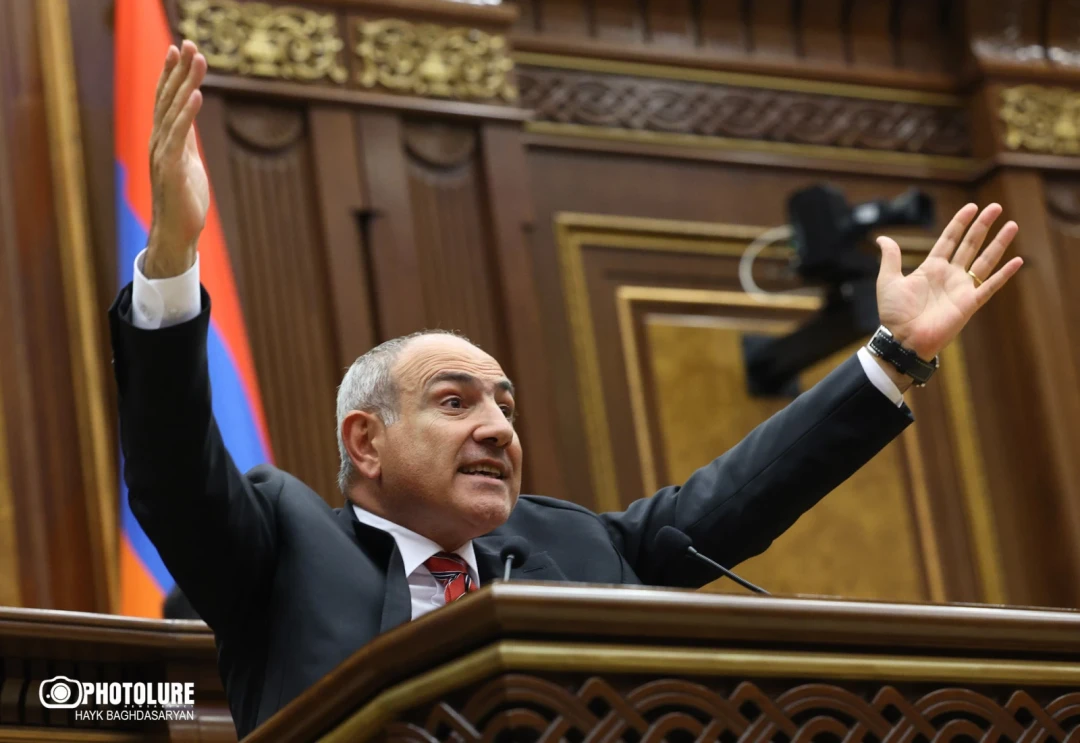
Armenian Prime Minister Nikol Pashinyan announced at a press briefing on Thursday that he would not seek another term as prime minister after a peace agreement is signed with Azerbaijan.
He also said he would resign with immediate effect if Armenians reject a new constitution proposed by his government and necessary for advancing peace negotiations with Baku.
“If our people say no [to the new constitution], I will step down. But if they say yes, I will see through the peace agenda, and in the following election, I will not run for prime minister again,” Pashinyan said.
The prime minister also announced that the draft constitution would be made public next week, opening it up for broad public discussion.
He said the proposed changes would introduce additional checks and balances, including guaranteed representation for opposition forces in key state institutions such as the Central Bank board and the Central Electoral Commission.
The planned constitutional changes have become a point of contention in Armenia’s peace process with Azerbaijan. Baku has demanded that Armenia remove references to the country’s Declaration of Independence from its constitution, arguing that they imply territorial claims against Azerbaijan. The Armenian government has said it intends to adopt a new constitution, although Pashinyan has insisted that the matter is an internal affair. He has also argued that the ruling Civil Contract party first suggested major constitutional changes shortly after it had come to power in 2018, long before Baku’s demand.
Also read: EXPLAINER: What’s behind Armenia’s potential constitutional changes?
Last month, Pashinyan said the ruling Civil Contract party might call a snap parliamentary election to secure enough seats to make the changes possible. The party currently holds 64 of parliament’s 105 seats, six short of the two-thirds majority required to trigger a constitutional referendum.
Armenia last held a constitutional referendum in 2015, during the administration of then-President Serzh Sargsyan. The amendments, approved by 66.2% of voters, shifted most executive powers from the president to the prime minister.
The changes were widely viewed as Sargsyan’s attempt to remain in power after completing two presidential terms. Despite pledging not to seek to lead the country after his presidency ended in April 2018, Sargsyan was elected prime minister by a parliament controlled by his Republican Party immediately afterward.
The appointment triggered mass protests across Armenia, known as the Velvet Revolution. Sargsyan stepped down later that month, and Pashinyan’s My Step Alliance went on to win 70.4% of the vote in the parliamentary election held in December of the same year.

 Stories