By Lia Avagyan
Hrant Minasyan has given himself a title. “I call myself the last resident of a dying village,” he says.
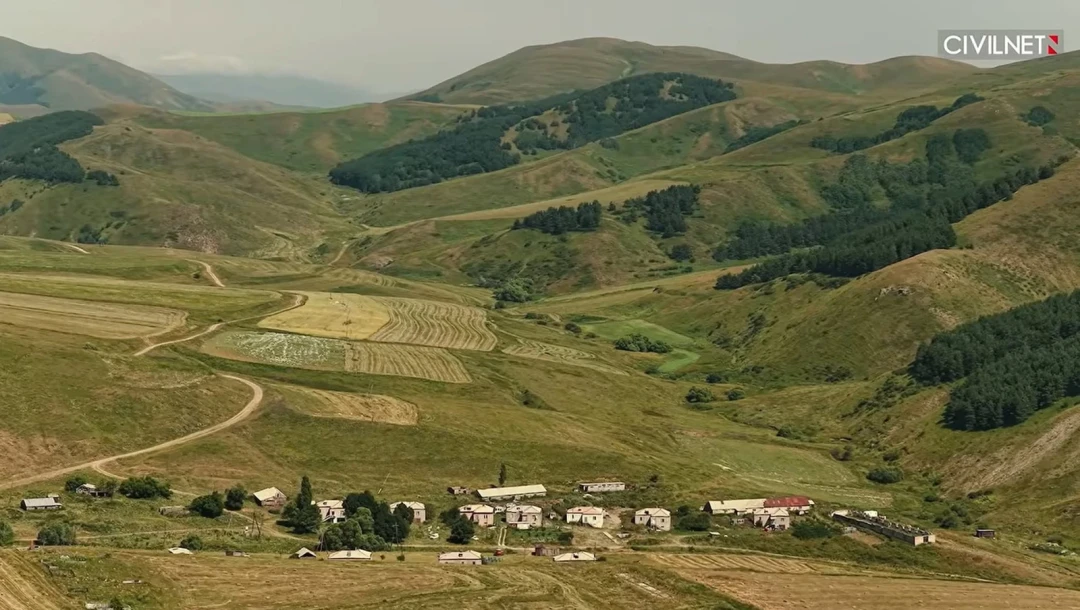
HIs village, Lernagyugh, sits nearly 2,000 meters (6,500 feet) above sea level, in a highland valley about 15 kilometers (9 miles) northeast of Gyumri, in Armenia’s Shirak province. Fields of hay roll out toward the surrounding hills. The village is reached by a dirt road that branches off the main highway at the neighboring village of Torosgyugh. The road has never been paved.
Today, Hrant and his wife, Margarit Khchoyan, are the ones left who live here. There are 10 houses in the village, Hrant says, and nine of them are empty. Two or three families return in the summer to cut hay on their land, sell it and leave again.
“From what people say, Lernagyugh used to be the largest village in our area,” he says. “But because of the road, which was terrible, especially in winter, the village fell apart. The older people died, and the young ones left. They never came back.”
The decline shows in the records. The village, known as Chorli until 1946, took its current name, meaning mountain village, in 1967. Its residents are Armenians, some of whose ancestors came from villages around Kars and Basen, now in Turkey. In 1897, Lernagyugh had 520 inhabitants. By 1939, the number had risen to 539. By 1989, it had fallen to 42, and the 2011 census counted 25.
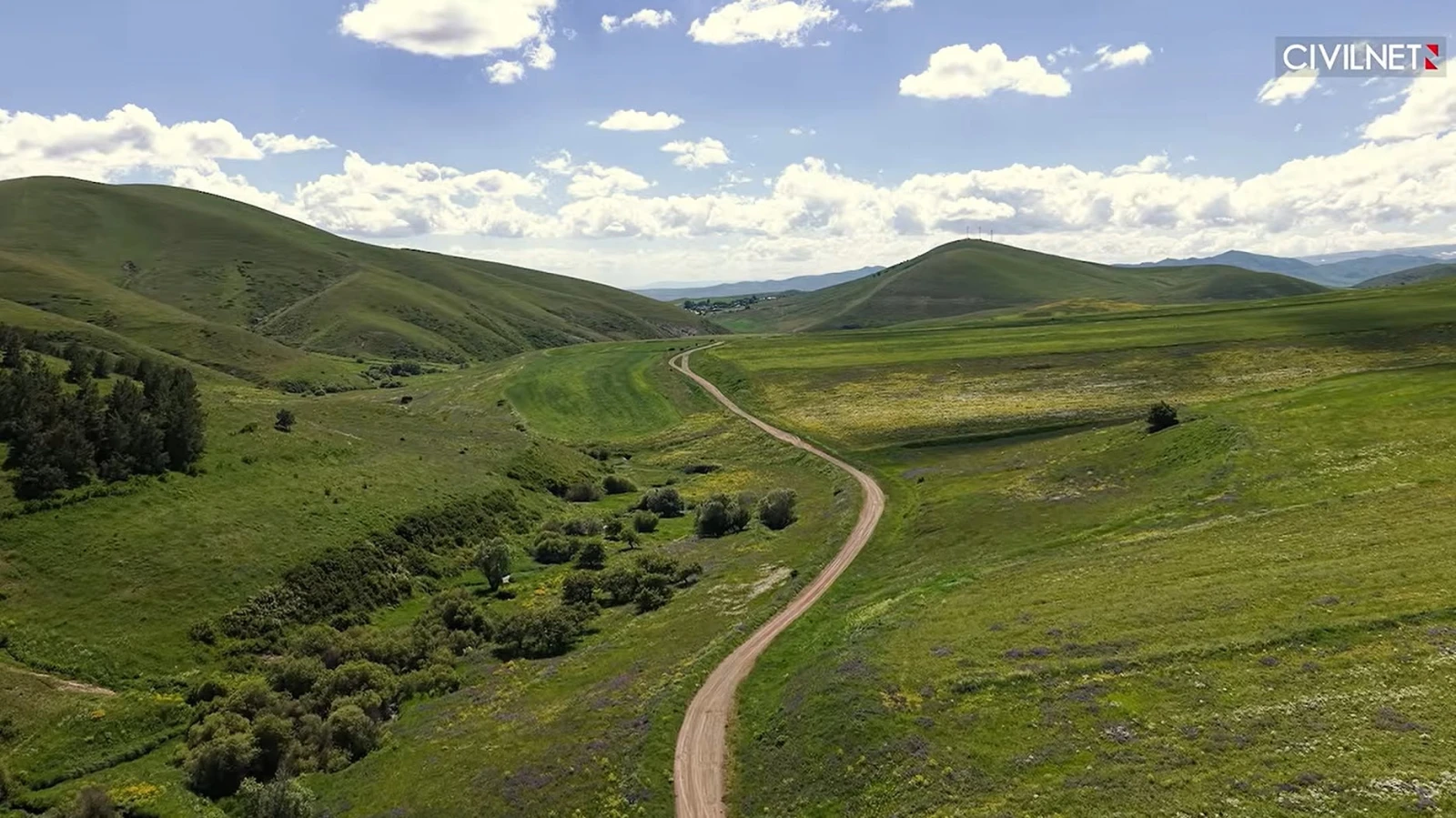
Shirak is a frontier province, bordering both Turkey and Georgia. Lernagyugh lies roughly 25 kilometers (15 miles) from the closed Turkish border. After the 1988 earthquake devastated the region, about 15 new houses were built in the village. In 1989, 18 families lived here. A decade ago, three remained.
Winter in these highlands lasts about six months, from early November to the end of April. There has never been a regular school. A primary school opened in 1992 but closed a few years later for lack of pupils. The couple’s eldest son changed schools three times, in three different places.
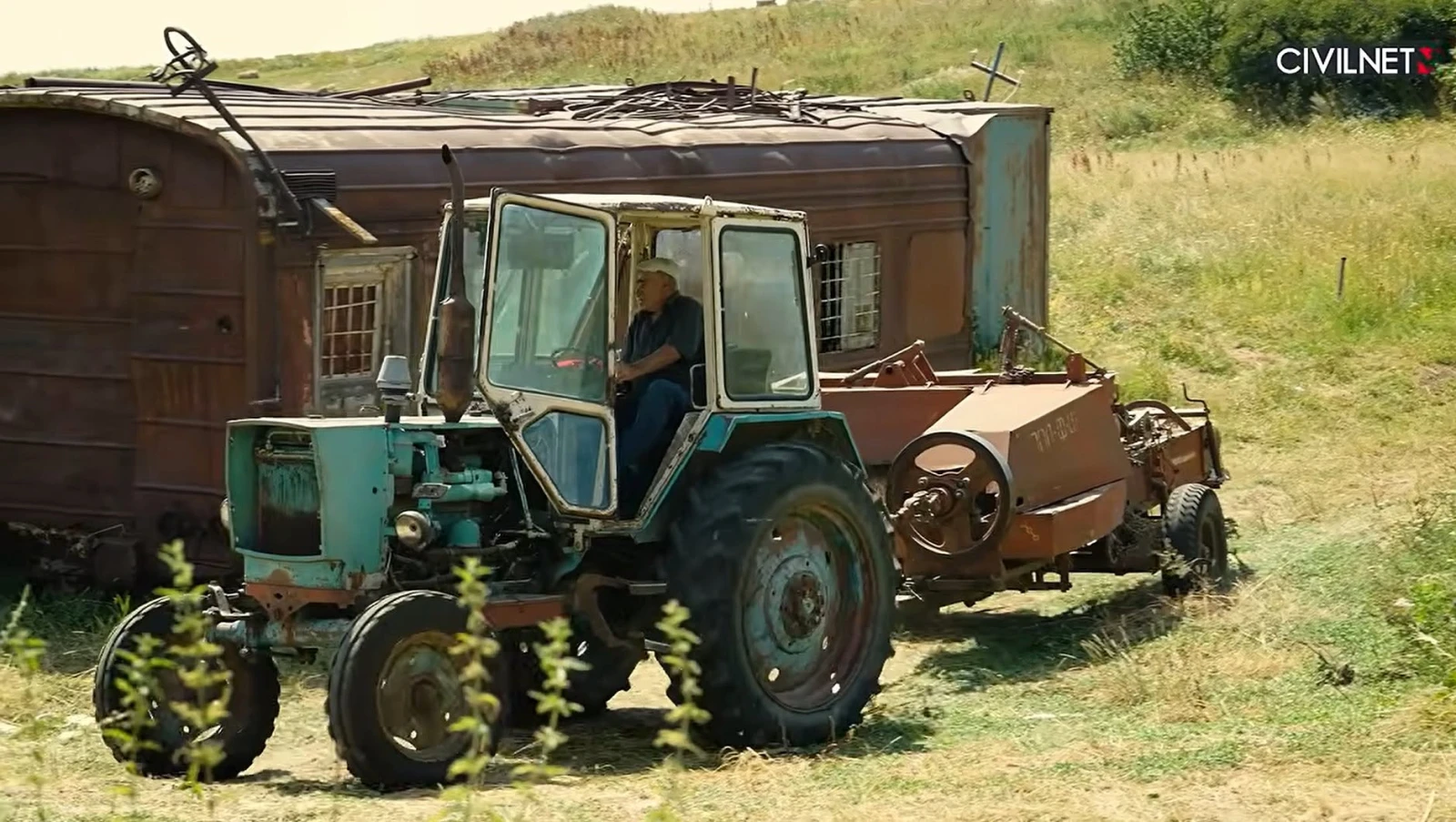
Hrant says he no longer plows or sows. There is no one to help. Now he bales hay.
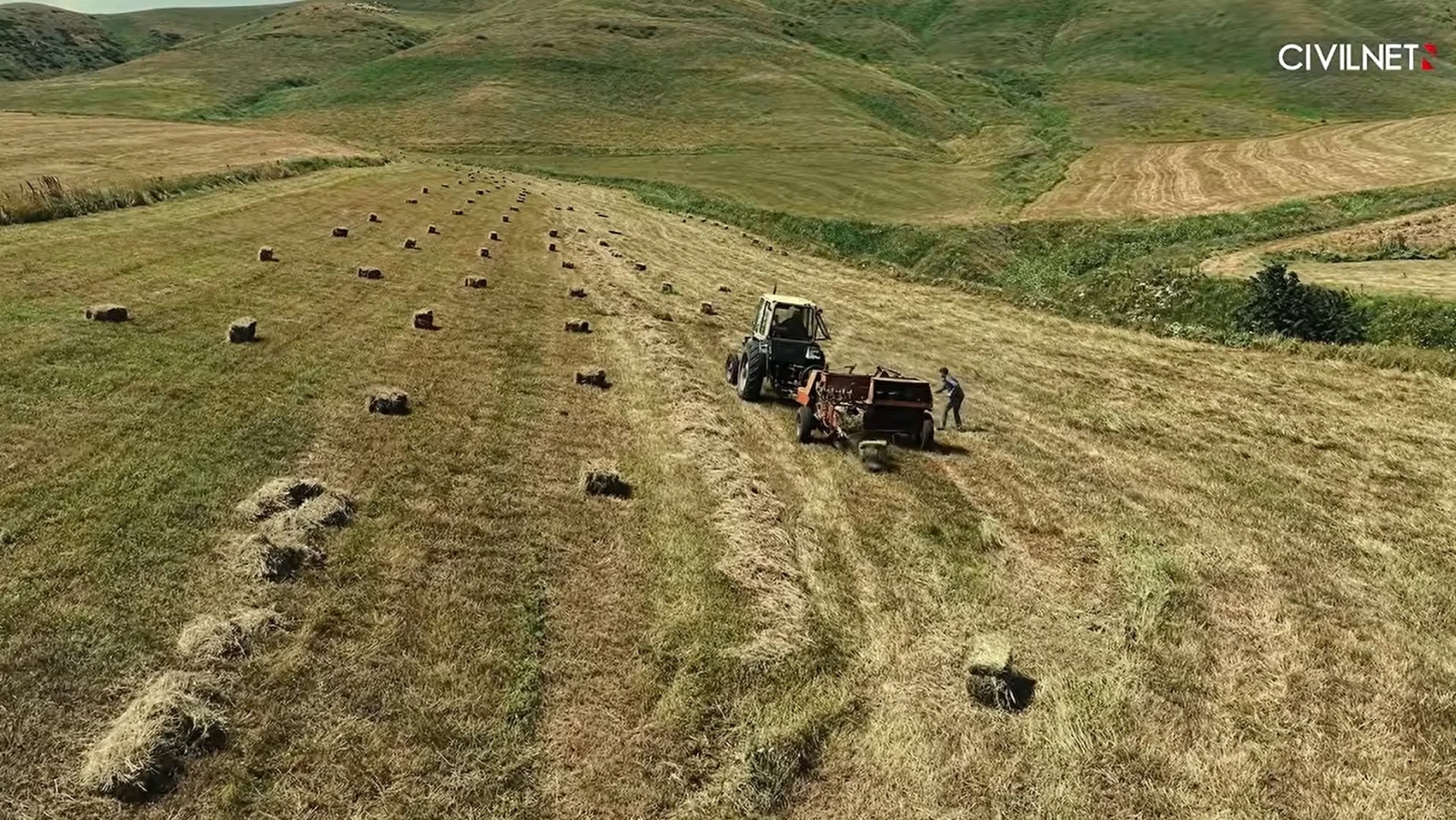
Asked whether his wife helps, he laughs. “She doesn’t even make me coffee in the morning, let alone help me,” he says. “It’s a good thing people come by often, so I have coffee with them.” Then he softens. “How could she help at her age? Age is catching up with her, too.”
He has little patience for sitting. “Even this chair must be wondering why Hrant has been sitting for so long,” he says. He has hay to bale and haul, and old farm machinery to fix.
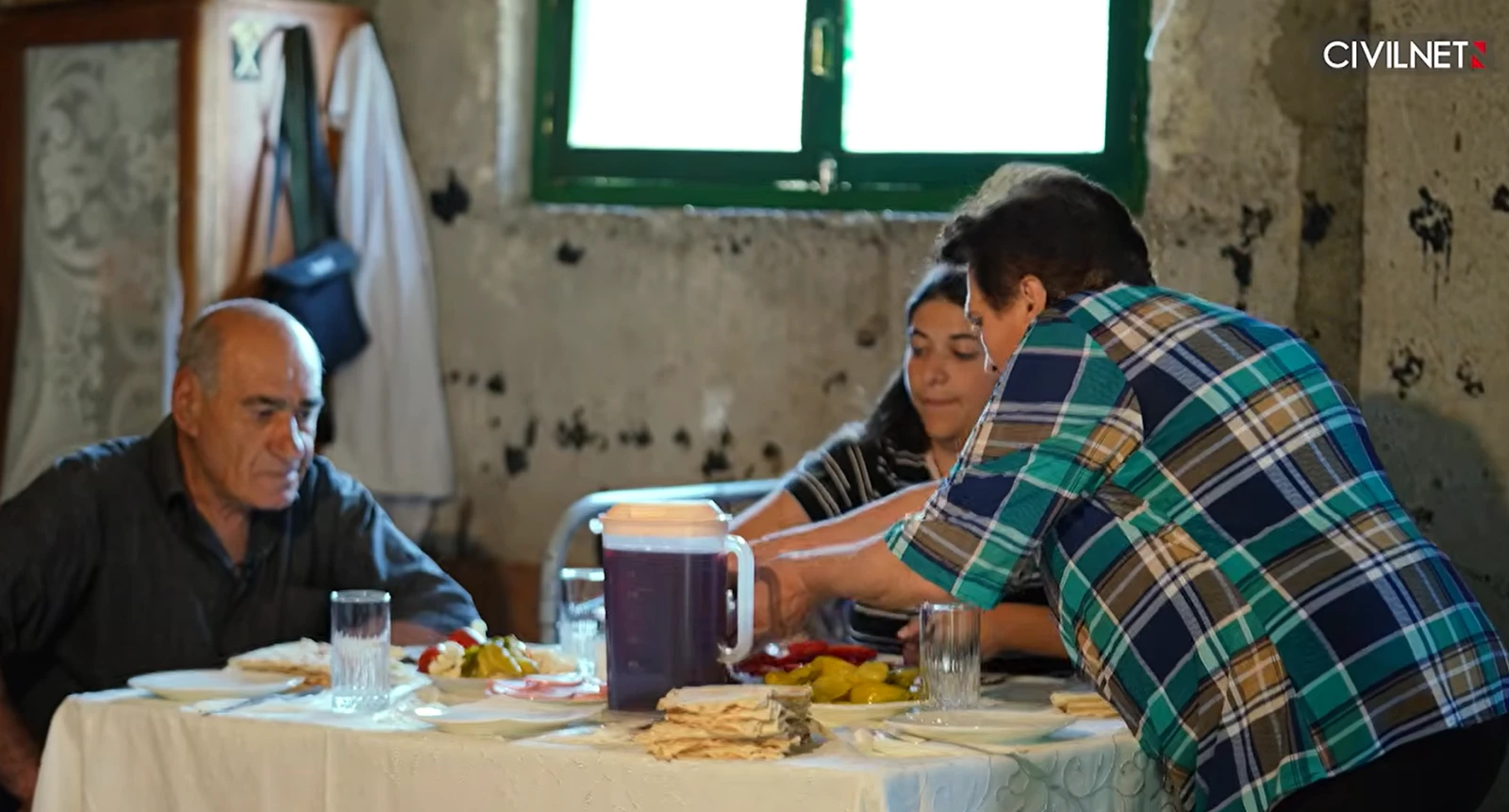
He remembers haymaking season when seven families still lived here and their children came back from elsewhere to help. “They would cut the grass, rake it, there was music, shouting, joy,” he says. “When you went out into the fields, you saw people working and creating something. Now, when you go out there, it’s all deserted. You won’t find a soul.”
Most young people, he says, no longer want to raise livestock or work the land. In the neighboring village, 20 or 30 young men have never married. “In the old days, people said girls were left unmarried,” he says. “Now they say it about the boys.”
Asked whether he wants to leave, Hrant groans. “I was hoping you wouldn’t ask that,” he says. He could move to Mayisyan, a village closer to Gyumri. “But what would I do there, sit around all day? I can’t sit idle. Here I get up, keep busy around the house, and my day goes by.”
His wife wants to go. He turns to her. “Should I go or not? I’ll listen to you.”
“I don’t want to be the bad guy,” she says, waving her hand.
“See?” Hrant says. “I’m not going.”
He calls his life here freedom. He has his house, his barn and his animals. “I don’t want my children to struggle to help me,” he says. “I’d rather struggle myself and, if I can, help them.”
Margarit sees it differently. There is no clinic, no shop and almost no one left. “Life has become boring,” she says. If one of them falls ill in winter, there is no one to drive them to a hospital. In Mayisyan, everything is closer.
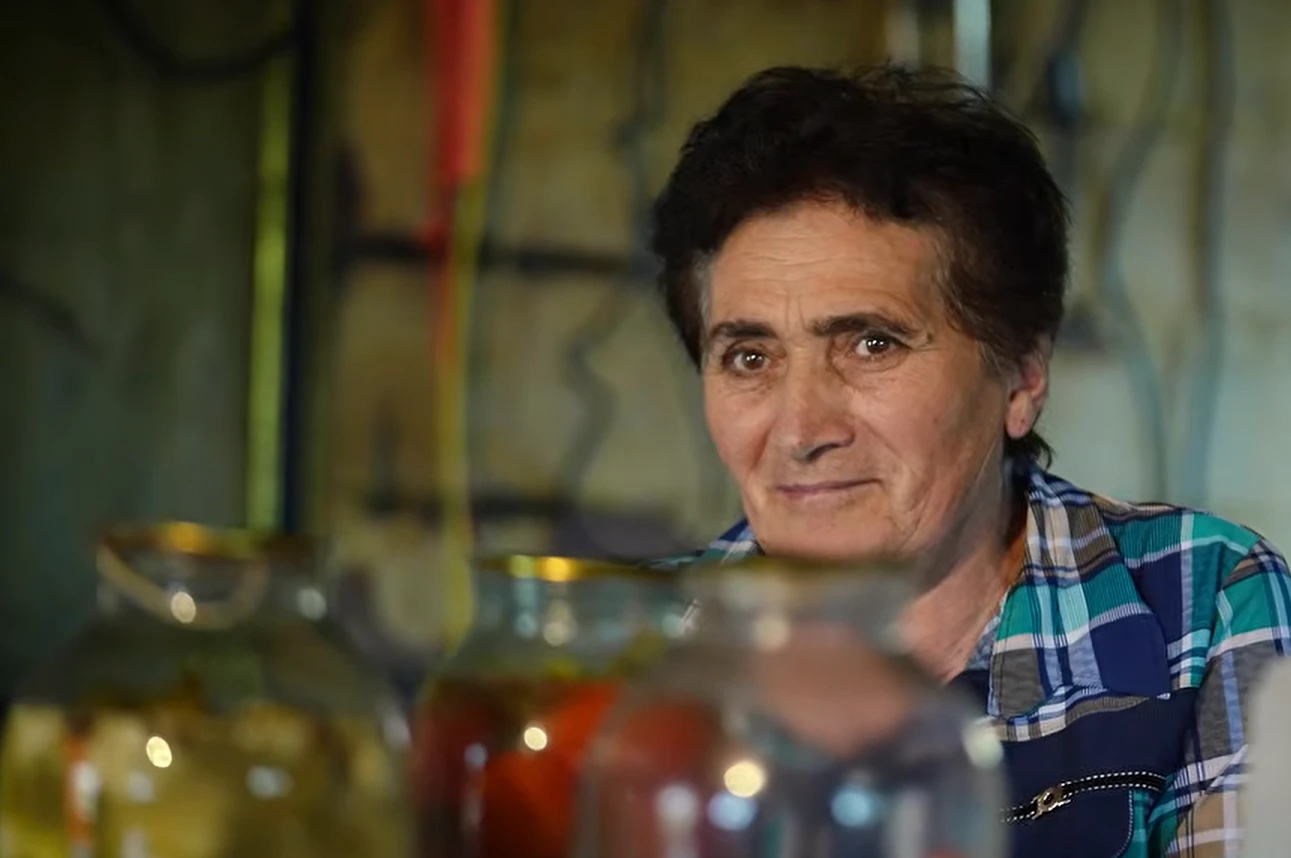
Their children agree with her. “They tell us, ‘You’ve struggled enough. Come and live a better life,’” she says. Her plan is a compromise: winter in Mayisyan, summer back home. Convincing Hrant, she admits, is very difficult.
She misses the old days, when neighbors dropped by for coffee and laughed together. “I had wonderful neighbors,” she says. “Really wonderful.”
Hrant believes the villages are emptying mainly because young people are not marrying. Village girls do not want to stay, he says, and city girls do not want to come. Love, he says, is what decides everything. “If you don’t love a car, you won’t buy it. If you don’t love a woman, you won’t marry her. And if you do anyway, it’s a meaningless life.”
Asked whether he loves his wife, he deadpans: “No, ours is a meaningless life.” Then he laughs. “Of course I do. If I didn’t, I wouldn’t still be with her.”
What will become of Lernagyugh if they leave?
Hrant does not hesitate. “It’ll be looted, dear,” he says. “They’ll steal whatever they can and take it away.”



 Stories