 Lusine Vardanyan
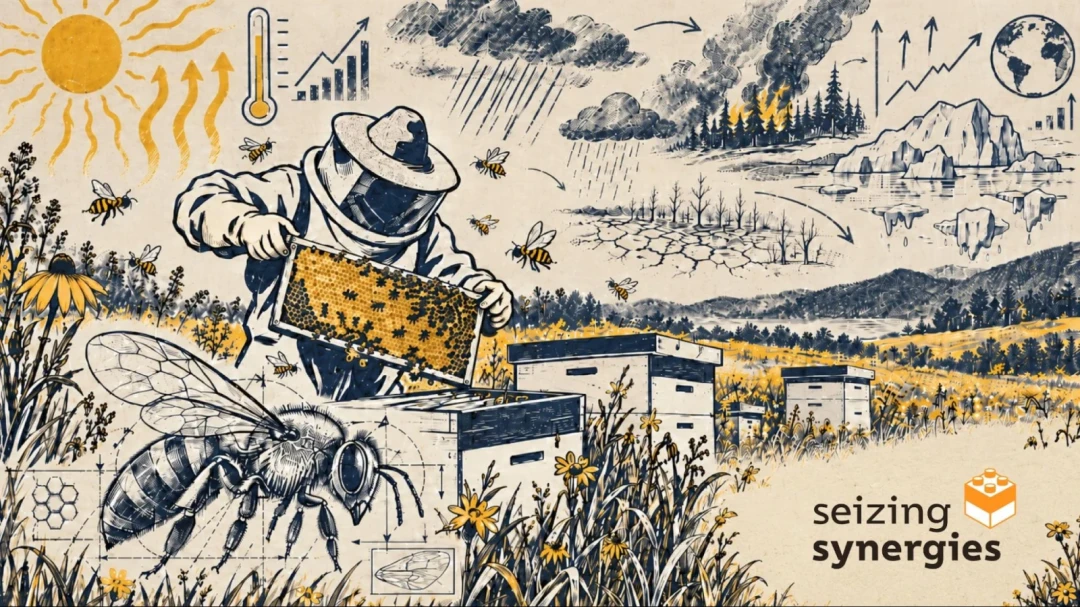
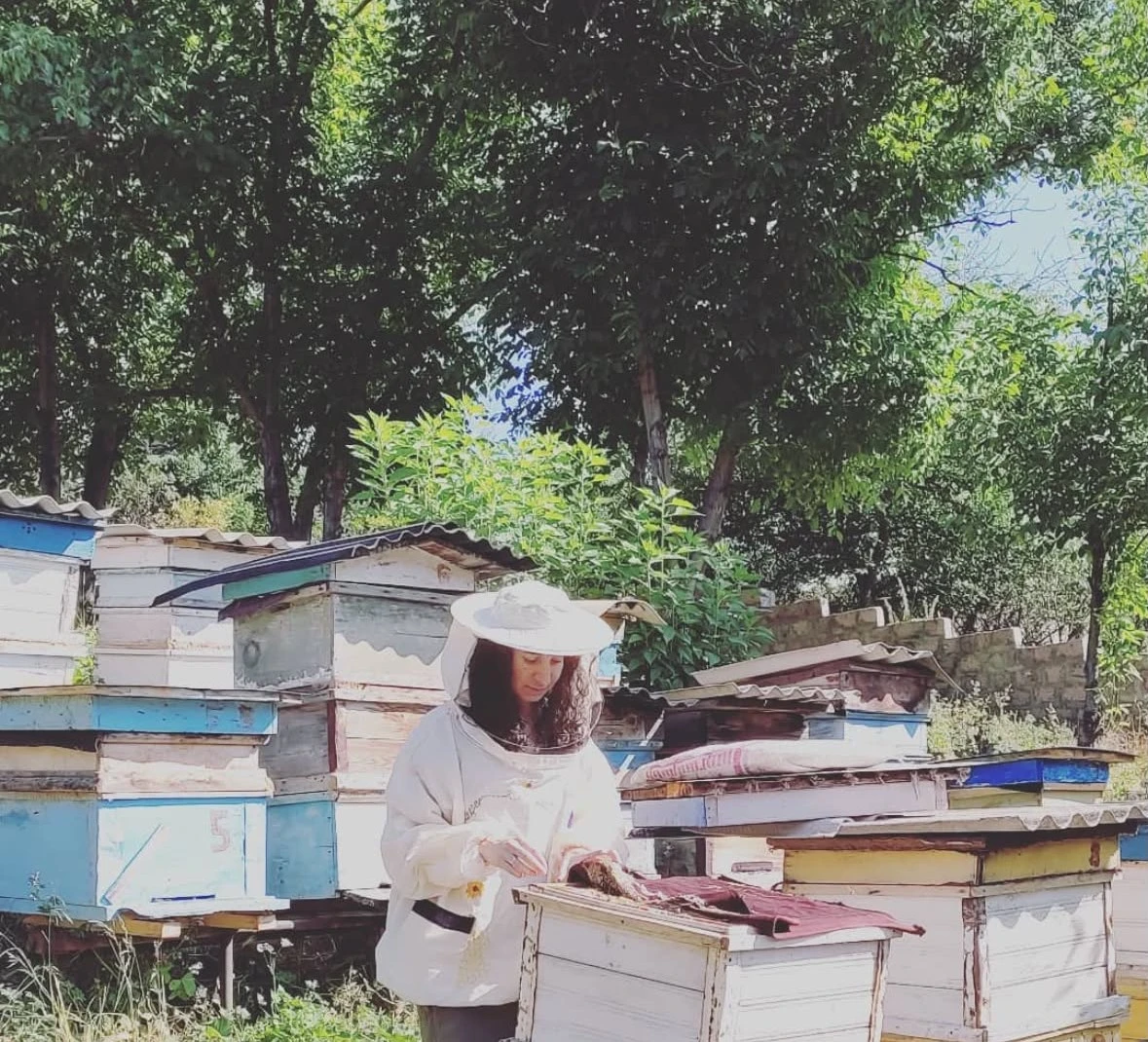
“I have always thought that even if humans did not exist, bees would still produce honey. We change their natural habitat, upset the balance and put stress on the ecosystem,” beekeeper Armine Abovyan tells CivilNet. For her, bees are first and foremost about connecting with nature, then business and production. Armine says she learns a great deal from the bees’ calmness and their ability to reach their goals without rushing.
Abovyan owns 50 hives. She says that six years ago one hive would produce 15 to 20 kilograms of honey a year, and this figure has gone down to just six kilos. Many beekeepers tell similar stories.
“The past two years have been difficult: there was either no profit or very little. Bees’ needs and natural way of life must be respected. When I extract honey, I try to leave the bees their reserves and sometimes give the surplus to weaker colonies,” Armine says.
Both in Armenia and elsewhere, about 75% of agricultural crops depend on bee pollination. The Armenian government plans to develop honey production and beekeeping, increase the number of hives and bee colonies, and boost export volumes.
Incomplete data
At least 250,000 bee colonies are required to ensure full pollination of Armenia’s wild vegetation and cultivated plants. At the start of 2026, Armenia recorded 167,520 bee colonies, 11.4% fewer than a year earlier.
The responses to inquiries seeking an overall picture of beekeeping in Armenia suggest there is no single, comprehensive set of statistics covering the sector’s different aspects. A separate agency is responsible for each figure, such as the Ministry of Economy, the Statistical Committee, the Food Safety Inspection Body, the State Revenue Committee, the Scientific Center of Zoology and Hydroecology, and others.
“The data is incomplete and general, with no analysis or assessments,” journalist Christian Ginosyan who previously researched the problem, tells CivilNet.
“The only data I managed to obtain were the number of beehives in the country by year. To put it mildly, that tells us nothing. We do not know how many belong to large producers and how many to people who simply keep a few hives in their backyard. Such averaged figures conceal real growth and decline trends,” Christian said.

To understand the problems facing beekeepers in Armenia, Christian spoke to 110 beekeepers. In his articles The Fading Buzz of Bees and Bees and Climate: The Last Buzz?, Ginosyan described how he traveled with his father in a Soviet VAZ-2106 through all of Armenia’s regions, collecting and recording beekeepers’ stories and trying to understand which factors were contributing to the decline in bee colonies.
Although beekeepers do not always use the term “climate change,” they see changing weather conditions as a serious threat.
“Every beekeeper has a garden and, of course, they notice how different everything is now compared to, say, 30 years ago,” the journalist said.
The threat to bees from climate change
In the Lori region, the linden flowering season has coincided with heavy rains in recent years, and linden is one of the region’s main sources of honey.
Moving bees during the season to areas rich in nectar-producing plants is possible in theory, but Armine says it does not always make a significant difference.
Adapting to changes in nature requires knowledge, and Armenia has a serious shortage of it. Christian Ginosyan notes that many of the beekeepers he spoke to refer to beekeeping guidelines from the 1960s, sometimes overlooking the fact that beekeeping is directly linked to climate, landscape and habitat.
Gayane Simonyan is the founder of BeeLife, a social enterprise whose name means “the life of bees,” to educate beekeepers, help them move beyond the obsolete beekeeping approaches and encourage the use of new technologies.
“For example, organic treatments such as oxalic acid, formic acid, KAS-81 herbal infusions, among others, can be used instead of medication to control Varroa mites. The same applies to the proper use of bee products and to the beehive inhalation treatments we have tested in our practice, which have remarkable health benefits,” she told CivilNet.
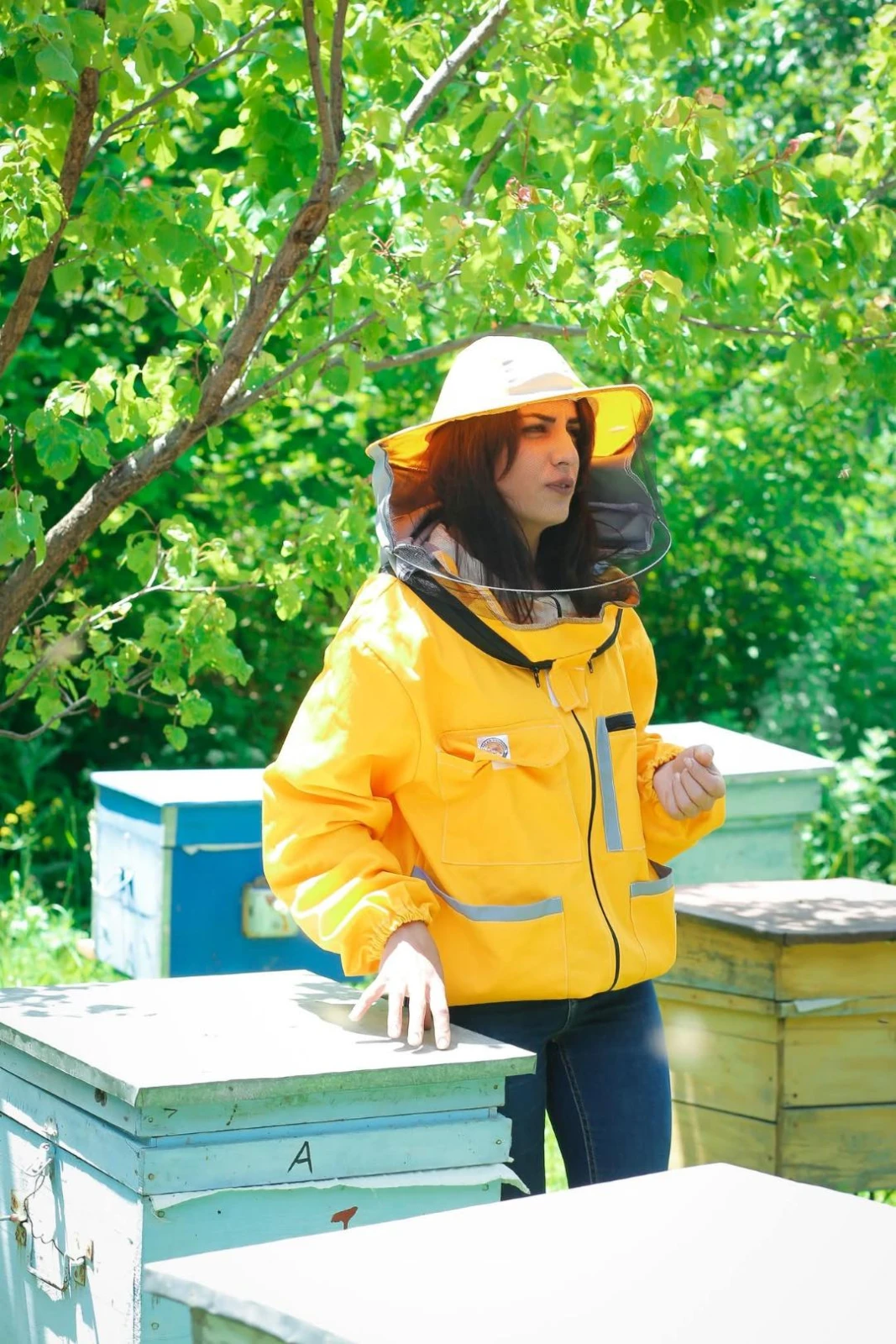
Simonyan believes the government should introduce controls on the unregulated import of bee colonies and queen bees. Without proper regulation and quarantine controls, imported bees can bring dangerous diseases and pests into Armenia.
“The biggest threat to our region is the Tropilaelaps mite, which is already present in neighboring countries. This requires exceptional vigilance and strict preventive measures on our part to keep it out of Armenia,” Gayane Simonyan says.
BeeLife and My Honey are preparing to create Healthy Hive, a platform offering local beekeepers training in beekeeping and marketing so that they can produce quality products and successfully reach consumers.
“We raise queen bees of a single breed, and years of experience and our farm’s high productivity have made us fully confident in their quality. Before selling queen bees or using them on our farm, we always rigorously check the quality and egg-laying performance of the queens we produce,” Simonyan says.
The practice of mixing sugar into honey continues in Armenia. For Armine Abovyan, distinguishing natural from artificial honey on the market is a problem. She expects state support in the form of an accessible and affordable system of inspections, testing and certification for small producers:
“I produce and sell natural honey, but I do not have the certificate needed to confirm its purity, because getting one is quite expensive. If such certification were more accessible to small beekeepers, it would help us prove the quality of our work and make our products more trustworthy for buyers,” she believes.
Despite the problems, Armine Abovyan wants “beekeeping to retain its meaning and remain a way of expressing a connection with nature, care and responsibility.”
Pesticides can cause mass bee deaths
Armenia has a major problem with the use of pesticides that cause mass bee deaths. According to the report “Effective Management and Judicious Use of Pesticides in Agriculture”, their use and storage in Armenia are not properly controlled. Small farms often buy them in bottles labeled only with the product name, with no instructions for use or expiration date. Farmers also lack professional advice: the regional centers that used to support them have been dissolved. Data collection is also incomplete: there is no unified database in the country bringing together information on pesticide use, residues and health effects.
Reaching agreements with farmers on pesticide use is not always easy.
“Orchard growers’ uninformed use of pesticides during flowering harms beekeepers, who lose bee colonies. Beekeepers are often left to deal with their losses alone because legislation and compensation mechanisms are inadequate,” BeeLife’s founder says.
What can Armenia learn from neighboring Georgia?
Aleko Papava, head of the Georgian Beekeepers’ Union, describes the pesticide problem from the other side of the border. Georgia’s pest control program has a warning system, but private farms still do not coordinate their spraying schedules.
More than 15,000 people are involved in beekeeping in Georgia. Small family farms account for 95%. The remaining 5% are large commercial producers focused on exports.
According to Georgia’s statistical service, around 250,000 bee colonies are officially registered. Experts say this is not enough: the number needs to reach at least 900,000.
Other problems include the Varroa mites. In 2024, the presence of the Tropilaelaps mercedesae mite was confirmed for the first time in the Samegrelo-Zemo Svaneti region. Identifying and registering apiaries is also a problem: beekeepers fear taxation, even though primary production in the country is exempt from taxes and qualifies for other benefits.
Despite these problems, cooperation between state agencies and beekeepers is working better in Georgia, and state support is broader. Papava says they jointly run training courses in every community and develop programs to expand small apiaries.
The Georgian Beekeepers’ Union was founded in 2018, after which the development of beekeeping accelerated. There is a working group to tackle the brown marmorated stink bug (Halyomorpha halys), rules have been set for pesticide use, and there is a hotline through which the National Food Agency responds to reports, among other measures.
Honey contamination has been a problem in Georgia. Papava says the rate of antibiotic contamination was 56% before the Beekeepers’ Union was established; today it is 4%.
The union works with Armenian beekeepers. But Papava says Armenia currently doesn’t have a strong beekeepers’ union, “even though such an organization is essential.”
State support in Armenia
In 2024, the Armenian government approved a pilot program to develop beekeeping, which provided for reimbursement of 50% of the cost of purchasing up to 10,000 bee colonies over two years.
The plan was to purchase 3,000 bee colonies in the program’s first year and 7,000 the following year, and to produce 300 metric tons of honey.
The Ministry of Economy told CivilNet that 2,000 beehives had been purchased under the program in 2024-2025.
Under the program, the price of one hive is roughly $40. Based on this calculation, the state spent $220,000, against a planned $1.1 million.
The ministry did not provide a full response to CivilNet’s inquiry.





 Stories