By Bedo Demirdjian
Armenians released from Azerbaijani captivity often face a new set of difficulties upon their return: psychological trauma, unemployment, financial hardship, and social isolation. Human rights advocate Hilda Tchoboian argues that Armenia must develop a coordinated approach to support the reintegration of former prisoners, while continuing efforts to secure the release of those still held in Azerbaijan.
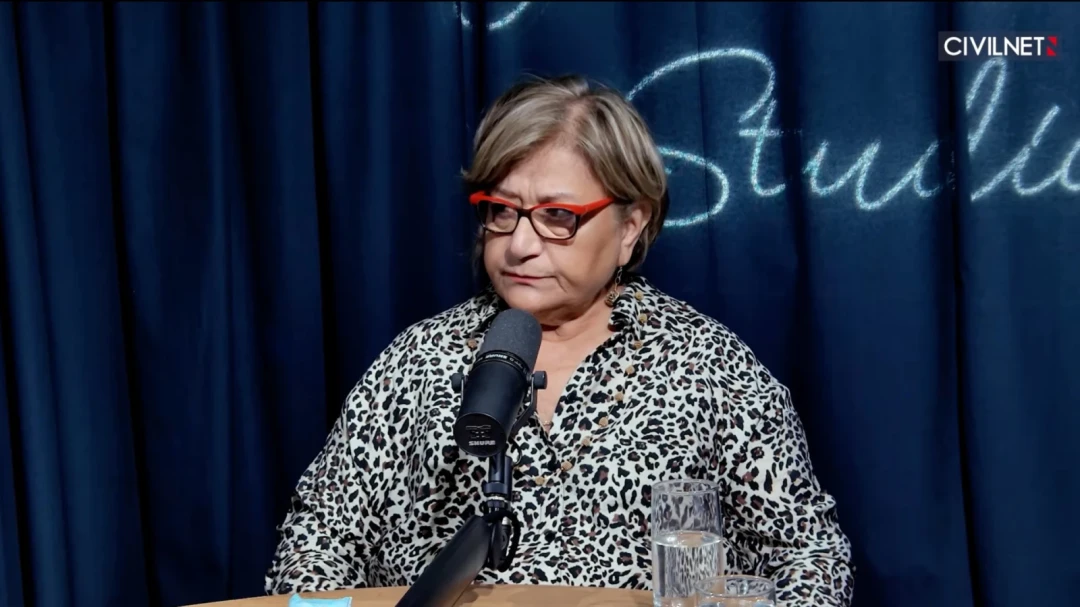
Speaking to CivilNet, Tchoboian, president of the France-based Covcas Center for Law and Conflict Resolution and coordinator of the LIBERTAS 2020 initiative, stressed that the problems facing returnees require state intervention. “This is the responsibility of the state,” she said, noting that individual organizations cannot provide long-term solutions on their own.
On October 16, a conference organized in Yerevan within the framework of the LIBERTAS campaign focused on the reintegration of former prisoners and the fate of Armenians still detained in Azerbaijan.
The Stigma of Returning from Captivity
One of the most painful issues Tchoboian highlighted is the attitude of society toward former captives. Idealized notions of heroism, she said, sometimes lead to accusations and rejection of those who returned alive. “Some people ask them: why didn’t you detonate your grenade and die?” she recounted, citing accounts from specialists working with former prisoners.
Such attitudes deepen the psychological trauma caused by captivity. Some returnees suffer from severe post-traumatic symptoms, including suicidal thoughts.LIBERTAS, which initially focused on demanding the release of prisoners, has since expanded its work to support their psychological rehabilitation. In Armenia, the International Committee of the Red Cross has also implemented mental health and psychosocial support programs. According to the organization, 3,826 people from various conflict-affected groups benefited from these programs in 2024. However, publicly available data is insufficient to assess how accessible this support has been specifically for former prisoners.
Unemployment and Financial Hardship
Some former contract soldiers struggle to resume their service due to additional security screenings. “The authorities may have legitimate security concerns, but former prisoners should not be left indefinitely without employment opportunities,” Tchoboian said. Another problem concerns accumulated debts. In some cases, interest on bank loans continued to accrue during captivity, leaving returnees in severe financial difficulty upon their release.
Armenia has employment support programs for people affected by hostilities, but it remains unclear how many former prisoners have benefited from them and whether they adequately address their specific needs. Tchoboian recalled the case of a former prisoner suffering from cancer. Although his medical treatment was covered, he lacked the means even to cover travel costs to the hospital. LIBERTAS assisted with improving his living conditions. He died earlier this year. According to the human rights advocate, this example illustrates that medical care alone is not enough; social and economic support is also necessary.
Gaps in State Support
Tchoboian’s main criticism concerns the lack of systematic follow-up support for former prisoners. Upon return, she said, individuals typically undergo medical examinations and questioning by security services, but subsequent assistance is not sufficiently coordinated. LIBERTAS sent inquiries to state institutions to clarify the scope of available support. The responses, according to Tchoboian, did not contain complete information on beneficiary selection criteria, the duration of payments, or the overall budget.
Armenia has mechanisms providing financial, psychological, and employment assistance to conflict-affected persons. However, Tchoboian questions how well these correspond to the particular needs of people who have been through captivity. She noted that none of the state bodies invited to the October 16 conference sent representatives. “I propose the creation of a small coordinating body that would assess the needs of former prisoners, organize psychological support, facilitate professional retraining, and help them find employment,” she said.
20 Armenians Still Held in Azerbaijan
As of the end of September 2026, 20 Armenians remained in Azerbaijani custody, including former political and military leaders of Nagorno-Karabakh. Four Armenian prisoners were released in January 2026, but in February Azerbaijani courts handed down heavy sentences against former Nagorno-Karabakh officials. On February 5, five defendants, including former president Arayik Harutyunyan, were sentenced to life imprisonment. Others received prison terms of 15 to 20 years. On February 17, former state minister Ruben Vardanyan was sentenced to 20 years in prison.
The trials have been criticized by international human rights organizations. Amnesty International has raised concerns about violations of the right to a fair trial. In September, Human Rights Watch published Ruben Vardanyan’s allegations regarding detention conditions and limited access to medical care, while noting that it had been unable to independently verify them. Azerbaijan’s human rights commissioner has rejected the accusations. The closure of the International Committee of the Red Cross mission in Azerbaijan in 2025 complicated contact between prisoners and their families. Nevertheless, representatives of the organization visited Armenian detainees in December.
Prisoners as a Tool of Political Pressure
Tchoboian describes Azerbaijan’s approach as “hostage diplomacy,” arguing that the continued detention of Armenians may be used to exert political pressure on Armenia. While this motive has not been independently confirmed, international bodies have repeatedly raised the issue of Armenian prisoners. In March 2025, the European Parliament adopted a resolution demanding their immediate and unconditional release and calling for sanctions against responsible Azerbaijani officials.
Tchoboian questions the possibility of genuine reconciliation as long as prisoners remain in captivity. “How can peace be established between the two countries when these hostages continue to be held?” she asked. The Armenian government maintains that the return of prisoners remains a priority. Prime Minister Nikol Pashinyan stated in August that the issue has never left the government’s agenda. Foreign Minister Ararat Mirzoyan has also emphasized the need for a diplomatic solution. Tchoboian, however, stresses the importance of sustained international and public pressure as well.
---
The full conversation with Hilda Tchoboian is available on CivilNet’s “Jagadapats” podcast (in Western Armenian):


 Stories