Partner content
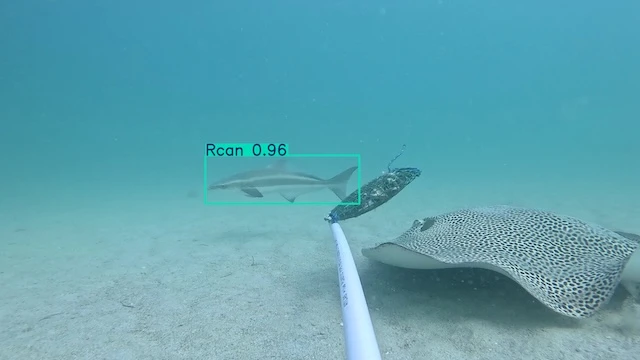
Researchers at Sorbonne University Abu Dhabi, in collaboration with Emirates Nature–WWF and the American University of Sharjah, have developed an artificial intelligence system designed to automatically detect and identify fish species in underwater video footage from the Southern Arabian Gulf. The technology aims to accelerate biodiversity monitoring and support marine conservation efforts.
The research, presented at the OCEANS 2026 Monterey conference in California, demonstrated promising results across five fish species. The project has since progressed to an initial validated dataset covering ten species, according to Sorbonne University Abu Dhabi.
The system addresses one of the major challenges in marine biodiversity monitoring: the time required for researchers to manually analyse hours of underwater footage. By automating fish detection and identification, the technology could support more scalable biodiversity monitoring, evidence-based marine management and the UAE’s commitment to UN Sustainable Development Goal 14, Life Below Water.
Collaboration Between AI Researchers and Marine Scientists
The project was developed by the Sorbonne Center for Artificial Intelligence (SCAI) at Sorbonne University Abu Dhabi (SUAD), in collaboration with Emirates Nature–WWF and the American University of Sharjah (AUS).
Sorbonne University Abu Dhabi leads the development of artificial intelligence and computer-vision technology. Emirates Nature–WWF contributes expertise in marine conservation, field-based biodiversity monitoring and the application of research to conservation and management needs. The American University of Sharjah provides expertise in fish ecology, taxonomy and the environmental conditions of the Arabian Gulf.
The research was presented at OCEANS 2026 Monterey by Dr. Andrea Mecchina, a postdoctoral researcher at Sorbonne University Abu Dhabi.
The initial scientific study focused on five fish species selected for their ecological and fisheries relevance. According to the researchers, the AI model reliably detected and correctly identified the large majority of fish in an independent test dataset that had not been used during training.
The project has also advanced to an initial validated dataset covering ten species. The next phase will focus on expanding training and validation using a much larger regional archive of underwater footage, additional species and a broader range of environmental conditions.
Researchers emphasise that the results represent an initial proof of concept. Further testing across different species, locations, seasons and environmental conditions will be necessary before the technology can be applied at broader monitoring scales.
Dr. Giulia De Masi, Associate Professor at Sorbonne University Abu Dhabi and lead researcher on the project, said the research demonstrates the potential of interdisciplinary collaboration.
“Turning large volumes of underwater imagery into useful ecological information is a complex challenge, and this project demonstrates the strength of the interdisciplinary research being advanced at Sorbonne University Abu Dhabi. By bringing together expertise in artificial intelligence, computer vision and marine science, we are developing tools that can support long-term monitoring, deepen our understanding of changes in fish communities and strengthen the evidence available for conservation and marine management across the Arabian Gulf.”
Dr. Daniel Mateos-Molina, Head of Marine Conservation and Biodiversity at Emirates Nature-WWF, who conceived the project, highlighted the importance of combining ecological monitoring with artificial intelligence.
“Effective conservation depends on our ability to understand how marine ecosystems are changing over time. By combining field-based ecological monitoring with artificial intelligence, we have an opportunity to turn those observations into usable evidence much faster and at a much larger scale. Equally important is bringing together conservation practitioners, universities and experts in the UAE to develop solutions that respond to real conservation needs. This collaboration shows how applied research can translate scientific and technological expertise into practical tools that strengthen our ability to monitor biodiversity and ultimately support better conservation and management decisions for the UAE’s marine ecosystems.”
Dr. Ivonne Bejarano, Associate Professor at the American University of Sharjah, pointed to existing gaps in scientific knowledge about fish populations in the region.
“Despite the ecological and economic importance of fish communities in the Arabian Gulf, important gaps remain in our understanding of their diversity, distribution and changes over time. By combining our knowledge of Arabian Gulf fish biodiversity with AI and extensive underwater imagery, we are developing an approach that can make long-term monitoring of fish communities more efficient and scalable, while maintaining the scientific rigor needed to support conservation and management.”
Monitoring Marine Ecosystems Under Environmental Pressure
The Southern Arabian Gulf presents particularly challenging conditions for marine ecosystems. Its waters are shallow and highly saline, with summer sea temperatures frequently exceeding 33°C and locally approaching 38°C.
Marine ecosystems in the region also face pressures from coastal development, shipping, desalination and other human activities.
Understanding which fish species inhabit these waters, how their populations change over time and how they respond to environmental pressures is important for effective conservation and marine management.
One method used by scientists to collect this information is the Baited Remote Underwater Video System (BRUVS). The system consists of an underwater camera placed on the seabed, with bait used to attract fish into view.
The method is non-extractive and repeatable, allowing researchers to survey fish communities across many locations without capturing animals.
Using underwater imagery collected from UAE coastal waters and offshore islands, the Sorbonne-led research team developed a computer-vision pipeline designed to recognise fish under challenging underwater conditions.
These include turbid water, changing light conditions, partially obstructed views and situations in which multiple fish appear in the same video frame.
Five Species Studied, With Plans for Further Expansion
The initial study presented at OCEANS 2026 focused on five fish species: the orange-spotted grouper, orange-spotted jack, pink ear emperor, cobia and Spanish mackerel.
Future development will include combining fish detection with tracking and abundance measurements, allowing researchers to obtain more detailed information about fish populations.
The team also plans to explore lighter versions of the AI system that could eventually operate onboard underwater robotic systems for near-real-time processing.
The technology is also planned to be showcased at the Jubail Mangrove Innovation Centre as an example of AI-enabled marine monitoring.
Supported through Sorbonne University Abu Dhabi’s SAFIR-funded research programme, the project forms part of the university’s broader research activities in artificial intelligence and marine science.





 Stories